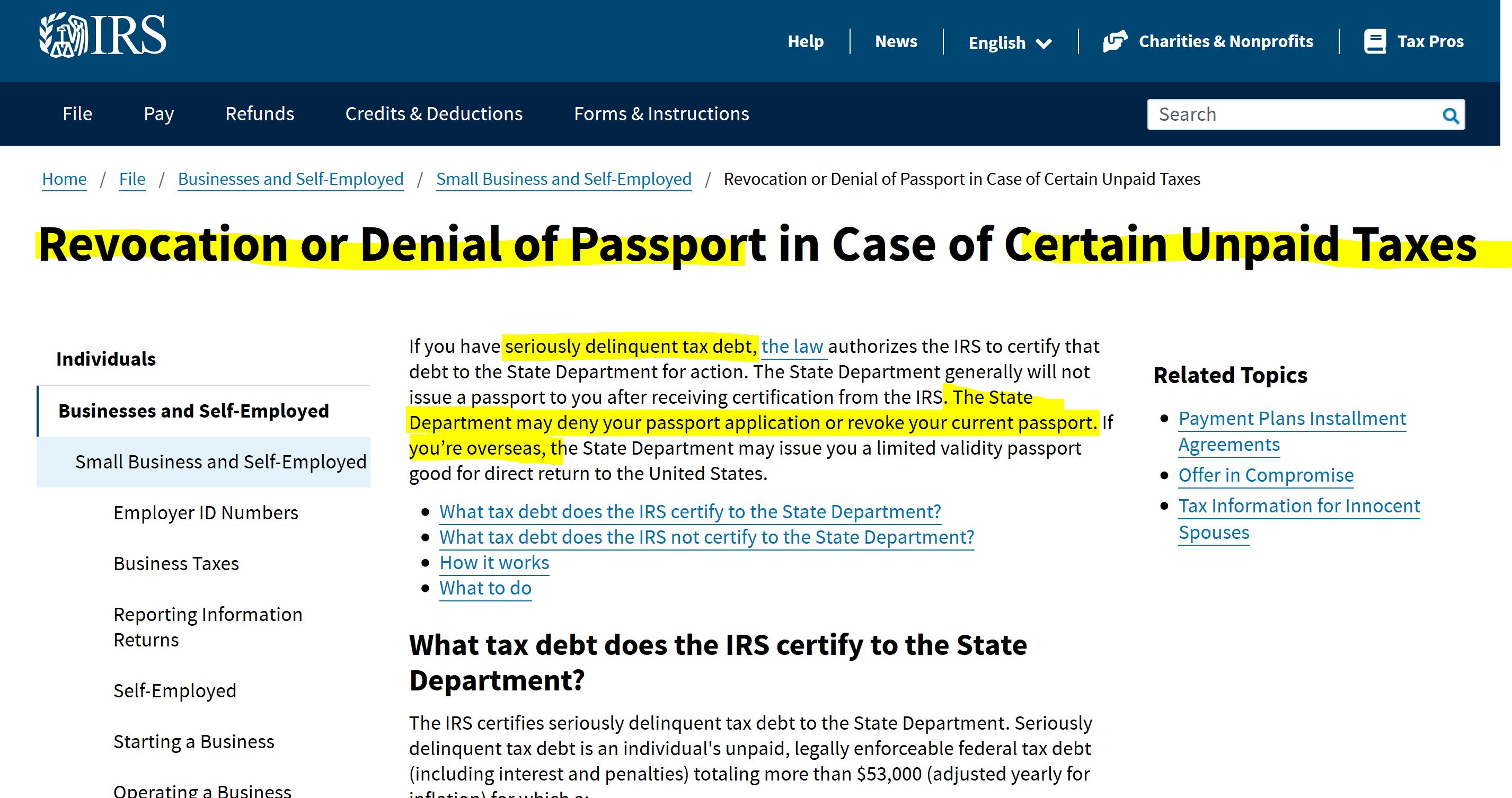
Wowzers! Consular Fees for Processing U.S. Citizenship Renunciations Decreased to US$450 Fee – ($320 – inflation adjusted)!
More than a dozen years ago, I wrote a blog when the State Department jacked up the fee to US$ 2,350.

As of September 2026, the U.S. Department of State has reduced the U.S. citizenship renunciation fee from $2,350 to $450. Adjusted for inflation since the 2014 increase, $450 today is equivalent to approximately $320 in 2014 dollars — the lowest real-terms cost for renunciation in more than a decade.
This is what the updated government website provides regarding renunciation:
Overview
Relinquishment of U.S. citizenship by performing certain statutory expatriating acts, including taking the oath of renunciation, voluntarily and with the intent of relinquishing U.S. citizenship, is a personal right that cannot be exercised on a person’s behalf. For example, a person’s parent(s) or legal guardian may not take the oath of renunciation for that person. A Certificate of Loss of Nationality (CLN) approved by the Department of State is the final agency determination of loss of U.S. nationality.
NOTE: STEPS 1-4 below outline the process for requesting a CLN based on taking an oath of renunciation before a U.S. diplomatic or consular officer abroad under Immigration and Nationality Act (INA) Section 349(a)(5), 8 USC 1481(a)(5). For information on the parallel process to request a Certificate of Loss of Nationality (CLN) on the basis of the commission of another potentially expatriating act under INA 349(a)(1)-(4), 8 USC 1481(a)(1)-(4), please contact your location by selecting it below.
Oath of Renunciation of U.S. Nationality
Embassy, consulate, or office providing consular services process requests to take the oath of renunciation of U.S. citizenship. Minors, individuals who do not read or write English, individuals with mental health or cognitive disability or impairment and/or guardianship, and those for whom loss of U.S. nationality would result in statelessness are invited to contact your location to discuss taking the oath of renunciation.
Taking an oath to renounce U.S. nationality before a U.S. diplomatic or consular officer overseas is a serious and irrevocable act. Therefore, you should carefully consider and fully understand the consequences and ramifications of this act prior to your decision to begin the process.
Steps to Take
STEP 1: Review the legal requirements and consequences/ramifications of taking the oath of renunciation of U.S. citizenship.
Please read the information provided by the embassy, consulate, or office providing consular services and available online at the Department of State and Internal Revenue Service links below regarding the legal requirements for taking the oath of renunciation before beginning this process. Loss of U.S. nationality is irrevocable, and you should fully understand the consequences and ramifications before beginning this process.
For questions related to possible U.S. tax implications, please contact the Internal Revenue Service and/or review the Joint Foreign Account Tax Compliance Act (FATCA) FAQ .
For questions related to Social Security Administration (SSA) or other federal benefits, please contact your location.
Department of State and Internal Revenue Service links:
STEP 2: Email your location to initiate the process and receive instructions. Gather and submit scanned copies of the required documents and schedule your first interview.
To schedule an initial interview, which will be conducted by telephone or in-person at the embassy, consulate, or office providing consular services, please send an email to your location. Canada, Bern, Berlin, Amsterdam, Australia (Sydney and Melbourne), Singapore, Brussels, and Paris provide electronic first interviews
Applicants should personally review all documents and prepare all forms provided by the embassy, consulate, or office providing consular services in accordance with the instructions. DO NOT SIGN ANY FORMS BEFORE YOUR FINAL INTERVIEW.
STEP 3: Schedule and attend the final interview at the embassy, consulate, or office providing consular services with all required original documents and pay the fee.
Schedule your final interview appointment according to embassy, consulate, or office providing consular services instructions. On the day of your final interview appointment, you must bring all of the original documents you previously submitted by email. You will be asked to reschedule if you do not have the required documents at the time of your final interview appointment.
Your Consular Report of Birth Abroad, and Certificate of Naturalization or Citizenship, if applicable, generally will be retained by the embassy, consulate, or office providing consular services during the remainder of the process and then returned to you. Your U.S. passport also will be retained and, if your Certificate of Loss of Nationality is approved by the Department of State, it will be canceled before it is returned to you upon your request. If you need to travel to the United States on your U.S. passport after the second interview but before the Certificate of Loss of Nationality has been approved, please so advise the embassy, consulate, or office providing consular services at the second interview.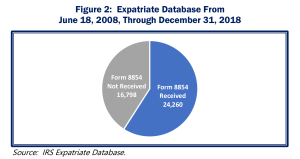
You will meet with a consular officer for your second interview and you will be given another opportunity to review the documents that you have already filled out (but not signed) Form DS-4079, Questionnaire; Loss of United States Nationality; Attestations prior to signing them and taking the oath of renunciation.
Fee: Immediately after taking the oath of renunciation, you must pay the non-refundable current fee of US $450 for administrative processing of a request for a Certificate of Loss of Nationality. The fee is not waivable, nor is it refundable if your request for a Certificate of Loss of Nationality is denied.
Step 4: Receive the Certificate of Loss of Nationality if approved by the Department of State
The Department of State will review each request for a Certificate of Loss of Nationality to determine whether there is a legal basis to approve it. This step may take several months or more. The embassy, consulate, or office providing consular services may contact you for further information before the Department of State decides your case. The embassy, consulate, or office providing consular services will email you if and when your request has been approved. If your request is denied, the embassy, consulate, or office providing consular services will send you an email attaching a denial letter.
NOTE: STEPS 1-4 above outline the process for requesting a CLN based on taking an oath of renunciation before a U.S. diplomatic or consular officer abroad under Immigration and Nationality Act (INA) Section 349(a)(5), 8 USC 1481(a)(5). For information on the parallel process to request a Certificate of Loss of Nationality (CLN) on the basis of the commission of another potentially expatriating act under INA 349(a)(1)-(4), 8 USC 1481(a)(1)-(4), please contact your location for inquiries.
Fees (Prices in U.S. Dollars)
Non-refundable fee of $450 USD at the time of the appointment.
What the Fee Reduction Does Not Change
The $450 consular fee covers only the State Department’s administrative processing of the renunciation appointment. It has no effect on the U.S. tax consequences of renunciation, which are governed entirely by separate federal tax law.
A U.S. citizen who renounces citizenship in 2026 still faces the same IRS obligations as before the fee change. Form 8854, the Initial and Annual Expatriation Information Statement, must still be filed. The five-year tax compliance certification is still required. If the renouncing individual qualifies as a covered expatriate under the three IRS tests — net worth, average annual tax liability, and compliance certification — the Section 877A mark-to-market exit tax still applies in full.
The fee reduction makes the administrative step of renouncing less expensive. It does not reduce the tax cost.
Is the $450 Fee the Only Cost of Renouncing?
No. The consular fee is the smallest cost most people encounter. The substantive costs of renunciation depend entirely on the individual’s financial situation and filing history. For individuals who are covered expatriates, the Section 877A exit tax can represent a significant liability. For individuals with unfiled FBARs or unreported foreign accounts, FBAR penalties may apply separately.
Attorney fees for proper pre-renunciation planning, tax preparation for Form 8854, and any exit tax liability are the costs that vary significantly from person to person. The $450 appointment fee is the one cost that is the same for everyone.
When Did the Fee Change Take Effect?
The State Department updated its fee schedule in September 2026, reducing the U.S. citizenship renunciation fee from $2,350 to $450 effective immediately. The $2,350 fee had been in place since September 2014, when it was increased by more than 500 percent from the prior $450 level. In real terms, adjusted for inflation since 2014, the current $450 fee is equivalent to approximately $320 in 2014 dollars.
A U.S. Immigration Officer Stops You at at the Airport – @ the Point of Entry (Demands your Green Card be Turned Over))
Being stopped, searched, interrogated or simply questioned by U.S. federal government agents can be intimidating. Especially, if you do not know your legal rights.
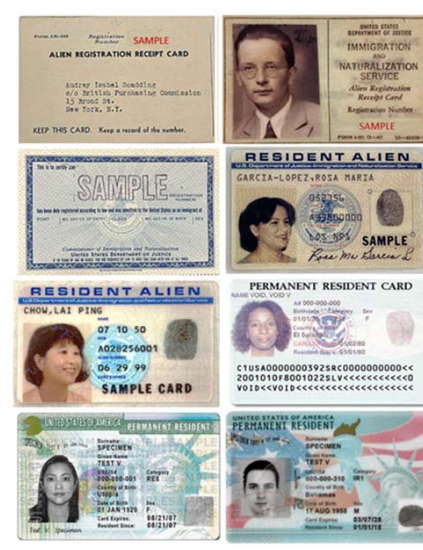
It can be more intimidating on your arrival to the U.S. airport, if the CBP officer (U.S. Customs and Border Protection) demands that you physically “return voluntarily” your green card. The consequences they tell you will be immediate deportation from the U.S. 
- Removal from the U.S. – is it voluntary or not, under these circumstances?
- What are the U.S. federal tax consequences if you “return voluntarily” your green card?
- What if the CBP officer pulls out Forms W-8s you previously signed with your foreign financial institution and presents them to you in the airport and asks the following questions:
-
- Why did you certify “under penalty of perjury” you were not a United States person on your foreign bank produced documents (you received in France, Germany, the U.K., Canada, Mexico, Japan, Indonesia, Australia — or any other foreign country)?

-
- The officer then asks for all of the envelopes and papers in your luggage and opens the letters and files in your possession – See, the U.S. Supreme Court decision United States v. Ramsey, 431 U.S. 606 (1977).
-
Why Are Foreign Banks Closing Accounts for Americans Abroad?
Is it hype, or is it real? Many U.S. citizens and lawful permanent residents (green-card holders) living overseas have heard that foreign banks are closing their accounts. Here is what actually shows up in practice, and why so many people are moving their money home.
On this page
Read the full analysis here.
Are foreign banks really closing the accounts of Americans living overseas?
It is hard to know with certainty how accurate these claims are. If it has happened to you, of course you will know it. In practice, account closings have turned up in places such as Hong Kong, London, Geneva, and Zurich. But they do not appear to be a widespread practice, at least not anecdotally.
What have news reports said about banks cutting off American expats?
Several published reports have raised the issue, including:
- The Wall Street Journal, “Expats Left Frustrated as Banks Cut Services Abroad” (11 Sept 2014).
- The Wall Street Journal opinion piece by Colleen Graffy, “How to Lose Friends, Citizens and Influence.”
- Time Magazine, “Swiss Banks Tell American Expats to Empty Their Accounts.”
- The Huffington Post (Aug 2014), “Expatriate Tax Sense or Broad-Brush Overreach: The U.S. Foreign Account Tax Compliance Act (FATCA).”
- The New York Times (April 2013), “Overseas Finances Can Trip Up Americans Abroad.”
- The Association of Americans Resident Overseas, on Americans abroad being denied access to banking and investment opportunities.
- American Citizens Abroad, which compiles various news accounts of accounts being closed.
Does the size of the account change how a foreign bank responds?
It appears to. For individuals with large investment accounts, for example greater than US$1 million, banks seem to accommodate them, or at least require them to move their assets to a U.S. affiliate or branch. Those with smaller accounts, for example less than US$100,000, appear to see a broader brush stroke of closures.
If foreign banks aren’t the main driver, who is closing these accounts?
Much of it is the individual’s own decision, not the bank’s. What has been widespread in practice is a plan by individuals to close foreign financial accounts and relocate the assets to a U.S. financial institution. This includes U.S. citizens and lawful permanent residents (green-card holders) living outside the U.S. The move is the individual’s choice, not the financial institution’s.
Why are U.S. citizens and green-card holders abroad choosing to close their foreign accounts?
The reason is generally not FATCA (the Foreign Account Tax Compliance Act) itself, but a desire to reduce the compliance costs of filing and reporting on foreign accounts. FATCA seeks to co-opt foreign banks as long-arm enforcement of U.S. tax law. Even so, the driver people cite is cost, not the statute. Multiple tiers of reporting of foreign assets is now required. It can cost a small fortune to retain a good international tax adviser who is aware of these reporting requirements.
What reporting makes holding foreign accounts so expensive?
Two main layers apply to U.S. citizens and lawful permanent residents living outside the U.S.: the FBAR (the Foreign Bank Account Report) and IRS Form 8938 (Specified Foreign Financial Assets). For those with significant assets and numerous accounts, the professional fees and costs of reporting these accounts accurately can become exorbitant. That is especially true when the risk of potentially devastating civil penalties is weighed into the mix.
What penalties are people worried about?
The IRS now regularly threatens large, multiple-year 50% willfulness penalties for those who did not file an FBAR. This risk is more than just perceived. The Zwerner FBAR case is one example, and it has been described as probably a Pyrrhic victory for the government for U.S. citizens and lawful permanent residents living outside the U.S. The combination of cost, compliance burden, and penalty risk is what drives many people to act.
Is it actually illegal for a U.S. person to hold a foreign bank account?
No. There is no legal restriction for a U.S. citizen to hold foreign accounts. A U.S. citizen or lawful permanent resident residing outside the U.S. will generally find it easier, from a lifestyle and personal financial management perspective, to have an account in their home country. The irony is that the practical effect pushes in the opposite direction.
Where are these assets ending up?
The practical effect, anecdotally, is that U.S. financial institutions are receiving these assets and investments. As individuals close foreign accounts to cut compliance costs and penalty risk, the money flows back into the U.S. rather than staying in their home country abroad.
Read the full analysis here.
What Is a Certificate of Loss of Nationality and Why Does Your Bank Need It?
Who Is a “U.S. Person” for Tax, and How FATCA Treats Former Citizens and Green-Card Holders
Table of contents
Read the full analysis here.
How does your immigration status decide whether you owe U.S. tax?
Your U.S. tax status starts with your immigration status. The U.S. taxes a “U.S. person” (the technical term used for U.S. federal tax purposes) on worldwide income, and whether you are a “U.S. person” depends largely on immigration concepts. Three immigration-based categories can make someone a U.S. person:
- U.S. citizenship;
- lawful permanent residency (a green card); and
- meeting the substantial presence test as a non-citizen.
A person in any of these categories may have U.S. income tax residency, and so may be subject to U.S. income tax on income earned anywhere in the world.
Who counts as a U.S. citizen for tax purposes?
Almost every individual born in the United States is a U.S. citizen under the 14th Amendment. Citizenship can also pass from a parent. A child born outside the U.S. to a U.S. citizen parent may also be a U.S. citizen at birth through “derivative citizenship,” meaning citizenship derived from a U.S. citizen parent. The U.S. Citizenship and Immigration Services (USCIS) publishes “Nationality Chart 1, for Children Born Outside U.S.” to help determine whether such a child was a U.S. citizen at birth. Because U.S. citizens are “U.S. persons,” they are generally subject to U.S. tax on their worldwide income.
Can a green-card holder or visa holder be a “U.S. person” too?
Yes. Two non-citizen categories can still make someone a “U.S. person” for tax. The first is a lawful permanent resident (LPR), a green-card holder; LPR status carries a series of complex rules that can affect “U.S. person” status. The second is a person who is neither a citizen nor an LPR but who meets the “substantial presence test,” a tax test based on the number of days an individual is physically present in the United States. A person in either category may be treated as a “U.S. person” and taxed on worldwide income.
What is FATCA, and why is your foreign bank asking if you are a U.S. person?
If your foreign bank has asked whether you are a U.S. person, FATCA is why. FATCA (the Foreign Account Tax Compliance Act, Chapter 4 of Subtitle A of the Internal Revenue Code) entered into force in January 2014. It imposes obligations on financial institutions (“FFI”) and basically all private companies and legal entities (“NFFE”) throughout the world to confirm whether they have any “U.S. person” account holders or owners. That worldwide duty to check is what leads banks and companies outside the U.S. to ask account holders about their U.S. status.
How does a former U.S. citizen prove they are no longer a “U.S. person”?
A former U.S. citizen must generally provide a Certificate of Loss of Nationality (CLN), Form DS-4083, to prove they are no longer a U.S. person. This is a specific requirement both under the FATCA regulations and under a provision adopted into the FATCA intergovernmental agreements (IGAs) signed between the U.S. and other countries. For example, Annex I of the IGA between the U.S. and Spain addresses CLNs. Without the CLN, a financial institution may continue to treat the individual as a U.S. person.
Why does a U.S. place of birth make foreign banks ask for extra proof?
A U.S. place of birth is a warning sign to a withholding agent. Under Treasury Regulations Section 1.1441–7T, a withholding agent has reason to know that documents claiming foreign status are unreliable if its records show an unambiguous U.S. place of birth. To still treat such an account holder as a foreign person, the agent generally needs documentary evidence of citizenship in a country other than the United States (described in § 1.1471–3(c)(5)(i)(B)), plus one of the following:
- a copy of the individual’s Certificate of Loss of Nationality (CLN); or
- a reasonable written explanation of the renunciation of U.S. citizenship, or of why the person did not obtain U.S. citizenship at birth.
Alternatively, a valid Form W–8 establishing the account holder’s foreign status, together with that citizenship evidence and the written explanation, may satisfy the requirement.
Once you are no longer a U.S. person, does FATCA reporting stop?
Generally yes, once the right documentation is on file. A person who is no longer a “U.S. person” can generally avoid FATCA reporting to the IRS by a foreign financial institution (FFI), or by a company or legal entity (NFFE) in any country outside the U.S. The condition is that the supporting documentation, namely the Certificate of Loss of Nationality (CLN), is provided to that institution or entity. Until the CLN reaches the institution, FATCA reporting on the account may continue.
What is an Apostille Certificate, and why pair it with a CLN?
An Apostille Certificate is an international authentication confirming that an official document is genuine for use in another country. When providing a Certificate of Loss of Nationality (CLN) to a foreign financial institution or company, it is often advisable to obtain an Apostille Certificate along with the CLN. Some third-party organizations will accept the CLN only when it carries this certification. Pairing the apostille with the CLN can help the document be accepted abroad.
Future posts will cover more on the interplay of FATCA and former U.S. citizens and lawful permanent residents.
Read the full analysis here.
What Is a FATCA Intergovernmental Agreement and Is It Really Two-Way?
FATCA IGAs and the One-Way Reporting Gap: What US Persons and Foreign Residents Actually Face
Table of contents
Read the full analysis here.
What is FATCA, and how many countries have FATCA agreements with the United States?
FATCA (the Foreign Account Tax Compliance Act) is the US law behind the intergovernmental agreements (IGAs) that the US Treasury negotiated with some 113 countries. Treasury publishes the full country list on its website. Not all of these countries have actually signed. Many have what Treasury calls an “agreement in substance.” The IGAs require foreign financial institutions (FFIs, meaning non-US financial institutions) to identify “U.S. Persons” and “Substantial U.S. Owners,” and to report what the IGAs call “U.S. Reportable Accounts.” Treasury describes the agreements as “bilateral.” One published example, the FATCA IGA with Colombia, is largely identical in form to almost every other IGA.
How do FATCA IGAs affect US citizens and green-card holders living outside the United States?
They affect US citizens (USCs) and lawful permanent residents (LPRs, green-card holders) in many ways. Foreign financial institutions around the world now collect extensive information to identify account holders who are “U.S. Persons” or “Specified U.S. Persons,” the term the IGAs use for accounts that must be reported. If you received questions from a foreign bank asking whether you are a US person, FATCA is why. The reporting reaches beyond direct accounts. It also reaches entities that a US person controls.
Why are some foreign banks refusing or closing accounts for US citizens and LPRs?
Many FFIs have adopted a policy to no longer accept or retain US accounts. The cost of complying with FATCA for US citizens and lawful permanent residents is high. Many FFIs also want to avoid the risk of being penalized heavily by the US federal government, including being charged with aiding and abetting US taxpayers to evade their US tax obligations. Jack Townsend’s website, Federal Tax Crimes, reviews these cases in detail, with particular focus on Swiss banks and the US DOJ Program for Swiss Banks.
What is the difference between a “U.S. Reportable Account” and a “Country X Reportable Account”?
This difference is the core asymmetry of FATCA. A “U.S. Reportable Account” is defined extraordinarily broadly. A “Country X Reportable Account,” for example a Colombian Reportable Account, is defined narrowly. That gap is why the IGAs are not truly bilateral: US banks do not have to provide the same detailed information on their non-US clients that FFIs must provide on US accounts. A plain reading of the IGAs gets you to that conclusion.
What income must a US bank report on a foreign resident’s account?
Only a limited slice. A Colombian Reportable Account obligates US banks to send information on US source income of individual residents under chapter 3, plus certain accounts of Colombian entities. All non-US source income of a Colombia resident individual is not subject to reporting by the US financial institution. A Colombian resident could hold a US$150M portfolio of non-US mutual funds and ADRs (American Depositary Receipts) traded on the NYSE, with none of that income reported to the Colombian government. Stock sales of US corporations such as Apple, Ford, or Microsoft are not treated as “US source income” under chapter 3 either.
Can a foreign resident use an offshore company to avoid US bank reporting?
Yes, under the IGAs as written. If a Colombian resident holds investments through an offshore corporation, for example a BVI (British Virgin Islands) company, no reporting is required of the US financial institution. That holds even if the entire US$150M portfolio is invested in US stocks, US treasuries, and other American financial investments. Individuals resident in countries such as the UK, France, Mexico, China, the Netherlands, Spain, Colombia, Brazil, Belgium, Guatemala, and Luxembourg can generally hold US investment assets through opaque legal structures and hide behind the entity. A US financial institution has no duty to identify or disclose the beneficial owners to those residents’ tax authorities.
What must a foreign bank report on an account controlled by a US person?
Far more. A “U.S. Reportable Account” includes a US Person who is a “Controlling Person” of a “Non-U.S. Entity.” Take the reverse example: a Colombian bank must identify all of its clients holding non-US entities, an expensive due diligence process, and then determine whether each entity such as a BVI company has a “Specified U.S. Person” behind it. It does not matter whether the income comes from Colombian sources or non-Colombian sources. Income is income, and the FFI must report it. Banks in at least 113 countries must drill down and collect detailed information on the beneficial owners of basically all companies, trusts, and other legal entities, to find “U.S. persons” and “substantial U.S. owners” as defined in the FATCA regulations.
Can US taxpayers hide assets behind offshore entities under FATCA?
Generally no. FFIs must provide extensive information on all income in a “U.S. Reportable Account” to the IRS, either directly or indirectly through their own governments. US taxpayers cannot hide behind offshore opaque legal entities. It is generally illegal for US citizens to form and hold assets in a foreign corporation without reporting that corporation’s assets, activities, and earnings. Such a foreign corporation would generally be a CFC (controlled foreign corporation) or possibly a PFIC (passive foreign investment company).
Read the full analysis here.
Why Is My Foreign Bank Asking Me for a US Tax ID Number?
If you are a US citizen or green card holder living abroad, your local bank may have asked you to provide a US taxpayer identification number before opening an account. This is a consequence of FATCA, a US law that requires foreign banks to identify their American clients. Here is what is happening.
Table of contents:
What is FATCA and why does it affect my foreign bank?
Why does my foreign bank need my US tax ID number?
What if I have never had a Social Security Number?
What is FATCA and why does it affect my foreign bank?
FATCA, the Foreign Account Tax Compliance Act, took effect in 2014. It requires foreign financial institutions worldwide to identify their US account holders. This obligation extends to financial institutions worldwide.
A “US account” includes an account held by a US citizen who has lived all or almost all of their life outside the United States. The US Treasury has summarized FATCA’s purpose as obtaining information on accounts held by US taxpayers in other countries, as well as accounts held by certain foreign entities with substantial US owners, needed to detect and deter offshore tax evasion.
To enforce this, US financial institutions are required to withhold a portion of certain payments made to foreign financial institutions that do not agree to identify and report information on US account holders. This withholding regime acts as a backstop to FATCA’s main focus. The details and complexity of FATCA are significant, involving hundreds of pages of regulations.
Why does my foreign bank need my US tax ID number?
When you open a new account, your foreign bank must determine whether you are a US person. If you are a US citizen or lawful permanent resident (green card holder), it must collect your US taxpayer identification number (TIN). Under US tax law, a US citizen has no choice but to obtain a Social Security Number (SSN) as their TIN. Your bank will ask you to provide it, typically through IRS Form W-9 or a substitute form provided by the bank.
What if I have never had a Social Security Number?
Here is the catch-22. A US citizen who has spent virtually all of their life outside the United States will typically have no SSN. This includes people who were born in the US but raised abroad, and those who acquired citizenship through a US citizen parent, known as derivative citizenship. The bank asks for a TIN, but you do not have one to give.
The same problem arises for lawful permanent residents (green card holders) who have lived outside the United States for most of their lives. An LPR who never worked or filed taxes in the US may have no SSN or ITIN on record, yet their foreign bank now demands one under FATCA. The process of obtaining an SSN or ITIN as someone living outside the United States is particularly complex and will be addressed in a separate post.
This post provides general information only and is not legal advice. Consult an experienced attorney for guidance specific to your situation.
Read the full analysis here.
Can a US Citizen Sign a W-8 Form Instead of a W-9?
When your foreign bank asks you to complete a W-9 form as a US person, you may wonder whether you can sign a W-8 form instead to avoid FATCA reporting. The short answer is no. For US citizens, signing a W-8 is not a legal alternative. Here is why.
Table of contents:
What forms do foreign banks collect from US persons?
Can a US citizen sign a W-8 form?
What about derivative citizenship?
What is the difference between physical residency and tax residency?
What are the legal consequences of signing the wrong form?
Foreign financial institutions worldwide are required under FATCA to collect an IRS Form W-9, or a substitute W-9 form, from their US account holders. These forms may be provided in the local language of the country where the bank operates. US citizens are US persons, and most LPRs are also US persons under this definition. The goal is to identify “US persons” under US federal tax law.
Can a US citizen sign a W-8 form?
No. Under US tax law (26 USC § 6109), the only taxpayer identification number an individual US citizen may use is their Social Security Number. A US citizen, even one who has never lived a day in the United States, cannot legally sign an IRS Form W-8 certifying they are not a US person. Doing so would be signing a false document.
What about derivative citizenship?
Some people are US citizens without realizing it, through a process called derivative citizenship. A person born outside the United States to a parent who was a US citizen may have automatically acquired US citizenship at birth. The US Citizenship and Immigration Services (USCIS) provides a Nationality Chart 1 for children born outside the United States to help determine whether citizenship was acquired at birth through a US citizen parent. If you have derivative US citizenship, you are a US person and you cannot sign a W-8.
What is the difference between physical residency and tax residency?
There are two different concepts of residency. Physical residence refers to where a person actually lives. Tax residence, for US federal tax purposes, is determined by citizenship or LPR status, not by where you live. A US citizen who has not lived in the United States for many years is nevertheless treated as a US income tax resident, meaning a “US person,” for FATCA and tax purposes.
What are the legal consequences of signing the wrong form?
Any US individual income tax resident who intentionally signs a false IRS Form W-8 is filing a false document, which falls under the purview of IRC Section 7206(1), the federal perjury statute.
This post provides general information only and is not legal advice. Consult an experienced attorney for guidance specific to your situation.
Read the full analysis here.
What Is FATCA and Why Is My Foreign Bank Asking Me About My US Status?
If you received a letter from your foreign bank asking whether you are a US person, FATCA is why. FATCA (the Foreign Account Tax Compliance Act) is a US law requiring foreign banks to identify and report their American clients’ account information to the IRS. This post explains what those letters mean, what your bank is reporting, and what you should know if you are a US citizen or green card holder living abroad.
In this post
What is FATCA?
Why is my foreign bank sending me a letter about my US status?
What information does my foreign bank have to report to the IRS?
Who counts as a US person under FATCA?
What is a FATCA intergovernmental agreement?
What should I do if I receive a FATCA letter from my bank?
What is FATCA?
FATCA stands for the Foreign Account Tax Compliance Act. It added Chapter 4 to Subtitle A of the Internal Revenue Code, which is why your bank’s letter may use that formal legal phrase. In practice, it means one thing: foreign financial institutions are required by US law to collect information about clients who are US persons and report that information to the IRS.
If your bank’s letter references “Chapter 4 of Subtitle A of the US Internal Revenue Code,” it is simply their way of citing the statute behind their request.
Why is my foreign bank sending me a letter about my US status?
Your bank is required to ask. Under FATCA, foreign financial institutions must identify which of their clients are US persons and report those accounts to the IRS.
For many people, this letter is a surprise. A large number of US-born individuals who have lived most of their lives abroad find out for the first time, through a letter like this, that they are US income tax residents. Under the 14th Amendment of the US Constitution, being born in the United States makes you a US citizen and a US tax resident, regardless of where you have lived since.
In many cases, people first learn about their US tax obligations when they open a new account and the foreign bank asks them to provide an IRS Form W-9 along with their Social Security number.
Under FATCA, your bank reports your name, your account number, your taxpayer identification number (such as your Social Security number), and income earned from your account. Some institutions are also reporting account balances, even where FATCA does not yet require it.
Your bank will ask you to certify under penalty of perjury whether you are a US person or not. That is a legally significant step, not a routine form.
Who counts as a US person under FATCA?
If you were born in the United States, you are a US person, unless one of two things is true:
- You were born to diplomatic parents who were on a formal diplomatic assignment in the US at the time of your birth, or
- You have formally renounced your US citizenship and received a Certificate of Loss of Nationality (CLN) from the US Department of State.
If neither exception applies to you, you are a US person under FATCA, regardless of how long you have lived outside the United States.
What is a FATCA intergovernmental agreement?
A FATCA intergovernmental agreement (IGA) is an agreement between the US Treasury and a foreign government to exchange financial information. These agreements work in both directions: your foreign bank reports your US accounts to the IRS, and US banks may report your accounts there to your local tax authority.
This means FATCA letters are not only going to Americans with accounts abroad. Citizens of other countries are also receiving notifications that information about their US-held accounts will be shared with their home country’s tax authority. For a deeper look at how these agreements operate in practice, see The Dirty Secret of US FATCA IGAs.
What should I do if I receive a FATCA letter from my bank?
A FATCA letter is not a tax bill or a penalty notice. It means your bank is complying with its legal obligations, and that the IRS may receive information about your account.
If you are a US citizen or green card holder living abroad and have not been filing US tax returns or FBARs (FinCEN Form 114, the Foreign Bank Account Report), receiving this letter is a signal to act. Consult an experienced international tax attorney about your options.
This post provides general information only and is not legal advice. Consult an experienced attorney for guidance specific to your situation.
Read the full analysis here.
Form W-8 or W-9? Why the Wrong Choice Could Cost Green Card Holders Abroad
The choice between Form W-8 and Form W-9 comes down to one thing: your U.S. tax residency status, not your immigration status. Green card holders living abroad may be able to sign Form W-8 under a U.S. income tax treaty, but picking the wrong form means signing a false statement under penalty of perjury. And claiming treaty benefits carries a risk that many people never see coming. Consulting an experienced attorney before signing anything is essential.
Table of contents:
Both forms tell your bank or financial institution whether you are a U.S. tax resident or not. Form W-9 is for U.S. residents, who must pay U.S. taxes on income they earn anywhere in the world. Form W-8BEN is for non-residents, who generally only pay U.S. taxes on certain types of income that come from U.S. sources. The form you sign has real legal consequences, not just administrative ones.
Signing either form is a certification made under penalties of perjury. If you are a U.S. tax resident and you sign Form W-8, you are making a false statement, and serious legal consequences may follow.
Why is this more complicated for green card holders living abroad?
U.S. citizens always sign Form W-9, with no exceptions. For everyone else, it depends on tax residency status. Green card holders are generally treated as U.S. tax residents even while living in another country, which would normally mean they sign Form W-9. But there is an important exception: if the country where they live has an income tax treaty with the United States, they may be able to claim non-resident status under that treaty and sign Form W-8 instead. There are important unintended tax consequences that can befall individuals here: see, Oops…Did I “Expatriate” and Never Know It: Lawful Permanent Residents Beware! International Tax Journal, CCH Wolters Kluwer, Jan.-Feb. 2014, Vol. 40 Issue 1, p9).
The United States has 58 income tax treaties that together cover 66 countries. That includes the 1973 U.S. and U.S.S.R. income tax treaty, which still applies today to nine former Soviet republics: Armenia, Azerbaijan, Belarus, Georgia, Kyrgyzstan, Moldova, Tajikistan, Turkmenistan, and Uzbekistan.
What did the court decide in Aroeste v. United States, and why does it matter?
Aroeste v. United States (Case No. 22-cv-00682-AJB-KSC) is a federal court decision that established a 5-step analysis for green card holders who have not formally given up their green card but are living abroad. The key question the court addresses is whether a green card holder qualifies to be treated as a resident of a foreign country under an applicable U.S. income tax treaty. This ruling matters for the more than 3 million LPRs who are living outside the United States.
(Patrick W. Martin of Chamberlain Hrdlicka served as lead counsel for the taxpayer in this case. Read his full analysis of Aroeste v. United States here.)
What are the benefits of successfully claiming non-resident status under a treaty?
If a green card holder qualifies as a non-resident under a tax treaty, they may be able to stop filing U.S. federal income tax returns on their worldwide income. They may also no longer be required to file the Foreign Bank Account Report, known as the FBAR, which would help them avoid the significant penalties that come with missing that filing. The court in Aroeste laid out the specific steps required to make this claim correctly.
One important note: if you claim non-resident status under a treaty but fail to report that treaty position to the IRS on time, you face a separate penalty under IRC Section 6712(a) of $1,000 for each failure to timely file. Claiming treaty status correctly and reporting it on time are both required.
What is the risk on the other side?
Claiming treaty-based non-resident status may also legally end your U.S. tax residency. Under IRC Section 7701(b)(6), this shift may cause you to cease to be a lawful permanent resident of the United States. That change may trigger the U.S. expatriation tax rules under IRC Section 877A(g)(3), which could classify you as a covered expatriate. The Aroeste court did not address these consequences because they were not part of that case, but they are real and potentially serious.
What does covered expatriate status mean for your family?
Covered expatriate status does not only affect you. If your family members or friends in the United States later receive gifts or an inheritance from you, they may owe U.S. tax on those transfers under the covered gift and covered bequest rules. This may affect children, spouses, and anyone else who would receive something from you.
Do you need an attorney before making this decision?
The answer depends on which country you live in, which treaty applies, the value of your assets, and your long-term plans. Getting it wrong may trigger exit taxes, affect your family’s inheritance, and have consequences that cannot easily be undone. This post explains the framework but is not a substitute for legal advice specific to your situation.
If you are an attorney, read this post instead.
Why is signing an IRS Form W-8BEN a significant criminal risk for U.S. citizens living abroad?
Living or studying abroad often requires opening a foreign bank account, which is when many U.S. citizens run into IRS Form W-8BEN. While it might look like just another piece of bank paperwork, signing it as a U.S. citizen can lead to serious legal trouble. Here is a breakdown of what you need to know.
Who is legally allowed to sign Form W-8BEN?
The W-8BEN is strictly for individuals who are not “United States persons”. Under U.S. tax law (specifically IRC Section 7701(a)(30)(A)), every U.S. citizen is technically defined as a “United States person”. Because the form is a certificate of “Foreign Status,” a U.S. citizen who signs it is making a false statement about who they are. If you are a citizen, you should use Form W-9 instead to certify your status.
What specific crime is triggered by signing a false W-8BEN?
If a U.S. citizen signs a W-8BEN, they are technically committing felony perjury under IRC Section 7206(1). This is a criminal statute, not a civil one—meaning it’s about potential jail time and a criminal record, not just a tax fine. The law says it is a crime to “willfully” sign any document under penalty of perjury that you know isn’t 100% true. Since the form requires you to swear you aren’t a U.S. person, signing it as a citizen is a false statement “as a matter of law”.
Does the form need to be filed with the IRS to be considered a crime?
No. A common myth is that it only counts as a crime if you mail the form to the IRS. However, the law is much broader and covers “any statement… or other document”. This means that simply giving a signed, false W-8BEN to your foreign bank is enough to trigger the perjury statute.
How does the government prove a criminal violation?
To win a case, the government has to prove you acted “willfully”—meaning you knew the information was false but signed it anyway. While this can be hard to prove for someone who isn’t a tax expert, the government often argues that if you were born in the U.S. or grew up there, you should have known you were a citizen. They may use the fact that you signed right under a “penalty of perjury” statement as evidence that you knew what you were doing.
Why are U.S. citizens signing these forms if it is illegal?
Most of the time, it’s a mistake. Foreign banks often give Americans the wrong form by accident, and since U.S. tax laws (like Chapter 3 and Chapter 4/FATCA) are incredibly confusing, most people just sign whatever the bank tells them to. These forms have grown from simple one-page documents to 8+ pages of complex rules, making it very easy for a regular person to get overwhelmed and make an error.
What are the specific warnings for U.S. citizens?
Yes. The Form W-8BEN actually has big, highlighted warnings right at the top telling U.S. citizens not to sign it. There is also a specific section where you have to sign your name directly under a statement acknowledging the “penalties of perjury”. Because these warnings are so prominent, the government can argue that any citizen who signed the form ignored the clear instructions on purpose.
If you’re an attorney, read this post instead: https://tax-expatriation.com/w-8s-for-u-s-citizens-abroad-filing-false-information-with-non-u-s-banks/