International Tax · Citizenship Renunciation · LPR Abandonment
International Tax Shareholder
Tax Problems that Turn Serious – can Cause a Green Card Holder to become a “Covered Expatriate”
In Kawashima v. Holder (565 U.S. 478 (2012), the United States Supreme Court held that certain tax offenses committed by lawful permanent residents constitute crimes involving “fraud or deceit” for purposes of the Immigration and Nationality Act (“INA”). Specifically, the Court concluded that lawful permanent residents (a husband and wife from Japan) who were convicted of filing false tax returns resulting in a tax loss exceeding $10,000 had been convicted of an “aggravated felony” within the meaning of the INA.
As a consequence, a conviction for such an aggravated felony renders a lawful permanent resident removable (deportable) from the United States under the immigration laws. Importantly, however, the criminal conviction itself does not automatically terminate lawful permanent resident status. Rather, it provides the legal basis for the Department of Homeland Security to initiate removal proceedings, after which an Immigration Judge may enter a final order of removal.
Once a final order of removal becomes effective, the individual’s lawful permanent resident status is considered to have been revoked. For U.S. federal income tax purposes, this generally results in the termination of lawful permanent resident status under 26 U.S.C. § 7701(b)(6)(B), which provides that an individual ceases to be a lawful permanent resident when “such status has been revoked or has been administratively or judicially determined to have been abandoned.” Accordingly, following a final order of removal, the individual is no longer treated as a lawful permanent resident for purposes of the tax law as summarized below:
Stage
Legal Effect
1. Criminal conviction (including guilty plea)
If the offense qualifies as an “aggravated felony” under INA §101(a)(43), the individual becomes deportable under 8 U.S.C. §1227(a)(2)(A)(iii). A guilty plea counts as a conviction for immigration purposes if the statutory definition of “conviction” is satisfied.
2. DHS initiates removal proceedings
DHS serves a Notice to Appear (NTA) charging removability before an Immigration Judge under 8 U.S.C. §1229a.
3. Immigration Judge determines removability
DHS bears the burden of proving deportability by clear and convincing evidence, typically through the certified judgment of conviction.
4. Final order of removal
If removability is sustained and no relief is available, the Immigration Judge orders removal. After appeals are exhausted (or waived), the removal order becomes final, and the person’s LPR status ends.
The 2012 case involved Akio and Fusako Kawashima, Japanese citizens who had been lawful permanent residents since 1984. Mr. Kawashima pleaded guilty to willfully filing a false tax return under 26 U.S.C. § 7206(1), while Mrs. Kawashima pleaded guilty to aiding and assisting in the preparation of a false tax return under 26 U.S.C. § 7206(2). The immigration judge issued the order of removal. The Board of Immigration Appeals affirmed. Holding that convictions under 26 U. S. C. §§7206(1) and (2) in which the Government’s revenue loss exceeds $10,000 constituted aggravated felonies, the Ninth Circuit affirmed and ultimately so too did the SCOTUS in this decision.
The Supreme Court concluded that these tax offenses necessarily involve fraud or deceit and, because the tax loss exceeded the statutory $10,000 threshold, they constituted aggravated felonies under immigration law. The Supreme Court of the U.S. therefore upheld the government’s order (which had been upheld through the Ninth Circuit Court of Appeals) removing the Kawashimas to Japan.
This of course is important for U.S. “expatriation tax” purposes, since the “lawful permanent resident” status for tax purposes will necessarily terminate upon the final order of removal. Not before. Once LPR status terminates, the individuals will become covered expatriates, if they meet the time period under the statute to become “long term residents” as was the case for Mr. and Mrs. Kawashima and meet either of the three tests: the tax liability, net asset and certifications of compliance with the federal tax laws. See, Why a “long-term” LPR can NEVER avoid “Covered Expatriate” status under IRC Section 877A(g)(1)(B) if Asset or Tax Liability Test is Satisfied!
Part II of Part II: The Gold Card – The U.S. Tax Costs – “It’s like the green card, but better and more sophisticated.”
See Part I for the background discussion, which was published more than a year ago.
This article focuses on the tax consequences of the “Trump Gold Card” program and, in particular, the implications if participation ultimately leads to U.S. citizenship (“USC”).
The final version of the Gold Card program requires a $1 million contribution to the federal government, rather than the $5 million amount initially discussed in April 2025. See the government website, The Trump Gold Card is Here.
It is also important to note that President Trump established the Gold Card program through Executive Order 14351 in September 2025. Congress did not enact the program through legislation.
The Cost of a Trump Gold Card
For a $15,000 Department of Homeland Security processing fee and, following successful background review, a $1 million contribution to the federal government, an applicant may obtain U.S. permanent residence through the Gold Card program.
Why Would an Ultra-High-Net-Worth Individual Voluntarily Enter the U.S. Tax Net?
A fundamental question arises: Why would an ultra-high-net-worth (“UHNW”) individual contribute $1 million to obtain U.S. residence and potentially U.S. citizenship, thereby becoming subject to one of the world’s most expansive tax systems?
For many individuals, acquiring U.S. citizenship or lawful permanent resident (“LPR”) status can result in exposure to:
U.S. income taxation on worldwide income;
U.S. gift taxation on worldwide transfers of property; and
U.S. estate taxation on worldwide assets at rates that currently reach 40%.
U.S. Estate and Gift Taxation of Worldwide Assets
The United States generally imposes estate and gift taxes on the worldwide assets of U.S. citizens. In addition, lawful permanent residents who are domiciled in the United States may become subject to the same worldwide transfer tax regime.
Unlike many countries, the United States generally does not permit its citizens to escape worldwide taxation simply by relocating abroad. Most U.S. income tax treaties and estate and gift tax treaties contain a “savings clause” that preserves the right of the United States to tax its citizens notwithstanding treaty provisions.[1]
U.S. Estate and Gift Taxation of Worldwide Assets
As a result, the worldwide assets of a U.S. citizen may be included in the U.S. transfer tax system under IRC §§ 2001 and 2031 (estate tax) and IRC §§ 2501 and 2511 (gift tax).
Consider a U.S. citizen who owns:
a residence in Norway;
shares of a Mexican corporation;
a bank account in Singapore;
an interest in a Liechtenstein foundation (Stiftung);
a portfolio of securities held through a London financial institution; and
an apartment in Dubai.
Subject to applicable valuation and ownership rules, each of these assets generally forms part of the individual’s worldwide taxable estate for U.S. estate tax purposes.
By contrast, a non-U.S. citizen who is not domiciled in the United States generally would not be subject to U.S. estate tax on any of these assets, unless they include U.S.-situs property such as stock issued by U.S. corporations.
The difference can be dramatic: no U.S. estate tax exposure versus potential exposure to a 40% U.S. estate tax on worldwide assets.
U.S. Income Taxation of Worldwide Income
The contrast is equally significant in the income tax context.
A nonresident generally is subject to U.S. income taxation only on limited categories of U.S.-source income and income effectively connected with a U.S. trade or business.
A U.S. citizen, however, remains subject to U.S. federal income taxation on worldwide income regardless of where the individual resides.
Consequently, a foreign entrepreneur, investor, or family office principal who acquires U.S. citizenship will find that income earned from businesses, investments, trusts, partnerships, and financial accounts throughout the world generally becomes reportable to the Internal Revenue Service and subject o U.S. income taxation.
That result raises an obvious question: if the program is available, why have so few ultra-high-net-worth individuals pursued it successfully?
The most obvious explanation is that the long-term U.S. tax consequences may outweigh the perceived immigration benefits for many globally mobile individuals.
Comparison to the EB-5 Program
Different applicants may have different motivations.
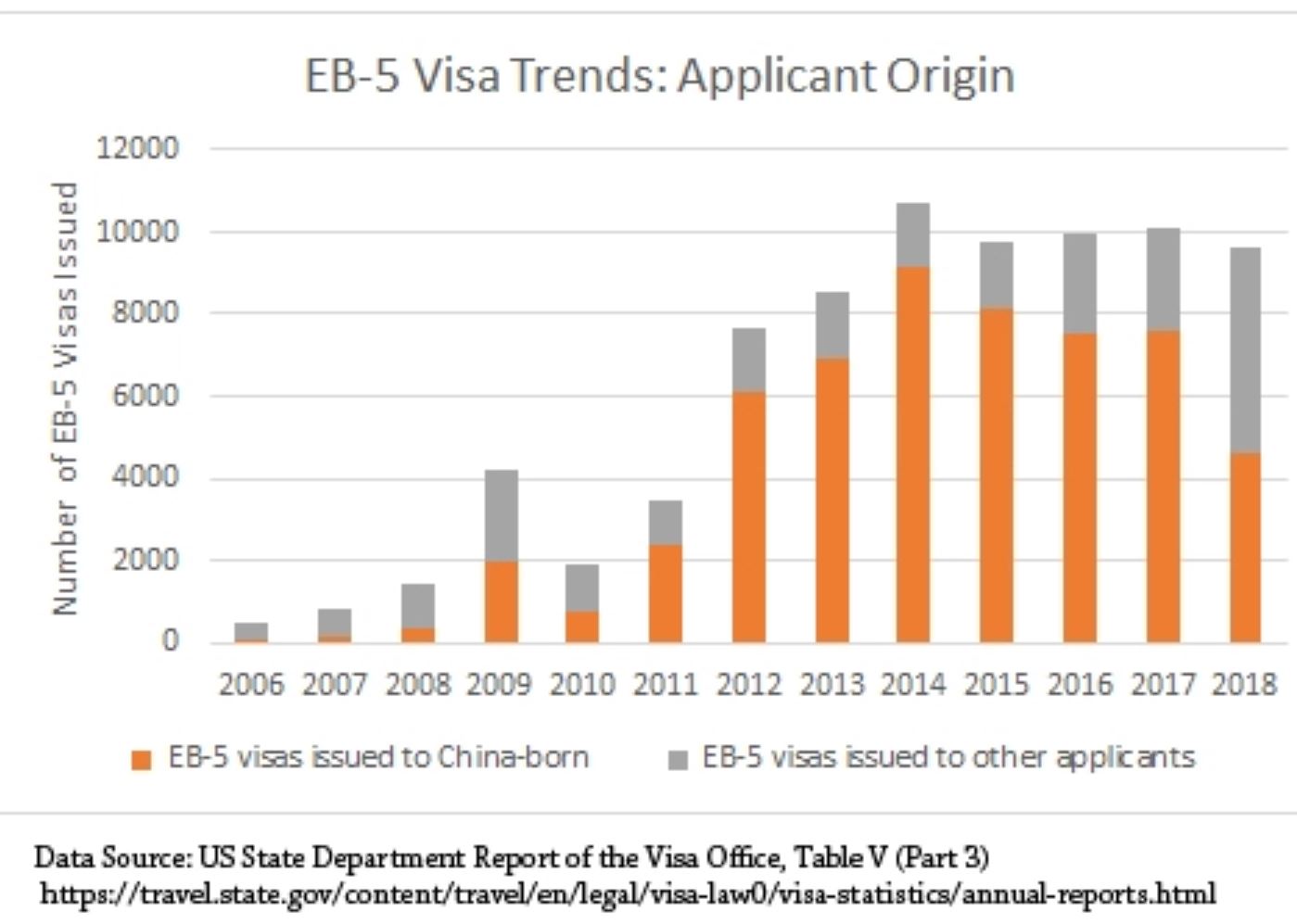
The traditional EB-5 immigrant investor program generally requires a qualifying investment that, if successful, may ultimately be recovered. The program also requires satisfaction of statutory requirements, including job creation. Approximately 200,000+/- individuals have obtained a green card through the EB-5 program. There are important unintended tax consequences that can befall individuals here: see, Oops…Did I “Expatriate” and Never Know It: Lawful Permanent Residents Beware!International Tax Journal, CCH Wolters Kluwer, Jan.-Feb. 2014, Vol. 40 Issue 1, p9).
EB-5 Visa Applicants by Country
By contrast, the Gold Card program requires a direct contribution to the federal government.
In either case, the successful applicant receives lawful permanent resident status. However, if the Gold Card ultimately serves as a pathway to naturalized U.S. citizenship, the applicant may become subject to the unique worldwide taxation regime applicable to U.S. citizens.
The Expatriation Problem
If Gold Card holders ultimately naturalize as U.S. citizens, future departure from the U.S. tax system will necessarily become significantly more complicated.
Individuals who later seek to relinquish U.S. citizenship will necessarily face the expatriation rules of IRC § 877A and be tainted with “covered expatriate” status.
As discussed in earlier posts, covered expatriate status can have substantial long-term tax consequences for both the expatriating individual and future recipients of gifts and inheritances.
Legal Questions Surrounding the Program
The Gold Card program also raises constitutional and statutory questions.
Unlike the EB-5 program, which was enacted by Congress, the Gold Card program was created through executive action. Congress did not amend Title 8 of the United States Code to establish a new immigrant category.
Whether the Executive Branch possesses sufficient statutory authority to create such a program remains an open legal question (I am doubtful it will be sustained – if challenged) and will likely be the subject of continued litigation and judicial review.
The outcome of pending litigation involving other immigration-related executive actions may provide useful guidance regarding the scope of presidential authority in this area. We await the outcome of the latest case litigated through the courts. See, Supreme Court appears likely to side against Trump on birthright citizenship which was also issued by an executive order.
Who Truly Benefits?
Who is the ideal candidate for a Trump Gold Card? Only one person thus far has one.
For almost all HNW individuals, the immigration benefits, travel flexibility, business opportunities, and potential pathway to U.S. citizenship would rarely justify the cost. Someone with assets below US$20M might find it attractive.
For almost all others—particularly those with substantial foreign businesses, investment portfolios, trusts, and family wealth located outside the United States—the long-term consequences of worldwide U.S. income, estate, and gift taxation will almost always substantially outweigh the advantages.
As a result, any prospective applicant for a Trump Gold Card should carefully evaluate not only the immigration benefits of the program (+ the uncertainty in the law), but particularly the tax consequences that will follow for decades thereafter.
Part I of Part II: The Gold Card – “It’s like the green card, but better and more sophisticated.”
Will the “gold card” sell to ultra high net worth investors around the world who want U.S. citizenship (“USC”)? What are the tax costs of USC? * About the Author: Patrick W. Martin
President Trump again announced on April 3, aboard Air Force One his plan:
Whether the U.S. adopts a new “Gold Card” “For $5 million [that] we will allow the most successful job-creating people from all over the world to buy a path to U.S. citizenship,” is up to the U.S. government.
Congress can amend Title 8 and include a new “Gold Card” option.
Current law provides the EB-5 visa as one path towards a “green card” that ultimately can lead to U.S. citizenship through naturalization.
President Trump presented at his March 4th speech to a joint session of Congress, explaining the concept: “It’s like the green card, but better and more sophisticated. And these people will have to pay tax in our country.”
Sounds like a panacea to help the U.S. federal deficit problem? If 100,000 of these “Gold Cards” were sold for $5M each, and these funds were paid directly over to the federal government, that would raise $500 billion dollars. If 1 million were sold, that would be $5 trillion dollars to use to pay down the deficit (running annually at far greater than $1 trillion dollars since 2019).
To put that into perspective, the EB-5 visa that also leads to a “green card” that can further lead to U.S. citizenship through naturalization has an annual visa limit of about 10,000. See, USCIS’s article – (16 Aug 2024) – Annual Limit Reached in the EB-5 Unreserved Category There have been multiple years where the annual visa limit was not met. Prior to 2015, the 10,000 visa limit was never met and in several years there were less than 500 EB-5 visas issued annually.
There have been less than 150,000 EB-5 visas issued over the last 35 years since its adoption in 1990. Is it realistic to be able to “sell” even ten thousand $5M gold visas annually, when the “green EB-5 visa” costs $800,000 and has had less than 150,000 issued in nearly 35 years?
Equity Investment for EB-5 visa – $800,000 (Does NOT go to the Government)
The total required equity investment amount for an EB-5 visa in the qualifying project, is only $800,000 (if in a “TEA”). See, EB-5 Immigrant Investor Program, as published by the U.S. Citizenship and Immigration Services (USCIS). See, USCIS’s Chapter 2 – Immigrant Petition Eligibility Requirements. It used to be only $500,000 (1/10th of $5M). A TEA is a targeted employment area (“TEA”) that meets specific requirements under the law. If the capital investment is not in a TEA, the required minimal capital investment amount is $1,050,000 that increases in January 1, 2027 and each 5 years thereafter. Still about 1/5th the cost of a “gold visa”.
U.S. Estate and Gift Tax Consequences for U.S. Citizens and those with a Green Card (“Gold Card”?)
Finally, maybe the biggest impact on who wants an investor visa that leads to U.S. citizenship depends largely upon the U.S. income tax and U.S. estate and gift tax consequences. There are many tax implications. See, my case Aroeste v United States – Order Nov 2023, that was appealed to the 9th Circuit by the Office of Solicitor General (DOJ). U.S. District Court ruled in favor of green card holder.
How Many Lawful Permanent Residents does the U.S. Receive (Per Year: 1820-2022)
There is an idea that only recently has permanent resident US immigration status into the United States grown substantially. The peak years were in the early 1990s as to absolute numbers. However, the greatest number of permanent residents as a relative percentage of the population was in the early 1900s; by far. See the chart below that I created from DHS immigration statistics data.
There were more LPRs admitted, in absolute terms in 1905 (1,026,499) than in 2022 (1,018,349).
[arm_restrict_content plan=”2,” type=”show”]
In percentage terms the total number of LPRs in 1905 compared to the total population was more than four times (4X) greater than in 2022 when it was (about 3/10th of 1 percent or 0.306%; versus a total population of 333 million) . In 1905 the total population was about 84 million, with newly admitted LPRs representing 1.225 percent of the entire resident population (1.225%; is greater than 4X the 2022 relative percentage).
The “Mark to Market” Tax that did NOT Exist in 1820, 1913, 1966 (Not Until 1996)
The US tax expatriation laws now impose a “mark to market” tax on so-called “long-term residents” who become “covered expatriates.” Such a concept in the tax law never existed in the early part of the 20th century, and indeed only became law in 1996. See an earlier post, The Foreign Investors Tax Act of 1966 (“FITA”) – The Origin of US Tax Expatriation law
This so-called Mark to Market tax is based upon a legal fiction, as if the individuals sold their worldwide assets on the “expatriation date.” It applies, even though there’s no current sale of assets, no disposition, transfer, change of ownership, change of title, or other “realization” event. The term “realization” is very significant in US tax law, including as recently discussed by the United States Supreme Court. See below and Moore v. the United States (2024) .
Below is a table of LPRs who were admitted to that status, per year, over the last 200+ years starting in 1820:
Are you or any of your family members one of these millions (more than 88 million) of LPR individuals represented in the above graph over the last 200+ years?
Is the “Mark to Market” Expatriation Tax Unconstitutional? – through the Prism of Moore
No Court in the land has explicitly ruled on whether the “mark to market” tax under Section 877A is unconstitutional. However, many international tax minds (myself included) have doubted the ability of Congress to levy a tax on unrealized wealth in light of Eisner v. Macomber, 252 U.S. 189 (1920) and the language of the amendment ratified in 1913 to the Constitution.
The Congress shall have power to lay and collect taxes on incomes, from whatever source derived, without apportionment among the several States, and without regard to any census or enumeration.
16th Amendment of the Constitution [emphasis added]:
One of the exceptional international tax minds, Professor Reuven S. Avi-Yonah has been writing a lot about this issue after submitting an amicus brief along with Professor Bret Wells to the U.S. Supreme Court (SCOTUS) in the Moore case which was decided last week. Moore v. United States, No. 22-800 (06/20/2024). Moore was not about “expatriation taxes” but rather a “mandatory repatriation tax” (“MRT”) under Section 965.
Moore argued some of the fundamental issues that lie at the core, in my view, of whether Congress has the legal authority to impose taxation (as an income tax) based upon the increased value of assets as of the date, the individual becomes a “covered expatriate”. How does the individual have any income (see, Eisner v. Macomber) by merely holding and having the same assets on the day prior to “expatriation” as the day after? No sales, no exchanges, no dispositions, no transfers, no gifting, etc. – and yet 26 U. S. C. § 877A imposes taxation on “income.”

 crimes involving “fraud or deceit” for purposes of the Immigration and Nationality Act (“INA”). Specifically, the Court concluded that lawful permanent residents (a husband and wife from Japan) who were convicted of filing false tax returns resulting in a tax loss exceeding $10,000 had been convicted of an “aggravated felony” within the meaning of the INA.