International Tax · Citizenship Renunciation · LPR Abandonment
International Tax Shareholder
What Is FATCA and Why Is My Foreign Bank Asking Me About My US Status?
If you received a letter from your foreign bank asking whether you are a US person, FATCA is why. FATCA (the Foreign Account Tax Compliance Act) is a US law requiring foreign banks to identify and report their American clients’ account information to the IRS. This post explains what those letters mean, what your bank is reporting, and what you should know if you are a US citizen or green card holder living abroad.
FATCA stands for the Foreign Account Tax Compliance Act. It added Chapter 4 to Subtitle A of the Internal Revenue Code, which is why your bank’s letter may use that formal legal phrase. In practice, it means one thing: foreign financial institutions are required by US law to collect information about clients who are US persons and report that information to the IRS.
If your bank’s letter references “Chapter 4 of Subtitle A of the US Internal Revenue Code,” it is simply their way of citing the statute behind their request.
Why is my foreign bank sending me a letter about my US status?
Your bank is required to ask. Under FATCA, foreign financial institutions must identify which of their clients are US persons and report those accounts to the IRS.
For many people, this letter is a surprise. A large number of US-born individuals who have lived most of their lives abroad find out for the first time, through a letter like this, that they are US income tax residents. Under the 14th Amendment of the US Constitution, being born in the United States makes you a US citizen and a US tax resident, regardless of where you have lived since.
In many cases, people first learn about their US tax obligations when they open a new account and the foreign bank asks them to provide an IRS Form W-9 along with their Social Security number.
What information does my foreign bank have to report to the IRS?
Under FATCA, your bank reports your name, your account number, your taxpayer identification number (such as your Social Security number), and income earned from your account. Some institutions are also reporting account balances, even where FATCA does not yet require it.
Your bank will ask you to certify under penalty of perjury whether you are a US person or not. That is a legally significant step, not a routine form.
Who counts as a US person under FATCA?
If you were born in the United States, you are a US person, unless one of two things is true:
You were born to diplomatic parents who were on a formal diplomatic assignment in the US at the time of your birth, or
If neither exception applies to you, you are a US person under FATCA, regardless of how long you have lived outside the United States.
What is a FATCA intergovernmental agreement?
A FATCA intergovernmental agreement (IGA) is an agreement between the US Treasury and a foreign government to exchange financial information. These agreements work in both directions: your foreign bank reports your US accounts to the IRS, and US banks may report your accounts there to your local tax authority.
This means FATCA letters are not only going to Americans with accounts abroad. Citizens of other countries are also receiving notifications that information about their US-held accounts will be shared with their home country’s tax authority. For a deeper look at how these agreements operate in practice, see The Dirty Secret of US FATCA IGAs.
What should I do if I receive a FATCA letter from my bank?
A FATCA letter is not a tax bill or a penalty notice. It means your bank is complying with its legal obligations, and that the IRS may receive information about your account.
If you are a US citizen or green card holder living abroad and have not been filing US tax returns or FBARs (FinCEN Form 114, the Foreign Bank Account Report), receiving this letter is a signal to act. Consult an experienced international tax attorney about your options.
This post provides general information only and is not legal advice. Consult an experienced attorney for guidance specific to your situation.
Why is signing an IRS Form W-8BEN a significant criminal risk for U.S. citizens living abroad?
Living or studying abroad often requires opening a foreign bank account, which is when many U.S. citizens run into IRS Form W-8BEN. While it might look like just another piece of bank paperwork, signing it as a U.S. citizen can lead to serious legal trouble. Here is a breakdown of what you need to know.
Who is legally allowed to sign Form W-8BEN?
The W-8BEN is strictly for individuals who are not “United States persons”. Under U.S. tax law (specifically IRC Section 7701(a)(30)(A)), every U.S. citizen is technically defined as a “United States person”. Because the form is a certificate of “Foreign Status,” a U.S. citizen who signs it is making a false statement about who they are. If you are a citizen, you should use Form W-9 instead to certify your status.
What specific crime is triggered by signing a false W-8BEN?
If a U.S. citizen signs a W-8BEN, they are technically committing felony perjury under IRC Section 7206(1). This is a criminal statute, not a civil one—meaning it’s about potential jail time and a criminal record, not just a tax fine. The law says it is a crime to “willfully” sign any document under penalty of perjury that you know isn’t 100% true. Since the form requires you to swear you aren’t a U.S. person, signing it as a citizen is a false statement “as a matter of law”.
Does the form need to be filed with the IRS to be considered a crime?
No. A common myth is that it only counts as a crime if you mail the form to the IRS. However, the law is much broader and covers “any statement… or other document”. This means that simply giving a signed, false W-8BEN to your foreign bank is enough to trigger the perjury statute.
How does the government prove a criminal violation?
To win a case, the government has to prove you acted “willfully”—meaning you knew the information was false but signed it anyway. While this can be hard to prove for someone who isn’t a tax expert, the government often argues that if you were born in the U.S. or grew up there, you should have known you were a citizen. They may use the fact that you signed right under a “penalty of perjury” statement as evidence that you knew what you were doing.
Why are U.S. citizens signing these forms if it is illegal?
Most of the time, it’s a mistake. Foreign banks often give Americans the wrong form by accident, and since U.S. tax laws (like Chapter 3 and Chapter 4/FATCA) are incredibly confusing, most people just sign whatever the bank tells them to. These forms have grown from simple one-page documents to 8+ pages of complex rules, making it very easy for a regular person to get overwhelmed and make an error.
What are the specific warnings for U.S. citizens?
Yes. The Form W-8BEN actually has big, highlighted warnings right at the top telling U.S. citizens not to sign it. There is also a specific section where you have to sign your name directly under a statement acknowledging the “penalties of perjury”. Because these warnings are so prominent, the government can argue that any citizen who signed the form ignored the clear instructions on purpose.
Which IRS Form Do I Give My Foreign Bank? A Guide for U.S. Expats and LPRs
If you’re a U.S. citizen or green card holder living abroad, your foreign bank will likely ask for your U.S. tax status under FATCA. The form you need is Form W-9 — not Form W-8BEN. W-8BEN is strictly for non-U.S. persons; signing it as a U.S. citizen or LPR is a false certification under penalty of perjury. Use W-9 to confirm your U.S. taxpayer status and provide your SSN.
What are all the IRS forms and their purposes?
W-9: Used by U.S. citizens and Lawful Permanent Residents (LPRs) to provide their Taxpayer Identification Number (TIN) to a third party.
W-8BEN: Used by non-U.S. individuals to certify they are not “U.S. persons” for tax purposes.
W-8BEN-E: An eight-page form used by foreign entities to identify “substantial U.S. owners”.
W-7: Used by individuals who are not eligible for a Social Security Number to apply for an Individual Taxpayer Identification Number (ITIN).
W-8IMY: A form for foreign intermediaries or flow-through entities that was substantially modified due to FATCA.
W-4: Used to determine an employee’s federal income tax withholding.
W-8ECI: Used by foreign persons to claim that income is effectively connected with a U.S. trade or business.
W-8EXP: Used by foreign governments or other foreign organizations to claim an exemption from withholding.
W-8: A general category of forms for foreign status reporting.
What are Taxpayer Identification Numbers (TINs)?
A TIN is a broad term for the identification number used for U.S. tax purposes. Its sub-types include:
Social Security Number (SSN): For U.S. citizens, LPRs, and individuals with permission to work in the U.S. under specific visas.
Individual Taxpayer Identification Number (ITIN): For individuals who are not U.S. citizens or LPRs and are ineligible for an SSN.
Employer Identification Number (EIN): For business entities such as corporations, partnerships, and trusts.
Is Form W-9 the standard for Americans abroad?
Yes. If a foreign bank or company asks for your U.S. tax status, Form W-9 is the standard form you should use. It’s how you officially tell them, “I’m a U.S. taxpayer, and here is my ID number”.
Who Can Sign Form W-8BEN?
U.S. Citizens: They cannot sign this form. Doing so would be a false certification that they are not a “U.S. person” under federal tax law.
Lawful Permanent Residents (LPRs): Generally, they also cannot sign this form, as they are considered U.S. persons for tax purposes.
Former Citizens with a CLN: While the source highlights the importance of a Certificate of Loss of Nationality (CLN) in relation to FATCA status, it does not explicitly state that holding one allows for the signing of a W-8BEN, though it notes that only non-U.S. persons can legally sign the form.
What are the banking requirements for U.S. Persons?
When a bank asks for tax status, a U.S. person should sign Form W-9. However, many Foreign Financial Institutions (FFIs) use substitute forms that comply with regulations but may not look exactly like the official IRS version.
What is the Form W-8BEN-E?
Who completes it: Non-Financial Foreign Entities (NFFEs).
Definitions: A “substantial U.S. owner” is generally a U.S. person who holds a 10% or greater economic interest in the foreign entity.
Burdens: The form is eight pages long and requires the user to understand over 450 pages of FATCA regulations to select from roughly 30 different categories.
Consequences: The form is signed under penalty of perjury. Due to its complexity, the source notes that many “good faith errors” are inevitable.
When does the 8-page Form W-8BEN-E become necessary?
This massive 8-page form is usually for businesses, not just individuals. If you own 10% or more of a foreign company, that company has to use this form to report you to the IRS as a “substantial U.S. owner”.
What are the risks of misfiling these complex entity forms?
It’s a major headache because the instructions for these forms are over 450 pages long, and you have to pick from about 30 different categories. If you check the wrong box, even by mistake, you’ve technically signed a false legal document under penalty of perjury.
Why are foreign banks suddenly demanding this information?
Because of a law called FATCA, banks all over the world—including those in China and Hong Kong—are now required to hunt down and report data on any account holders who might be U.S. taxpayers.
How does this affect my ability to maintain a bank account?
It puts you in a “Catch 22” situation. If you live abroad and want to open or keep a local bank account, you are often forced to give up this private tax info to the bank, or they might refuse to work with you.
Most important Questions for “Green Card” Holders (“lawful permanent residents”): Part I of VI
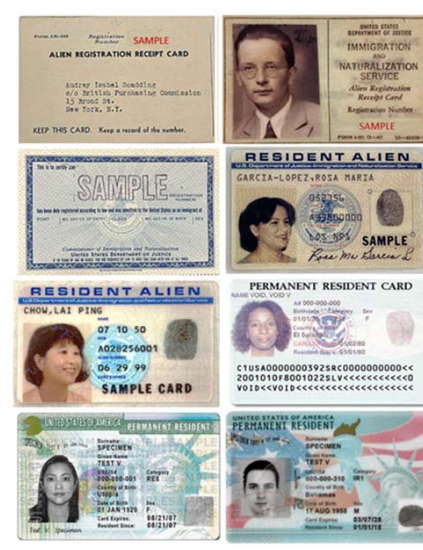
Those individuals who have green cards and live in and outside of the United States, should understand the tax and legal implications to them.
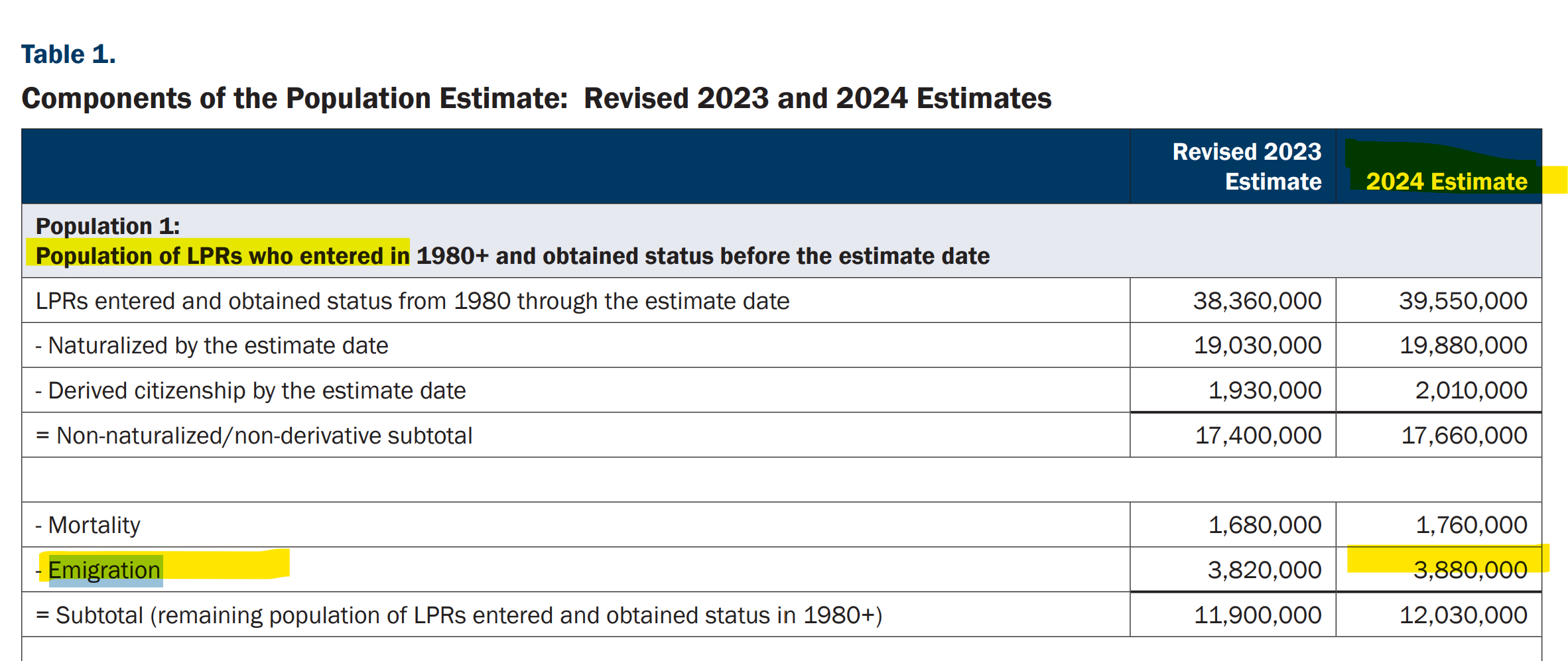
There are millions of individuals in this category. i.e., those who have “emigrated” with an “e” from the United States. There are 3.88 million of these green card holders, as of 2024 according to the U.S. federal government’s latest report. The statistics are striking – that so many individuals reside outside the U.S.
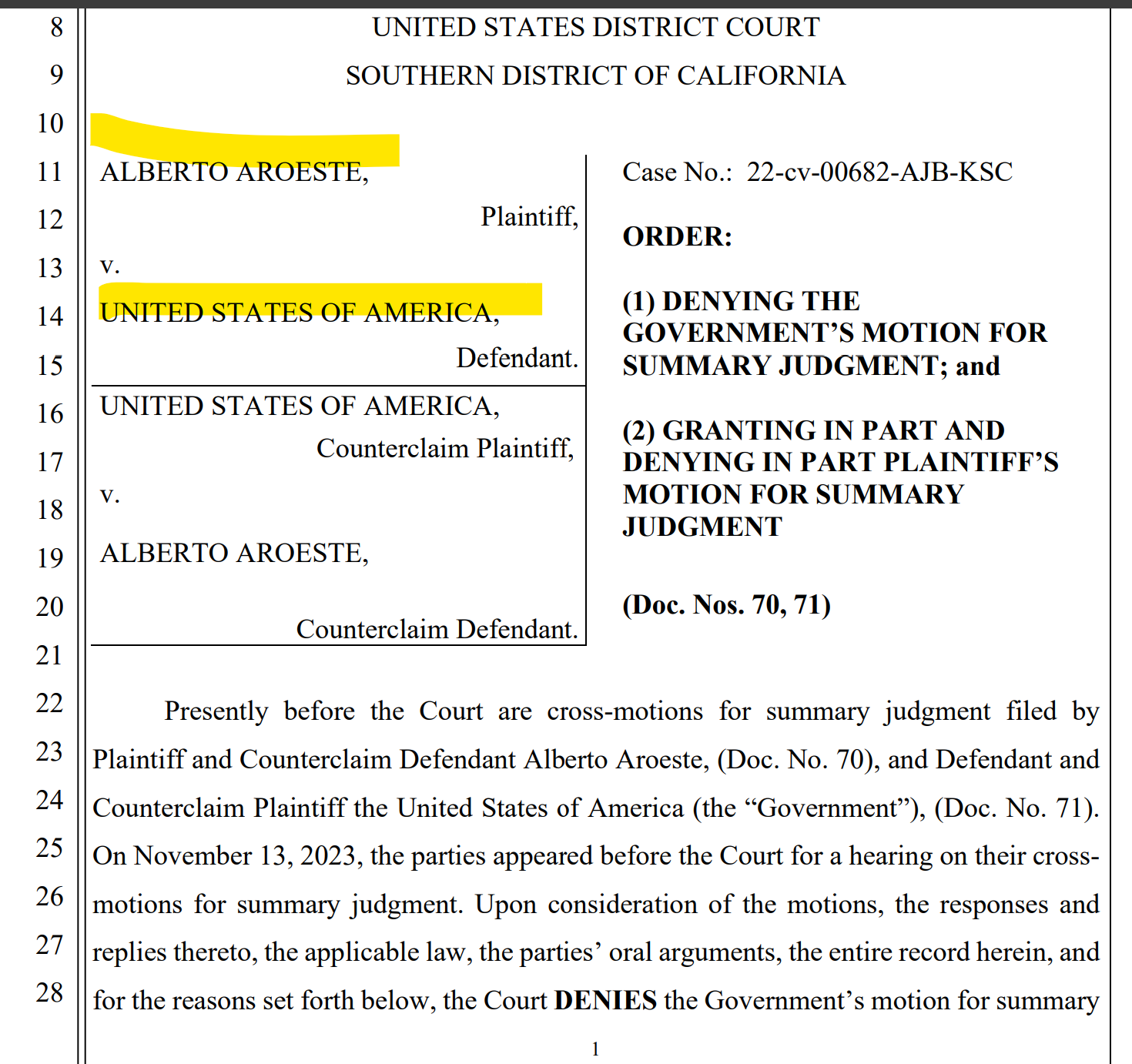
These nearly 4 million individuals who do not reside principally in the U.S. are similar to the fact pattern of Mr. Aroeste residing in Mexico City. See the case where yours truly, Patrick W. Martin, was lead counsel in that landmark case – and the analysis of the District Court in Aroeste v. United States. The government lost.
Today’s post is a series of simple and key questions for those with green cards, to help them better hone in on the legal issues and U.S. tax risks that may be applicable to them:
Am I still a U.S. taxpayer?
What does it mean to be a U.S. taxpayer, when there are technical tax terms such as “United States person” and an individual who is a “lawful permanent resident” (not defined in the immigration law)?
I have a green card but I’ve lived outside the U.S. for years — do I still have to file U.S. tax returns?
The date on my physical green card has expired – does that mean I am no longer a a “lawful permanent resident” for tax purposes?
Does it matter whether my green card is expired, taken back at the airport, or just sitting in a drawer overseas?
Is there a difference between “giving up” my green card and just letting it lapse?
Aroeste v. United States — what does it mean for me? –
Why are all of the above questions so important to me – since I previously obtained a “green card”?
Subsequent posts will address additional key questions that can have a significant legal consequence to individuals who had or have a green card and spend substantial time outside of the United States. For a preview, look at Oops.. .Did I Expatriate and Never Know It – International Tax Journal 2014
Does TIGTA have the Answer: to the Question – How many former U.S. citizens and long-term lawful permanent residents have filed and should have filed IRS Form 8854?
The short answer to the question above – is NO!
The government does not know how many IRS Forms 8854 should have been filed.
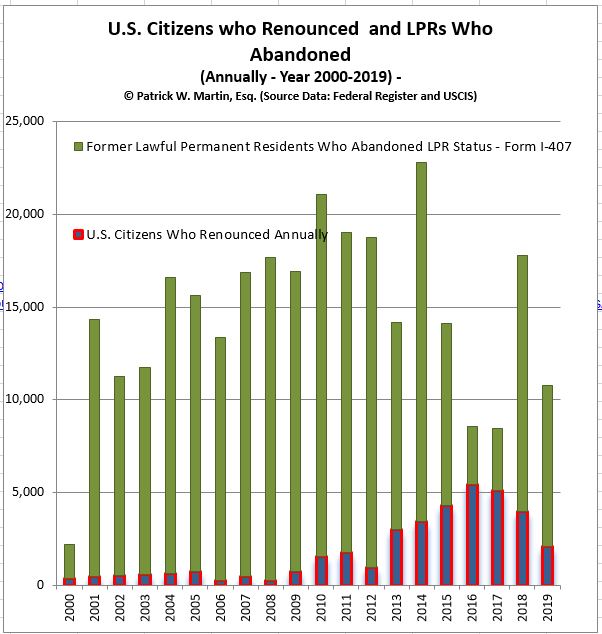
Note the total numbers of 8854 returns filed as reported in Figure 2 of the TIGTA Report were less than 25,000 during a ten year period. This report focuses really only on former U.S. citizens (“USC”) who have renounced their citizenship. Not on lawful permanent residents (“LPRs), which during that same ten year period there were around 200,000 who filed USCIS Form I-407.
* How Many Individuals Should have Filed Form 8854?
Quaint?: U.S. Treasury 1998 Report: Income Tax Compliance by U.S. Citizens and U.S. Lawful Permanent Residents Residing Outside the United States and Related Issues (Part I of Part II)
This is a classic report that now reads quaintly.
This 1998 U.S. Treasury report was written before the IRS and the Department of Justice started enforcing what has now become numerous international information reporting penalty provisions in the law. The author watched the change over these years, and the introduction of some new statutory penalties (e.g., 26 USC § 6039F in 1996; § 6039D in 2010; § 6039G in 1996; and major modifications in 2010 to § 6048, among others and increased FBAR penalties). Most importantly, the biggest change was how international individual taxpayers can (and often are) severely penalized by the IRS.
This 1998 report is full of sensible ideas. The Treasury explains the complex tax laws applicable to United States citizens (“USCs”) and lawful permanent resident (“LPR”) residing outside the U.S. The report has suggestions on how to best educate international taxpayers living overseas who are impacted by these laws.
Fast forward more than 25 years later (post 9/11/2001; post USA Patriot Act of 2001; post Swiss Bank scandals 2009+; post FATCA 2010+, etc.) and we are in a world of international tax penalties galore.
The U.S. international tax world in 2024 is a very different world, even though the core of the U.S. international tax law of how much tax is owing has largely remained the same for individuals. The calculation of income taxes for USCs and LPRs living overseas in 2024 is largely the same as it was in 1998. Plus, the IRS reports that only 10,684 resident income tax returns (IRS Form 1040) were filed by these individuals living overseas in the last year the IRS Office of Statistics reporting tax returns with IRS Form 2555 (Foreign Earned Income).
What has changed over these years is the IRS enforcement and easy found money on penalty collections. One example is the penalty for reporting tax-free gifts and inheritances. The reporting requirement of that law (26 U.S. Code § 6039F – Notice of large gifts received from foreign persons) was adopted in 1996.
The IRS has been increasingly aggressive in asserting international tax penalties: The available data shows . . . there were over 4,000 penalties assessed against individuals and businesses, totaling $1.7 billion [just for this penalty under 6039F]. During this period, the average penalty was . . . $426,000 . . .
Taxpayer Advocate Report (2023): Most Serious Problem #8 – The IRS’s Approach to International Information Return Penalties Is Draconian and Inefficient
The IRS assessed US$1.7 billion of penalties for this simple 6039F reporting violation over the four years of 2018-2021. The 2018 amounts tripled or quadrupled in subsequent years (e.g., $77M v. $238M v. 282M). Not all of these taxpayers are residing overseas, but certainly USCs and LPRs residing outside the U.S. are likely to encounter foreign gifts and foreign bequests, simply because their lives are foreign!
On the flip side, there have been few favorable changes to the U.S. citizen and lawful permanent resident (“LPR”) living outside the U.S. over these 25 years.
The most favorable developments have come in the last year or so. Importantly, the U.S. Supreme Court rejected the IRS interpretation of multiple per year non-willful FBAR penalties inUnited States v. Bittner, 143 S. Ct. 713 (2023). The author of this blog worked on the ACTEC amicus brief in Bittner, cited by the majority opinion (Justice Gorsuch) and the dissent (Justice Sotomayor).
Also of significance for individuals living in tax treaty countries is the case of Mr. Aroeste. The author of this blog represents the Mexico City resident who had not formally abandoned his LPRs. The case law provides significant relief for different groups of international taxpayers pursuant per the ruling by the federal district court in Aroeste v United States, 22-cv-00682-AJB-KSC (20 Nov. 2023). That case had over $3M of penalties assessed for IRS Forms 5471, 3520 and FBAR filings.
Plus, the DOJ conceded the penalty assessed against a Polish immigrant for a foreign gift in Wrzesinski v. United States, No. 2:22-cv-03568, (E.D. Pa. Mar 7, 2023) for not filing IRS Form 3520 based upon reasonable cause. Finally, the U.S. Tax Court decision in Farhy v. Commissioner of Internal Revenue (2023) concluded the IRS could not automatically assess penalties for not filing IRS Form 5471.
Indeed, the international tax world has changed much over this past quarter century since the 1998 U.S. Treasury report. These recent string of cases in favor of international taxpayers is starting to look like a positive trend. See, Six Weeks, Three International Information Reporting Decisions (18 Sept. 2023).
Short Window of Wait Times for CLN: One Month to 6 Weeks?
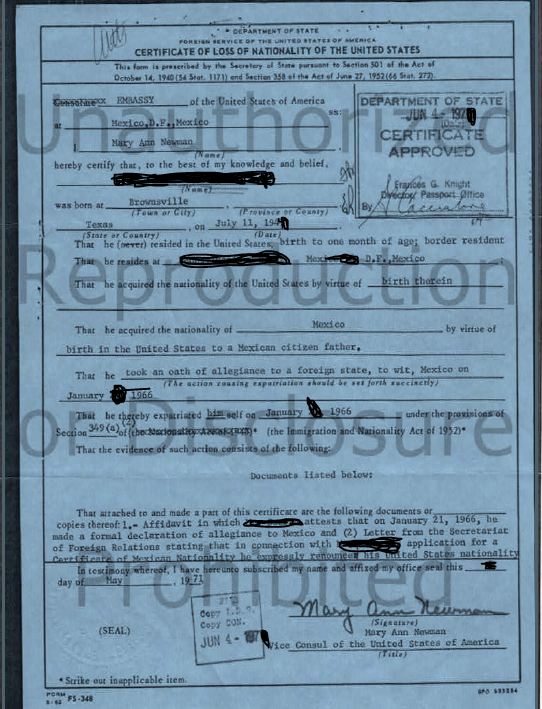
The wait times for the State Department to issue a Certificate of Loss of Nationality (“CLNs”) used to be quite long, based upon the author’s experience with various clients. That has all changed since about the beginning of this year 2023. The author has seen cases that are taking less than 6 weeks from the date of the meeting to take the oath of renunciation before a consular officer.
The press release of the Belgian Protection Authority from May 24, 2023 provides:
The Belgian Data protection authority today declared unlawful, and decided to prohibit, the transfers of personal data of Belgian “Accidental Americans” by the Belgian Federal Public Service Finance (FPS Finance) to the US tax authorities under the intergovernmental FATCA agreement. According to the Belgian DPA, the data processing carried out under this agreement does not comply with all the principles of the GDPR, including the rules on data transfers outside the EU. It also asks the FPS Finance to alert the competent legislator of the shortcomings identified by the DPA.
It is interesting that the term “Accidental Americans” is used in the release. The individual who filed the complaint is a dual Belgian and American citizenship and from the “Accidental Americans Association of Belgium.” The official website of the DBA provides the summary in part as follows:
Conclusions of the Litigation Chamber
The Litigation Chamber concludes that the transfers of data of Americans residing in Belgium to an authority located in a country outside the EU (which cannot offer an adequate level of data protection) are unlawful. For this reason, the Belgian DPA prohibits the FPS Finance from processing the complainants’ data and asks it to alert the competent legislator of this prohibition and of the shortcomings found.
The Belgian DPA also orders the FPS Finance to inform in a complete and accessible manner the data subjects of the data processing carried out as part of the FATCA agreement and of its modalities. It also asks to carry out a “DPIA” which is an analysis of the risks associated with this data processing.
The parties can appeal this decision.
Hielke Hijmans, Chairman of the Litigation Chamber, concludes: “Ordering the cessation of data flows to the United States under the FATCA agreement may seem harsh, but once we find that they do not comply with the applicable law, we are obliged to stop these data flows. This principle has been confirmed in the rulings known as the “Schrems rulings”.
The full decision in French can be reviewed here –
The federal tax law has a very transparent system of reporting and identifying former U.S. citizens who have renounced their citizenship. The data with the names of each individual are published quarterly on the federal government’s website as Required by Section 6039G. The complete set of lists including thousands of names of former U.S. citizens going back to the mid-1990s can be reviewed here. Quarterly Publications. Quarterly Publication of Individuals, Who Have Chosen to Expatriate.
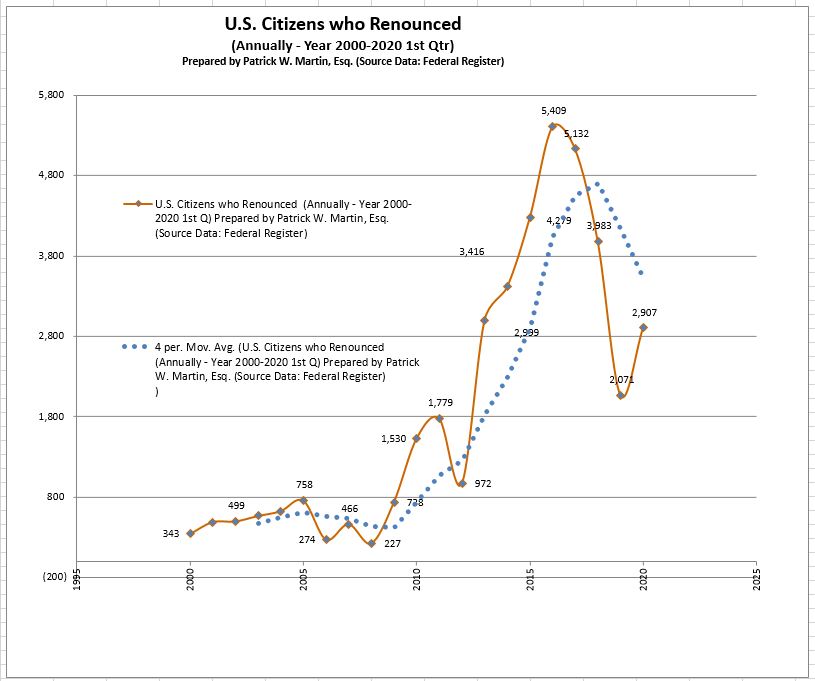
See previous posts regarding the numbers of USCs who were renouncing at an increasingly rapid pace starting at just around and just before the year 2010. The FATCA transparency laws were passed in 2010 and so too were more international information reporting requirements (IRC 6038D) and strong enforcement efforts overseas by the IRS and DOJ Tax Division; which could be part of a cause and effect consequence? See, CHAPTER 4—TAXES TO ENFORCE REPORTING ON CERTAIN FOREIGN ACCOUNTS (§§ 1471 – 1474)
Posted on : The current renunciations and now steep decline starting in 2018 may be temporary or part of a trend?
Subsequent posts will discuss the new trend of how relatively fewer lawful permanent residents (“LPRs”) are formally abandoning their status compared to USCs who formally renounce. This is true even though the number of USCs renouncing is in decline.
Will Treasury Ever Finalize the 2801 Regulations? Meanwhile – U.S. beneficiaries are exposed to tax on “covered gifts” and “covered bequests.”
Treasury has not yet finalized the 2801 regulations. The tax that is imposed under Section 2801 was passed into law in 2008, yet the collection of the tax has been suspended until the regulations are finalized.
First, the collection of the tax has been suspended until after guidance is issued along with IRS Form 708.
Second, this is the first U.S. federal tax of its kind as a true “inheritance” tax, in the case of bequests. It is also apparently the first tax of its kind on the recipient of gifts, which are otherwise exempt from income tax.
Third, the IRS has no way to help effectively track the tax, its application, collection and general enforcement.
Fourth, there is no basic guidance beyond the statute for “any United States citizen or resident” who receives such a gift or a bequest to make a host of decisions to properly determine or calculate the tax.
Fifth, presumably no “United States citizen or resident” has ever even paid such a tax, due to its suspension; although the law is now almost six years old.
Sixth, the statute imposes no time requirement for when the tax must be paid.
Seventh, since many of the assets likely to be gifted or bequeathed will be located outside the U.S. in different countries with different currencies and economic variables and legal systems compared to the U.S., there is a particular need to know the allowable methods of valuing the property gifted or bequeathed.
Eighth, Chapter 4 of Subtitle A, FATCA will bring greater awareness of U.S. tax law requirements for U.S. citizens and residents living outside the U.S., specifically including Section 2801.
Ninth and finally, there have been a record number of U.S. citizens who have renounced or relinquished their citizenship during the year 2013, which increases the number of affected taxpayers who might receive covered gifts or bequests.
Finally, there have been other thoughtful comments, including from ACTEC regarding the proposed 2801 proposed regulations – but still no final regulations and no statute of limitations periods running against the government to collect taxes which may be owing going back nearly 10 years!!






 still are not final. See,
  systems compared to the U.S., there is a particular need to know the allowable methods of valuing the property gifted or bequeathed.