U.S citizens (USCs) and Lawful Permanent Residents (LPRs): Caution When Making Gifts. US Tax Court Recently Ruled a 1972 Gift by Sumner Redstone Still Open to IRS Challenge
The statute of limitations is one of the most important considerations for any individual when considering what tax consequences the Internal Revenue Service (“IRS”) might argue they have for years past. This can occur many years into the future as explained further below. 
Former USCs and LPRs can be in a particularly precarious position, as was recently demonstrated by a U.S. Tax Court case for a gift that was made decades ago in 1972. See, Redstone vs. Commissioner (TCM 2015-237). Although this U.S. Tax Court case involving Sumner Redstone had nothing to do with renunciation of citizenship, it shows how the IRS can reach back many years and even decades in assessing taxes it claims are owing. The newly (in year 2010) added IRC Section 6501(c)(8) makes this highly likely under current revised law.
Former USCs and any U.S. beneficiaries of theirs (e.g., U.S. resident children or grandchildren who might receive gifts or bequests from the former USCs) should be cognizant of the statute of limitations. See a prior post from 2014, When the U.S. Tax Law has no Statute of Limitations against the IRS; i.e., for the U.S. citizen and LPR residing outside the U.S.
As this prior post noted, there are at least three basic scenarios when there is no statute of limitations for federal tax matters are as follows:
1. The former USC or LPR does not file a U.S. income tax return, when they had a requirement to so file. IRC Section 6501(c)(3). See a post from 2014, When do I meet the gross income thresholds that require me to file a U.S. income tax return?
2. There is fraud on the part of the taxpayer (e.g., the taxpayer intentionally does not report income). IRC Sections 6501(c)(1), (c)(2).
3. The USC or LPR fails to report certain foreign transactions, including inadvertently neglecting to report. IRC Section 6501(c)(8). This rule was only recently adopted as part of the “HIRE Act” which also created FATCA. The types of transactions set above in the table provides a brief summary of when transactions can give rise to an “open” statute of limitations period. In other words, as many years and decades can pass (see Redstone 1972 gift transaction) before the IRS ever has to make a proposed assessment of taxes and penalties. These include numerous ownership or economic interests in foreign (non-U.S.) companies, partnerships, foreign trusts, foreign investment accounts, among others.
This is indeed one of those areas where the IRS can argue a “gotcha moment”; simply because the former USC or LPR was not aware of the extremely complex rules of reporting assets (normally in their own country of residence outside the U.S.). The consequences to these families can go on indefinitely, per post from September 2015, Finally – Proposed Regulations for “Covered Gifts” and “Covered Bequests” Issued by Treasury Last Week (Be Careful What You Ask For!)
For a more in depth review of the international (non-U.S.) transactions that give rise to this reporting, see IRS Forms 3520, 3520-A, 5471, 8865, 5472, 8938, 8858, 926 among others.
Foreign Government Receives a “FATCA Christmas Gift” from IRS: 1 Gigabyte of U.S. Financial Information
The last post discussed how the director of the Mexican tax administration was critical of the U.S. federal government for not providing FATCA information on U.S. financial accounts. See, Foreign Government Criticizes U.S. Government for 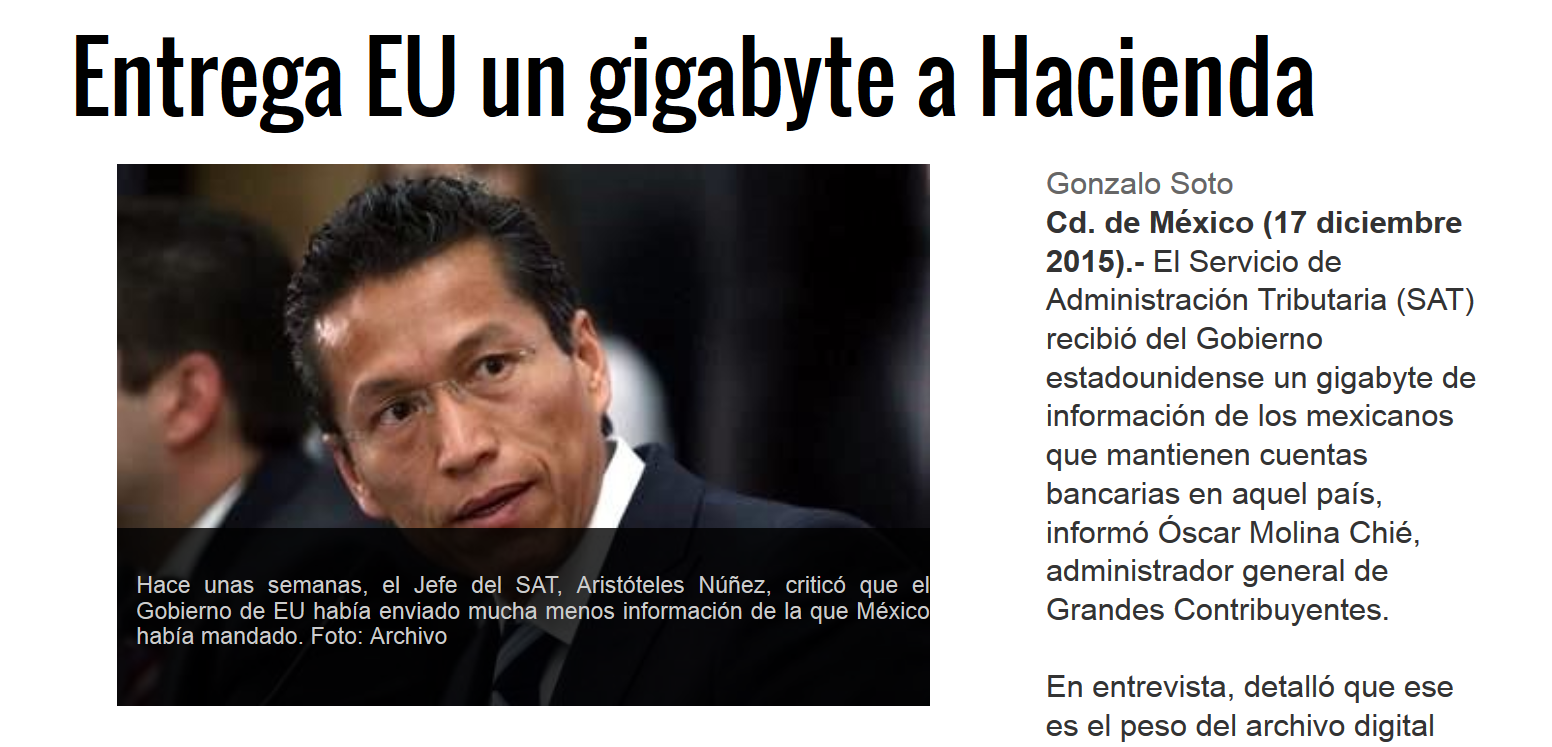 NOT Providing FATCA IGA Information on Their Taxpayers with U.S. Accounts, dated December 14, 2015.
The automatic exchange of bank and financial information is driven by the U.S. Treasury driven Intergovernmental Agreement (IGA).
As a follow-up, the Mexican newspaper Reforma reported on the 17th of December that the U.S. just provided Mexico’s treasury with a gigabyte of Mexican taxpayer information regarding U.S. financial and bank accounts. See, Entrega EU un gigabyte a Hacienda, dated Dec 17, 2015.
This news comes on the heals of the earlier criticism by the Commissioner of the Mexican IRS (SAT – Servicio de 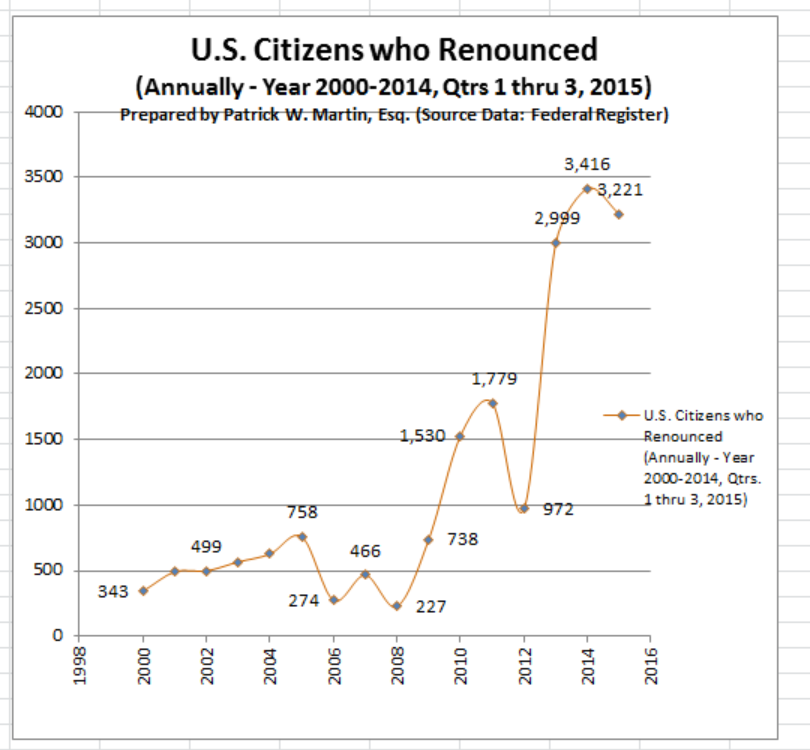 Administración Tributaria (SAT)), Mr. Aristóteles Núñez Sánchez. The Reforma article quotes Óscar Molina Chié (who is in charge of the large taxpayers division at SAT) generously regarding how and what information was provided by the U.S. federal government.
Finally, the article emphasized that Mexico has sent the IRS information regarding Mexican bank accounts of U.S. citizens.
The question is how much Mexican bank and financial information has actually been provided by SAT of the hundreds of thousands (if not more than 1 million) dual national taxpayers, who are citizens of both Mexico and the U.S.? See, Where the IRS will likely look overseas: USCs are Millions Yet U.S. Tax Returns are Just a Few Hundred Thousand, dated January 28, 2015.
Foreign Government Criticizes U.S. Government for NOT Providing FATCA IGA Information on Their Taxpayers with U.S. Accounts
This news is ironic. The U.S. government has chastised various banks and governments around the world since 2009 for not providing financial information on U.S citizens (USCs) and other U.S. taxpayers regarding their foreign bank and financial accounts. See, How Congressional Hearings (Particularly In the Senate) Drive IRS and Justice Department Behavior, posted Sept 8, 2014. 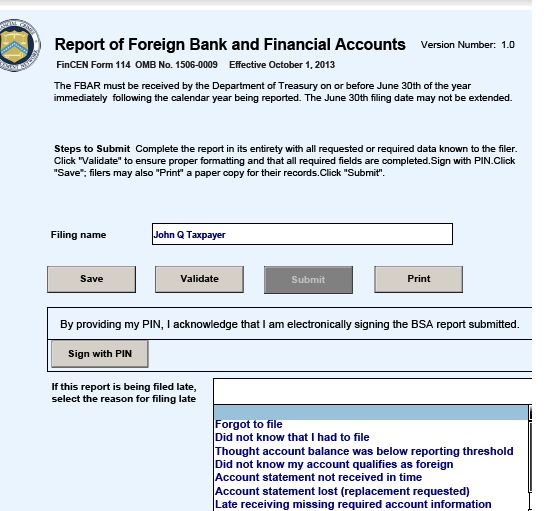
Now, it is foreign governments’ turn, to criticize the U.S. Treasury and IRS for not keeping up with its promises to provide U.S. financial and bank information on taxpayers of their countries pursuant to all of the FATCA Intergovernmental Government Agreements (IGAs) that were pushed so hard by U.S. Treasury. See, FATCA IGA with Hong Kong Signed: U.S. Citizens and Lawful Permanent Residents Residing in or Around Hong Kong Need to Know, posted on Nov. 17, 2014.
The Commissioner of the Mexican IRS (SAT – Servicio de Administración Tributaria (SAT)), Mr. Aristóteles Núñez Sánchez just announced that the U.S. government is not holding up its side of the bargain under the U.S.-Mexico IGA. See, the Dec. 12, 2015 article en the national Mexican newspaper, El Universal, EU incumple entrega de informacion: SAT: Mexico ha hecho su parte, asegura Aristóteles Núñez
The article, which is in Spanish, explains that Mexico has complied with its obligations under the IGA by providing detailed information about U.S. taxpayers with accounts in Mexican financial institutions to the U.S. government. However, the U.S. government has not complied with its side of the bargain. The news report says no specific details were provided by Mr. Núñez about what type of information was provided.
Revocation or Denial of U.S. Passport: More on new section 7345 (Title 26/IRC) and USCs with “Seriously Delinquent Tax Debt”
New Section 7345 completely modifies how U.S. citizens (“USCs”) living and traveling around the world have to now consider very seriously actions taken by the Internal Revenue Service (“IRS”). It is the IRS which now holds the power under this new law that requires the U.S. Department of State (“DOS”) to revoke or deny to issue a U.S. passport in the first place.

New Section 7345(e) provides in relevant part as follows: “upon receiving a certification described in section 7345 of the Internal Revenue Code of 1986 from the Secretary of the Treasury, the Secretary of State shall not issue a passport to any individual who has a seriously delinquent tax debt described in such section. . . ” [emphasis added].
This new law mandates (not at the discretion of the DOS) that various U.S. passports be denied at the direction of the IRS. Once the IRS issues the certification of “seriously delinquent tax debt.”
All it takes, is for the IRS to claim tax or penalties are owing of at least US$50,000 through an assessment (plus start a lien or levy action).
Of course, US$50,000 sounds like a large sum for many modest USCs, until an individual understands that there are a host of international reporting requirements for taxpayers. Specifically, the IRS can impose a US$10,000 penalty for each violation of failing to complete and file various IRS information forms; EVEN IF NO income  taxes are owing. See IRS website – FAQs 5 and 8 regarding civil penalties (see also How is the offshore voluntary disclosure program really working? Not well for USCs and LPRs living overseas).
For a summary of these forms and filing requirements, see a prior post, Oct. 17, 2015, Part II: C’est la vie Ms. Lucienne D’Hotelle! Tax Timing Problems for Former U.S. Citizens is Nothing New – the IRS and the Courts Have Decided Similar Issues in the Past (Pre IRC Section 877A(g)(4))
Indeed, our office has seen and assisted numerous taxpayers around the world where the IRS has assessed tens of thousands, hundreds of thousands and in some cases in excess of US$1M (in proposed assessments) against an individual for failure to simply file information reporting forms. See, for instance, a prior post on Nov. 2, 2015, Why Most U.S. Citizens Residing Overseas Haven’t a Clue about the Labyrinth of U.S. Taxation and Bank and Financial Reporting of Worldwide Income and Assets
Also, we have seen several IRS assessments of income tax (not just penalties) against individuals of hundreds of thousands of dollars which are not supported by the law. For instance, it is not uncommon for the IRS to issue a “substitute for return” alleging income taxes owing. See, How the IRS Can file a “Substitute for Return” for those USCs and LPRs Residing Overseas, posted Nov. 8, 2015. We have a number of those cases pending, where the IRS has taken erroneous information and made such assessments against USCs residing and working outside the U.S. for much if not most of their professional lives.
New Section 7345 requires that USCs, wherever they might reside, take great care in knowing about any actions the IRS might be taking against them; as to tax and penalty assessments, whether or not they are supported under the law.
One basic method of learning more about the activities of the IRS is to make a transcript request directly to the IRS regarding the status of a USC’s federal tax status according to IRS records. See, IRM, Part 21. Customer Account Services . . . Section 3. Transcripts.
It is also possible for the USC to obtain additional tax information from the IRS through a Freedom of Information Act (“FOIA”) request.
Denial of U.S. Passports: President Obama and Congress Pass Law that will Require Department of State to Deny a U.S. Passport for a “Seriously Delinquent Taxpayer”
Entry in and out of the U.S. has just gotten more problematic under a new law for those U.S. citizens who the IRS asserts owes taxes. A new statutory concept has been added to the tax law called “seriously delinquent tax debt”; which is defined by new IRC Section 7345 as a tax that has been assessed, is greater than US$50,000, and where a notice of lien has been filed or levy made.
Prior posts have addressed current legal requirements surrounding social security numbers for U.S. federal tax compliance purposes. See, USCs without a Social Security Number (and a Passport) “Cannot?” Travel to the U.S., posted on May 17, 2015.
Other posts have focused on the dilemma facing U.S. citizens (USCs) who have no social security number (“SSN”). See an older post (23 July 2014) – Why do I have to get a Social Security Number to file a U.S. income tax return (USCs)?
The Joint Explanatory Statement of the Committee of the Conference provides the key provisions summary of the law as follows:
***
The Supreme Court Denies Certiorari for USC Taxpayer Who Claimed Foreign Earned Income Exclusion
The U.S. Supreme Court only rarely takes tax cases for certiorari review. It is common that no more than one federal tax case is reviewed by the U.S. Supreme Court during their entire annual term.
Accordingly, it was not surprising that the U.S. Supreme Court refused to hear a decision of a Hong Kong-based flight attendant who as a U.S. citizen took the foreign earned income exclusion (“FEIE”) pursuant to IRC Section 911 on all of her income. The Treasury Regulations §1.911-3(a) have a specific rule regarding source of income and provides: “Earned income is from sources within a foreign country if it is attributable to services performed by an individual in a foreign country or countries.”
The IRS assessed tax and a 20% “negligence” penalty against the Hong Kong based flight attendant Ms. Yen-Ling K. Rogers. Judge Cohen of the U.S. Tax Court wrote the 2013 opinion, Rogers vs. Commissioner, TC Memo. 2013-77 – U.S. Tax Court
See prior posts on the FEIE; The Foreign Earned Income Exclusion is Only Available If a U.S. Income Tax Return is Filed, April 21, 2014.
See also USCs and LPRs Living Outside the U.S. – Key Tax and BSA Forms, dated March 17, 2014 that discusses in some detail IRS Form 2555.
The Court of Appeals for the District Of Columbia upheld the Tax Court and the Supreme Court let stand the Court of Appeals decision.
Survey of the Law of Expatriation from 2002: Department of Justice Analysis (Not a Tax Discussion)
Most discussions regarding renunciation/relinquishment of U.S. citizenship are highly focused towards the U.S. federal tax consequences. Today, the focus is on a 2002 report prepared by the DOJ for the Solicitor General, who supervises and conducts government litigation in the United States Supreme Court.
The report is found here, and I have highlighted some key excerpts: Survey of the Law of Expatriation: Department of Justice Analysis:
* * *
Another Common Misunderstanding of U.S. Tax Laws (Myth No. #8)
Myth #8: As a U.S. citizen (USC) there is no need to pay tax on income or gains from assets outside the U.S., as long as the proceeds are not repatriated to a U.S. bank or financial institution.
As a follow-on to the post of Nov. 19, 2015, See WSJ = World/Expats – For an Excellent Overview of U.S. Taxation for U.S. Citizen Individuals in Plain English, I just heard this one this past week from a cross border businessman. It has a perfect logic to it the same as the idea that a controlled foreign corporation that moves cash to its own U.S. bank account (as opposed to a financial account outside the U.S.), is subject to U.S. income taxation at that moment.
Laypeople often focus on – “where is the money” not “who has *’recognized’ the income” irregardless of where the money or property is physically located.
This international business operator is thoughtful and has been doing cross border business for some 20+ years with a principle part of his business outside the U.S.; although he is a dual national citizen and hence necessarily a U.S. income tax resident.
It’s a fairly common misunderstanding that I have seen multiple times in my career.
The federal tax law does not look to where the property or income is physically located or earned; unlike some countries which have a territorial based taxation system for individuals, e.g., Costa Rica, Hong Kong, Malaysia, Panama, Singapore and Paraguay, among many others which are smaller economies.
Plus, the federal tax law is not changed by the laws of the country where the income was earned.
Instead, the tax law looks to who “recognized”* the income, irrespective of where the property or cash from that income is located.
A common sense example brings home the concept. Assume you live in Georgia (the one next to Florida not Russia) and sell real estate in Texas and leave the proceeds from the sale in a Texas bank. Texas may not impose individual income taxation on the sale of the Texas real estate (where the property was physically located), but still the state of Georgia looks to who earned the income. In this case, the income was earned by a resident of Georgia, so Georgia imposes taxation on the income from the sale, even though the cash proceeds from the sale are left in a Texas bank.
By analogy, this is how the U.S. federal government imposes taxation; with one important break in the analogy. The U.S. federal government treats USCs as income tax residents, irrespective as to where they reside; whereas George only taxes those who are physically resident in their state on a worldwide basis.
For instance, a U.S. citizen residing in Singapore, who sells real estate in a country outside both the U.S. and even Singapore, e.g., Malaysia where the tax rate on the real estate capital gains is 0%, will have earned that income in Malaysia (the where). Even if the U.S. citizen keeps his funds in a Malaysian bank or even moves the funds to a Singapore bank the country of residence (still the where), he or she will be subject to U.S. income taxation, since the USC status (the who) creates tax residency irregardless of the physical residency. See, Supreme Court’s Decision in Cook vs. Tait and Notification Requirement of Section 7701(a)(50) posted June 27, 2014 and The U.S. Civil War is the Origin of U.S. Citizenship Based Taxation on Worldwide Income for Persons Living Outside the U.S. ***Does it still make sense? posted April 1, 2014.
It does not matter that the funds are not moved to a U.S. bank account, just like it did not matter for the Georgian resident that she kept her proceeds from the Texas real estate sale’s transaction in a Texas bank.
- * The term “recognized” is a technical U.S. federal tax term that determines at that moment in time a U.S. taxpayer has income for federal tax purposes; and hence, generally the requirement to report the income on their tax return.
See WSJ = World/Expats – For an Excellent Overview of U.S. Taxation for U.S. Citizen Individuals in Plain English
For an excellent overview (without penalty hype or exaggeration of the U.S. tax law), read the following article from Eric Scali of H&R Block’s expat-focused service titled –Puncturing 7 Common Myths about U.S. Expat Tax Rules, Nov. 15, 2015, WSJ = Globe, EXPAT, For global nomads everywhere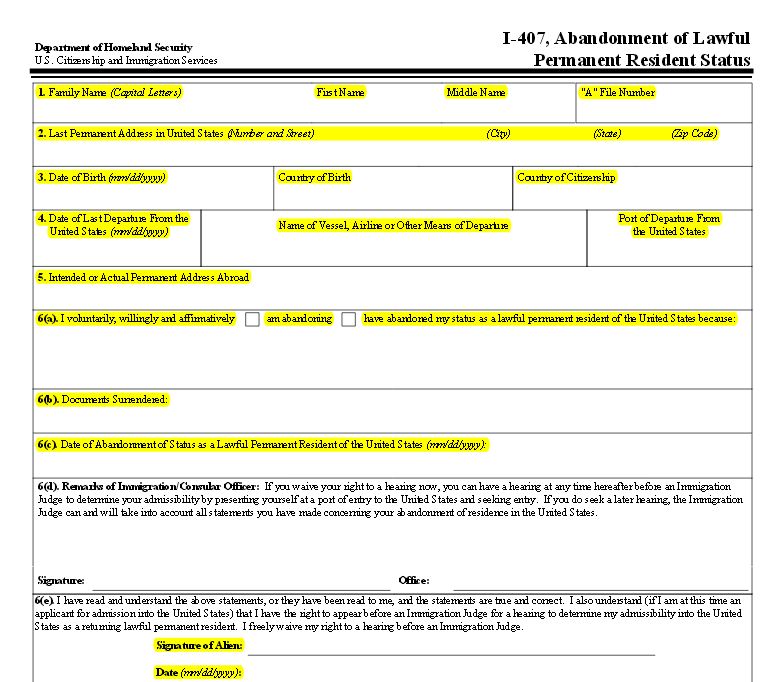
The following 7 myths are accurately addressed with respect to U.S. citizens residing outside the U.S. (although caution should be taken if you are a lawful permanent resident – “LPR”- residing inside a country with a U.S. income tax treaty – see, Does the IRS have access to the USCIS immigration data for former lawful permanent residents (LPRs)?, posted April 11, 2015 and the discussion of how many LPR individuals will have “expatriated” without actually having filed USCIS Form I-407. See, Oops…Did I “Expatriate” and Never Know It: Lawful Permanent Residents Beware! International Tax Journal, CCH Wolters Kluwer, Jan.-Feb. 2014, Vol. 40 Issue 1, p9):
Myth #1: Individuals living outside of the U.S. and filing tax returns with a foreign government don’t have to file annual U.S. tax returns.
Myth #2: Expats only need to report their U.S. income on their U.S. tax return.
Myth #3: If their foreign income is below the Foreign Earned Income Exclusion (FEIE), expats don’t need to file a U.S. tax return.
Myth #4: Work performed by an expat within the U.S. but paid by an expat’s foreign employer is foreign income because it’s paid by the foreign employer and not issued on a W-2.
Myth #5: Expats’ non-U.S.-based pension plans have the same tax treatment in the U.S. as they do in their country of residence.
Myth #6: When expats receive certain items of income, they’re only taxable in their country of residence under the rules provided for in the income tax treaty the foreign country has with the U.S.
Myth #7: An expat’s foreign investments are treated the same as they are in the foreign country.
Unfortunately, I have heard all of these and more (many times over) during my professional career as an international tax lawyer (and an accountant in the late 1980s) from both individuals and their tax advisers both inside the U.S. and outside the U.S. As someone who lives with their family outside the U.S., I have a good understanding about the difficulty of finding good U.S. tax resources that accurately and simply explain these very complex laws.
WSJ Asks the Question: Is the IRS Undercounting Americans Renouncing U.S. Citizenship?
Is the IRS Undercounting Americans Renouncing U.S. Citizenship?, posted Sept. 16, 2015.
The names of U.S. citizens who have renounced is published quarterly pursuant to IRC Section 6039G. See, prior related posts: 1,426 Individuals Give Up Passport: Record Number of U.S. Citizens Renouncing: Quarter 3 for 2015, October 30, 2015.
No one knows for certain if the IRS (including the IRS per some of my conversations) is getting complete data from the Department of State regarding each name and individual.
The graph I have prepared shows the number of names reported quarterly as I track all reported names quarterly that related to clients and non-clients. The latest cumulative amounts for 2015 (which does not include the 4th quarter) shows 3,221 thus far in the year. If there is close to 1,400 as was the case for the last quarter, the total will be a record – by a bunch; i.e., close to 5,000 renunciations for the year.
Anecdotally, I have seen renunciations surge in our practice, largely as U.S. citizens residing around the world (typically in the “Accidental American” category) learn about the long arm of the U.S. tax law by way of their local financial institutions and reporting and documents requested as part of FATCA. See, Why Most U.S. Citizens Residing Overseas Haven’t a Clue about the Labyrinth of U.S. Taxation and Bank and Financial Reporting of Worldwide Income and Assets, posted Nov. 2, 2015.
None of this answers the question of whether there is under-reporting of the names? Indeed, the question will likely not be answered without more information provided by the U.S. Department of State and the U.S. Treasury (i.e., the IRS officers responsible for issuing the names and report in the Federal Register).
The government is also likely to reject issuing information on these details to individuals and their advisers as part of a Freedom of Information Act (“FOIA”) request. I have had similar requests rejected by the government under the so called “Exemption 7(E)” of FOIA. See,