Penalties
The Supreme Court Denies Certiorari for USC Taxpayer Who Claimed Foreign Earned Income Exclusion
The U.S. Supreme Court only rarely takes tax cases for certiorari review. It is common that no more than one federal tax case is reviewed by the U.S. Supreme Court during their entire annual term.
Accordingly, it was not surprising that the U.S. Supreme Court refused to hear a decision of a Hong Kong-based flight attendant who as a U.S. citizen took the foreign earned income exclusion (“FEIE”) pursuant to IRC Section 911 on all of her income. The Treasury Regulations §1.911-3(a) have a specific rule regarding source of income and provides: “Earned income is from sources within a foreign country if it is attributable to services performed by an individual in a foreign country or countries.”
The IRS assessed tax and a 20% “negligence” penalty against the Hong Kong based flight attendant Ms. Yen-Ling K. Rogers. Judge Cohen of the U.S. Tax Court wrote the 2013 opinion, Rogers vs. Commissioner, TC Memo. 2013-77 – U.S. Tax Court
See prior posts on the FEIE; The Foreign Earned Income Exclusion is Only Available If a U.S. Income Tax Return is Filed, April 21, 2014.
See also USCs and LPRs Living Outside the U.S. – Key Tax and BSA Forms, dated March 17, 2014 that discusses in some detail IRS Form 2555.
The Court of Appeals for the District Of Columbia upheld the Tax Court and the Supreme Court let stand the Court of Appeals decision.
U.S. Citizens Overseas are Often Ill Advised to go into the (1) OVDP and sometimes even the (2) the Streamlined Filing Procedure
There have been prior posts discussing what is referred to as the offshore voluntary disclosure program (“OVDP”) and what the IRS later created – the so-called “streamlined program” filing procedure.
For more background, see, GAO Yr2014 Report on Offshore Voluntary Disclosure Program Indicates Less Than 4% of Taxpayers Lived Outside the U.S., posted March 11, 2014.
Importantly, these OVDP and streamlined programs created by the IRS are not creatures of any statutory law, for instance Title 26 (the Internal Revenue Code) or Title 31 (the so-called Bank Secrecy Act); or any law for that matter. There are no court cases or Treasury Regulations that spell out the terms of these programs as part of any legal framework.
I like to say they are similar to the Hasbro rules of “Monopoly”; a game I was fond of as a child. The IRS is like Hasbro in that they can change the rules of the game as they wish, and often do in the form of publicized frequently asked questions (“FAQs”). The IRS submits these rules of their game and ask, encourage and in some cases (in my view) browbeat taxpayers, often times through their advisers, into participating. See some of the various rule changes below –
- IRS OVDP FAQs and Answers 2012
- Transition Rules: Frequently Asked Questions (FAQs)
- IRS 2011 Offshore Voluntary Disclosure Initiative
- January 8, 2010 — added Q&As 53-54
- August 25, 2009 — added Q&A 52
- July 31, 2009 — modified A6, A21 and A22
- June 24, 2009 — modified A26 and added Q&A 31-51
- May 6, 2009 — posted Q&A 1-30
The above reflect just some of the modifications and rules the IRS has made, and keeps making to their rules of their proposed OVDP structure; which again, I repeat, is not part of the law.
Many taxpayers and their advisers, in my view have not thought carefully about the law and its application; but rather have focused on the “Monopoly” rules. They cite and read the FAQs if that is somehow the law! See How is the offshore voluntary disclosure program really working? Not well for USCs and LPRs living overseas posted May 10, 2014 and The 2013 GAO Report of the IRS Offshore Voluntary Disclosure Program, International Tax Journal, CCH Wolters Kluwer, January-February 2014. PDF version here.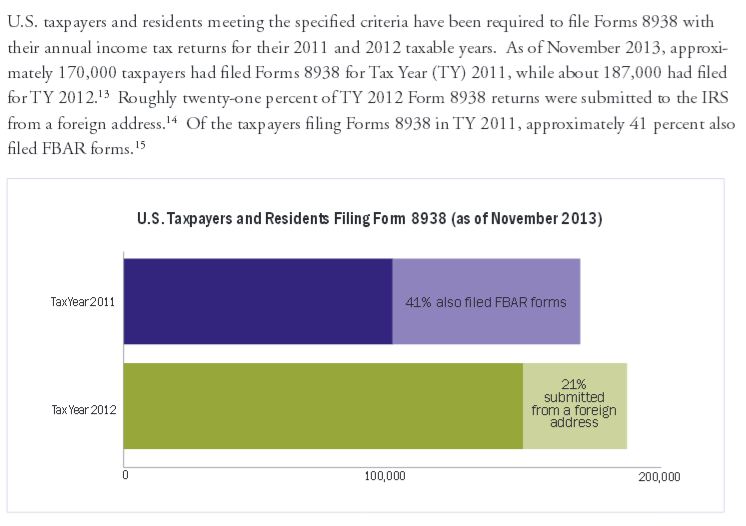
Similarly, the streamlined filing procedures is not part of the law, and also has been modified several times by the IRS. Fortunately, the IRS realized that U.S. taxpayers residing outside the U.S. are not the same as those who reside in the U.S. when they created two separate programs last year in 2014.
The point of this post is that I have seen numerous cases where U.S. citizens residing around the world were ill advised to participate in the OVDP. In short, if an individual has no criminal tax liability, I think there is little purpose or reason for almost all USC overseas to participate into the OVDP. Analyzing thoughtfully the facts of each case and the law (not the Monopoly rules) is what is important for each individual.
Finally, a clear understanding of what are the Monopoly rules compared to the law is crucial when advising USCs residing overseas. Sometimes, filing through the streamlined procedure might be well advised for a particular taxpayer; e.g., if they would otherwise have substantial late payment and late filing penalties. However, there are plenty of cases where simply filing tax returns pursuant to the law will be preferable in a particular case. This is a process that needs to be thoughtfully considered in each case with a clear understanding of the law – not just the Monopoly rules.
For some related commentary on this topic, see the following posts:
Why Most U.S. Citizens Residing Overseas Haven’t a Clue about the Labyrinth of U.S. Taxation and Bank and Financial Reporting of Worldwide Income and Assets
This post is written simply because so many U.S. citizens residing overseas are reasonably confused about the complexity of U.S. tax law. The mere requirement to file U.S. income tax returns for those overseas often comes as a great surprise. My non-U.S. born wife is an exception (as she also lives outside the U.S.) simply because I have repeatedly told her for our 20 some years of marriage. 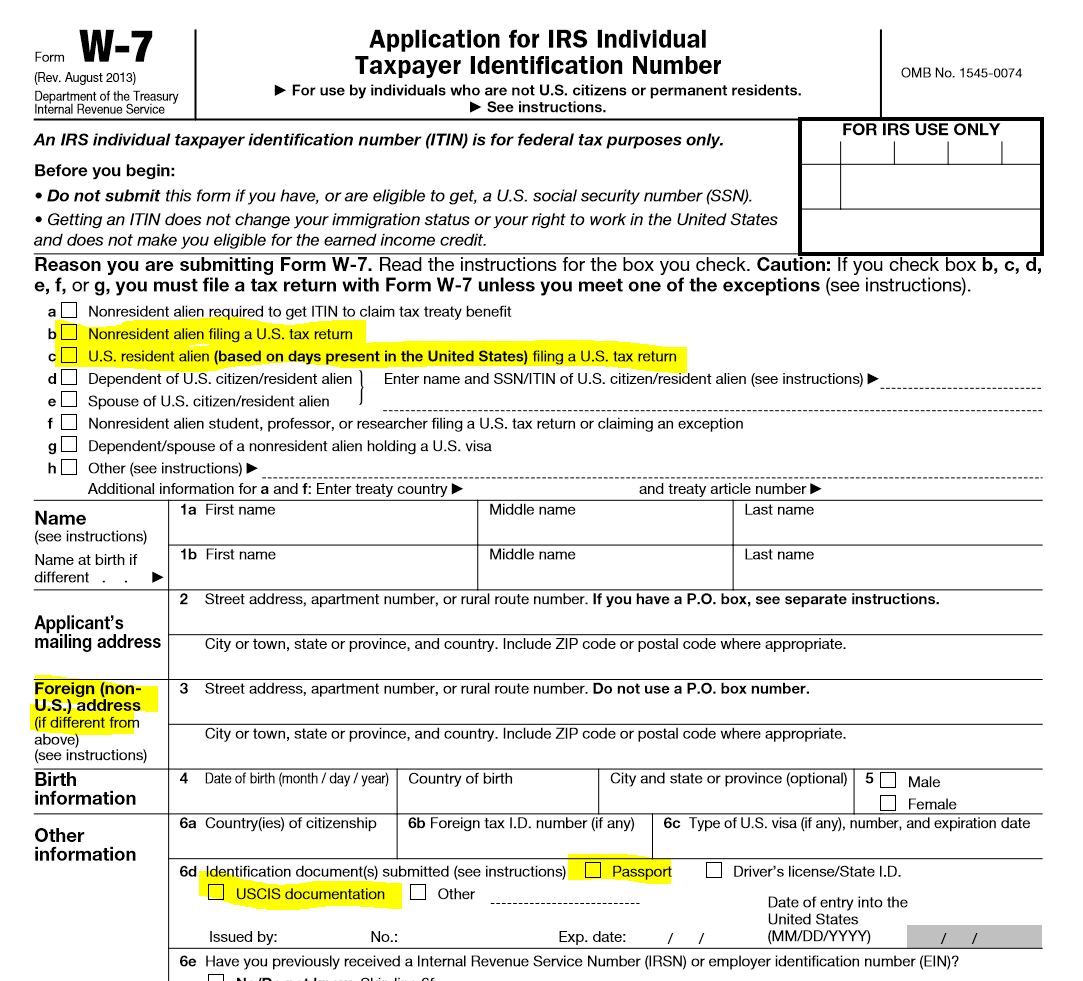
Some in the IRS erroneously think U.S. citizens residing overseas do and should understand U.S. tax law. I posed one simple scenario to a very sophisticated IRS attorney not very long ago who specializes in the FATCA rules.
Her view is (hopefully was) that U.S. citizens throughout the world know or should know the U.S. tax laws because the instructions to IRS Form 1040 are clear.
This thought knocked me off my figurative chair onto the floor! Smack.
My surprise is based upon my own experience working with individuals and families throughout the world, in numerous countries. I have noticed a number of notions, based upon these andectodal experiences as follows:
- A minority of U.S. citizens (unless they lived most of their lives in the U.S. and recently moved overseas as an “expatriate”) have no real basic idea of how the U.S. federal tax laws work; let alone to their assets and income in their country of residence. See USCs and LPRs Living Outside the U.S. – Key Tax and BSA Forms
- There are indeed plenty of immigrant U.S. residents (certainly less than 50% by my own experience – especially when concepts of PFICs and foreign tax credits start being discussed) who even understand the basics of U.S. international tax law.
- If they reside in an English speaking country that has relatively strong family or historical ties to the U.S. (e.g., England, Ireland, Scotland, and Canada, etc.) they are likely to have a better idea of the U.S. federal tax laws, but still the majority don’t know key concepts. See, Nuances of FBAR – Foreign Bank Account Report Filings – for USCs and LPRs living outside the U.S.
- Even those in English speaking countries that have less historical or family ties to the U.S. have a lesser understanding (e.g., New Zealand, Australia, Kenya, South Africa, India, etc.).

- Those who do not speak English know even less about U.S. tax laws and how they apply to them.
- Many individuals who learn of these requirements overseas are sometimes driven to great despair. The message they receive is not a correct one under the law in my view: as they read IRS materials (for instance, see FAQs 5, 6 and and former 51.2 from the Offshore Voluntary Disclosure Program Frequently Asked Questions and Answers 2014) and come to the conclusion they will soon be going to jail, criminally prosecuted or otherwise be subject to tens of thousands of dollars worth of penalties for their failure to file a range of tax forms.
- Literally, sometimes as a tax lawyer I feel more like a psychologist, when these individuals come to me saying they can’t sleep, they can’t eat, they are seeing a cardiologist for high blood pressure, etc. and even in a most extreme case they thought suicide was a solution. See, How is the offshore voluntary disclosure program really working? Not well for USCs and LPRs living overseas.
- Individuals around the world (even tax professionals) and certainly laypeople, are not commonly reading TaxAnalysts (nor would they subscribe) or other tax professional publications that explain many of the intricacies of U.S. tax laws.
- Learning and understanding U.S. tax laws, including just the basics, requires a great deal of time, aptitude for nuances and details, literacy, patience and a level of aptitude for such matters that simply escape many people around the world (most I would say). see, “PFICs” – What is a PFIC – and their Complications for USCs and LPRs Living Outside the U.S. I can relate to this personally, as I am an international tax professional (indeed I even studied a post graduate law course outside the U.S. in a non-English language), have spent my entire professional career of more than 25 years in the area, and yet only generally have a very superficial understanding of tax laws throughout the countries where I am dealing with clients. I don’t try to understand the details of those laws.

- Many people are angry and frustrated (justifiably so, in my view, in many cases) after learning they are subject to these rules. See comment above about being a psychologist. Plus, USCs and LPRs residing outside the U.S. – and IRS Form 8938. In addition, see, Taxpayer Advocate Report on Burdens of Benign Taxpayers who Make Mistakes
Back to the intelligent IRS tax attorney. My question to her was: “Why would you, as a U.S. born individual not be reviewing the tax laws, tax forms and tax instructions of the country where your parents were born prior to immigrating to the U.S.?” I asked: “Are you not reviewing those laws in the original language of your parents (not English, but the other language of your parent’s country) to understand what tax forms and returns you should be filing?”
The IRS attorney’s response was: “What: of course, I am not reviewing such tax forms or filing information or tax laws, as I would have no tax obligations in that foreign country where I have no income, no assets or no bank or financial accounts!”
My follow-up question was a simple one: “Don’t you realize that U.S. federal tax law (Title 26) and financial bank reporting laws (Title 31) do just that!”
“Hmm she paused: how can that be?” I don’t recall if she said this out loud, or just said it with her puzzled expression.
The answer of course is that through citizenship (including derivative citizenship through a U.S. parent even though the child never spent a single day of residence in the U.S., let alone received any income or assets); that same individual in the mirror position as that IRS attorney is subject to a host of U.S. federal tax and financial reporting laws. See, Sir Winston Churchill – Famous People. Did he become a U.S. citizen at birth via “derivative citizenship”? Did he file U.S. income tax returns?
Here is the big disconnect. It’s not just among the ill-informed or those lesser educated on the fine points of law. I had the pleasure this week along with my wife to host two educated, worldly and engaging individuals who have been married some 20 years together. They are well read and highly educated. Both are lawyers by training, one practices law that often pushes him fairly deeply into the tax law and his wife is a wonderful and experienced judge in the California state courts.
I asked them (as I like to ask people around the world) if they had ever heard or understood that the U.S. federal tax law imposes taxation and very detailed reporting on the worldwide income and assets of U.S. citizens who reside outside the U.S. I discussed  Cook v. Tait and the U.S. Civil War a bit. See both Supreme Court’s Decision in Cook vs. Tait and Notification Requirement of Section 7701(a)(50) and The U.S. Civil War is the Origin of U.S. Citizenship Based Taxation on Worldwide Income for Persons Living Outside the U.S. ***Does it still make sense?
All of it was a great surprise to them! They were in utter shock and both are residents in the U.S., highly educated in the law and are like the vast majority of the world, including U.S. citizens who reside outside the U.S.
This is the common response for many U.S. citizens residing overseas.
IRS Attorney – Dan Price, Provides Specific Recommendations for U.S. Citizen Taxpayers Overseas at USD – Procopio International Tax Institute
Tax Analyst’s reported some of the key comments made by IRS Attorney Dan Price at the 11th Annual University of San Diego School of Law – Procopio International Tax Institute. The course panel he discussed was – Course 10: Current Practical Problems for Taxpayers in OVDP and Streamlined.
The article written by Ms. Amanda Athanasiou provided good coverage of comments from IRS Office of Chief Counsel Attorney Dan Price about the streamlined procedure. See, the complete article that was published October 27, 2015, Confusion Over Offshore Accounts Prompts IRS Response, Worldwide Tax Daily and Tax Notes Today: News Stories.
The common fact pattern is that many U.S. citizens around the world have simply not filed U.S. federal income tax returns. Many of them were unaware of the requirements and/or they thought in good faith they were not required to file since their income levels were below the “foreign earned income” exclusion amounts. See a prior post, March 24, 2014, The Foreign Earned Income Exclusion is Only Available If a U.S. Income Tax Return is Filed.
The streamlined procedure for U.S. citizens residing overseas does not require that they have previously filed U.S. income tax returns. See, U.S. Taxpayers Residing Outside the United States: The following streamlined procedures are referred to as the Streamlined Foreign Offshore Procedures. Eligibility for the Streamlined Foreign Offshore Procedures
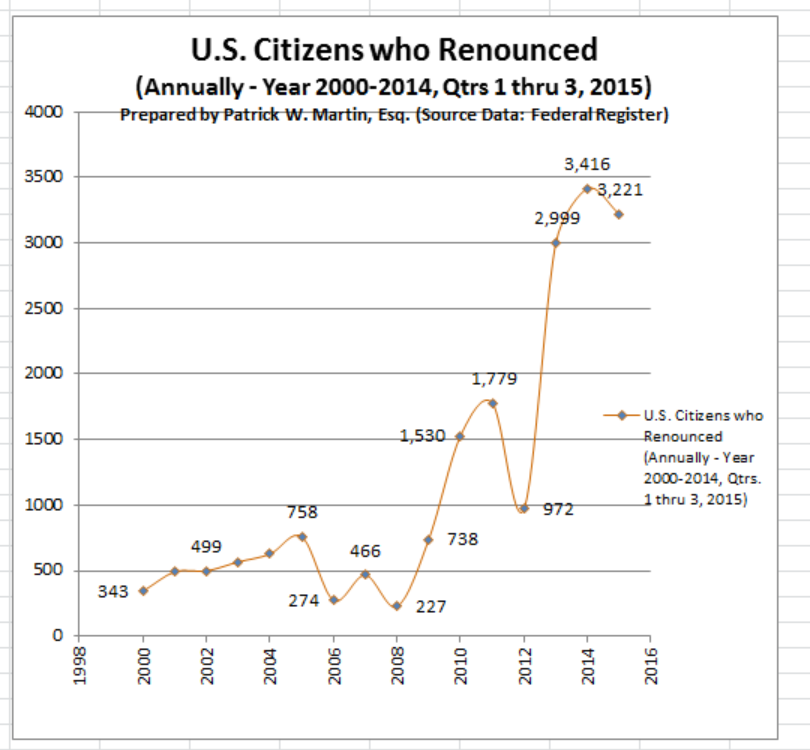
Incidentally, with a record number of citizenship renunciations reported just a few days ago (more than 1,400 in the latest quarter – Quarterly Publication of Individuals, Who Have Chosen To Expatriate, as Required by Section 6039G, Oct. 27, 2015) this is particularly important to U.S. citizens living all around the world.
One particularly salient quote regarding the streamlined procedure from Mr. Price was, “The IRS is going to presume the taxpayer was non-willful unless facts indicate otherwise.”
One of the important questions that U.S. citizens overseas face is whether their particular facts indicate they would be better off by simply filing initial or amended tax returns. There are also so-called “qualified amended returns” which will be discussed in another post.
Neither the federal tax law nor the Treasury Regulations provide that a taxpayer has an affirmative statutory duty to file an amended income tax return, as long the original return reflects a good faith effort to comply with the law at the time the tax return was originally filed. The Treasury Regulations, which are drafted by the IRS, instruct that a taxpayer “should,” within the period of limitation, amend to correct prior errors in a tax return, but not that a taxpayer “must” amend. See Treas. Reg. § 1.451-1(a). 
When a taxpayer fails to file a tax return by the due date, the taxpayer may be subject to failure to file and failure to pay penalties and interest charges. See IRC Section 6561; IRC Section 6601. The real problem can be that if a taxpayer fails to file a return voluntarily, the IRS may file a substitute return for the taxpayer instead, including on the basis of information received by third parties. See IRC Section 6020. This substitute return may not give the taxpayer credit for deductions and exemptions they are entitled to. Substitute returns prepared by the IRS are valid for calculating a taxpayer’s income tax deficiencies and penalties for failure to file and failure to pay. See Holloway v. Commissioner, T.C. Memo. 2012-137; see also Brewer v. U.S., 764 F. Supp. 309 (S.D.N.Y. 1991).
However, at the end of the day, those U.S. citizens residing overseas who were/are not aware of the U.S. federal tax law filing requirements have not committed a “mortal sin” in the vernacular of the Roman Catholic Church. Indeed, in these circumstances, they have probably only exposed themselves to penalties (late payment, late filing, etc.) which are based upon the amount of tax owing. Of course, the IRS does sometimes use the stick of international information reporting penalties over the head of taxpayers. See, excellent summary by the American Citizens Abroad, Delinquent FBAR and Tax Filing Penalties
The question is: “Streamlined (to be) or not Streamlined, i.e., just file returns (not to be)”?
U.S. District Court Flatly Denies Claims of Injury under FATCA and Title 31-FBAR Reporting Requirements: Upholds FATCA, IGAs and the FBAR Requirements to Encourage Tax Compliance and “Combat Tax Evasion”
There has been a case floating around since a complaint was filed this summer by Senator Rand Paul (current Presidential candidate) and various other current and former U.S. citizens including a Mr. Kisch who is resident in Toronto, Canada and a Mr. Crawford who lives in Albania; along with other individuals. Crawford v. United States Dep’t of the Treasury, 2015 U.S. Dist. The complaint asked for declaratory and injunctive relief.
The District Court granted neither and dismissed the case in favor of the government in a bold fashion upholding FATCA and FBAR/Title 31 reporting and information requirements. Importantly, the Court concluded by saying ” . . . The FATCA statute, the IGAs, and the FBAR requirements encourage compliance with tax laws, combat tax evasion, and deter the use of foreign accounts to engage in criminal activity. A preliminary injunction would harm these efforts and intrude upon the province of Congress and the President to determine how best to achieve these policy goals.”
See a prior post regarding how FATCA affects United States citizens (USCs) and lawful permanent residents (LPRs) residing outside the U.S.; as was the case of many of the complainants in the case, Part 1- Unintended Consequences of FATCA – for USCs and LPRs Living Outside the U.S., posted August 13, 2014.
Also, the tax publication/resource, Tax Analysts summarized the original complaint (which can be read in its entirety here) as follows:
The FATCA suit makes the following claims:
- the IGAs are unconstitutional sole executive agreements because they exceed the scope of the president’s independent constitutional powers, and because they override FATCA;
- the heightened reporting requirements for foreign financial accounts deny U.S. citizens living abroad the equal protection of the laws;
- the FATCA FFI penalty, passthrough penalty, and willfulness penalty are all unconstitutional under the excessive fines clause;
- FATCA’s information reporting requirements are unconstitutional under the Fourth Amendment; and
- the IGAs’ information reporting requirements are also unconstitutional under the Fourth Amendment.
See, complete Tax Note’s article of July 15, 2015: Sen. Paul Files Lawsuit Challenging FATCA, by William R. Davis and Andrew Velarde.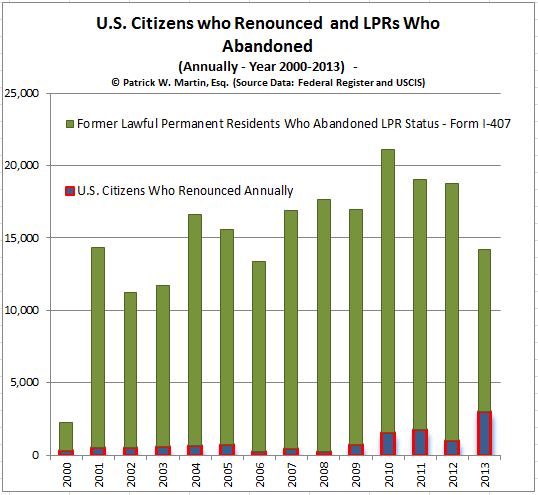
Not unsurprisingly, the District Court ruled in favor of the government and dismissed the majority of the claims by a finding that the parties lacked standing to bring the suit and that ” . . . The FATCA statute, the IGAs, and the FBAR requirements encourage compliance with tax laws . . .”
Some highlights of the Court’s opinion [with my emphasis added] are set out below:
* * *
- Background
A. FATCA Statute and Regulations
Congress passed the Foreign Accounts Tax Compliance Act (FATCA) in 2010 to improve compliance with tax laws by U.S. taxpayers holding foreign accounts. FATCA accomplishes this through two forms of reporting: (1) by foreign financial institutions (FFIs) about financial accounts held by U.S. taxpayers or foreign entities in which U.S. taxpayers hold a substantial ownership interest, 26 U.S.C. § 1471; and, (2) by U.S. taxpayers about their interests in certain foreign financial accounts and offshore assets. 26 U.S.C. § 6038D.
- FATCA
President Obama signed FATCA into law on March 18, 2010. Senator Carl Levin, a co-sponsor of the FATCA legislation, declared that “offshore tax abuses [targeted by FATCA] cost the federal treasury an estimated $100 billion in lost tax revenues annually” 156 Cong. Rec. 5 S1745-01 (2010). FATCA became law as the IRS began its Offshore Voluntary Disclosure Program (OVDP), which since 2009 has allowed U.S. taxpayers with undisclosed overseas assets to disclose them and pay reduced penalties. By 2014, the OVDP collected $6.5 billion through voluntary disclosures from 45,000 participants. “IRS Makes Changes to Offshore Programs; Revisions Ease Burden and Help More Taxpayers Come into Compliance,” http://www.irs.gov/uac/Newsroom/IRS-Makes-Changes-to-Offshore-Programs;-Revisions-Ease-Burden-and-Help-More-Taxpayers-Come-into-Compliance (last visited Sept. 15, 2015). The success of the voluntary program has likely been enhanced by the existence of FATCA.
* * *
C. Report of Foreign Bank and Financial Account
The third body of law at issue in this case pertains to the Report of Foreign Bank and Financial Account (FBAR) requirements. U.S. persons who hold a financial account in a foreign country that exceeds $10,000 in aggregate value must file an FBAR with the Treasury Department reporting the account. See 31 U.S.C. § 5314; 31 C.F.R. § 1010.350; 31 C.F.R. § 1010.306(c). The current FBAR form is FinCEN Form 114. The form has been due by June 30 of each year regarding accounts held during the previous calendar year. § 1010.306(c). Beginning with the 2016 tax year, the due date of the form will be April 15. Pub. L. No. 114-41, § 2006(b)(11). A person who fails to file a required FBAR may be assessed a civil monetary penalty. 31 U.S.C. § 5321(a)(5)(A). The amount of the penalty is capped at $10,000 unless the failure was willful. See 5321(a)(5)(B)(i), (C). A willful failure to file increases the maximum penalty to $100,000 or half the value in the account at the time of the violation, whichever is greater. § 5321(a)(5)(C). In either case, whether to impose the penalty and the amount of the penalty are committed to the Secretary’s discretion. See § 5321(a)(5)(A) (“The Secretary of the Treasury may impose a civil money penalty[.]”) & § 5321(a)(5)(B) (“[T]he amount of any civil penalty . . . shall not exceed” the statutory ceiling). Plaintiffs seek to enjoin enforcement of the willful FBAR penalty under § 5321(a)(5). Prayer for Relief, part Q. They also ask for an injunction against “the FBAR account-balance reporting requirement” of FinCen Form 114. Prayer for Relief, part W.
The Government asserts that the information in the FBAR assists law enforcement and the IRS in identifying unreported taxable income of U.S. taxpayers that is held in foreign accounts as well as investigating money laundering and terrorism.
* * *
Mark Crawford decries his bank’s policy against taking U.S. citizens as clients and claims the denial of his application for a brokerage account may have “impacted Mark financially,” ¶ 21, any such harm is not fairly traceable to an action by Defendants, which are not responsible for decisions that foreign banks make about whom to accept as clients. Crawford cannot establish standing indirectly when third parties are the causes of his alleged injuries. See Shearson, 725 F.3d at 592. Moreover, his discomfort with complying with the disclosures required by FATCA, see ¶23, does not establish the concrete, particularized harm that confers standing to sue. See, e.g., Lujan, 504 U.S. at 561 (requiring “concrete and particularized” and “actual or imminent” injury). Even if Crawford fears “unconstitutionally excessive fines imposed by 31 U.S.C. § 5321 if he willfully fails to file an FBAR,” ¶ 24, there is no allegation that he failed to file any FBAR that may have been required, much less that the Government has assessed an “excessive” FBAR penalty against him. Any harm that may come his way from imagined future events is speculative and cannot form the foundation for his lawsuit.
* * *
None of the allegations states that Kuettel is presently being harmed by FATCA or the Swiss IGA, and neither FATCA nor the IGA apply to him as a non-U.S. citizen. See ¶¶ 51-58. His assertion of past harm because he was “mostly unsuccessful” in refinancing his mortgage due to FATCA does not convey standing. If that was a harm, it was due to actions of third-party foreign banks not those of Defendants. Regardless, having now renounced his American citizenship and obtained refinancing on terms he found acceptable, any past harm is not redressable here. See Adarand Constructors, Inc. v. Pena, 515 U.S. 200, 210-11 (1995) (“[T]he fact of past injury . . . does nothing to establish a real and immediate threat that he would again suffer similar injury in the future.” (quotation omitted)). This leaves Kuettel’s claims concerning the FBAR requirement, in Counts 3 and 6, for which the Government concedes Kuettel has standing. Response, ECF 16, at 15, PAGEID 216.
* * *
Donna-Lane Nelson is a citizen of Switzerland who has also renounced her U.S. citizenship. ¶ 59. She alleges that her Swiss bank “notified her that she would not be able to open a new account if she ever closed her existing one because she was an American. Fearing that she would eventually not be able to bank in the country where she lived, she decided to relinquish her U.S. citizenship.” ¶ 65. After she renounced, a Swiss bank “offered investment opportunities that were not available to her as an American.” Id. She “resents having to provide” “explanations” to Swiss banks that have requested information on her past U.S. citizenship and payments to her daughter, who lives in the United States, and she sees “threats implied by these requests which appear to be prompted by FATCA.” ¶ 68. Like other Plaintiffs, Nelson does not want to disclose financial information to the Government, and she fears willful FBAR penalties, even though no such penalty has been imposed or threatened against her. ¶¶ 69, 70. Unlike the preceding Plaintiffs, however, she adds that she fears the 30% withholding tax may be imposed against her “if her business partner,” who is now her husband, and with whom she has joint accounts, “opts to become a recalcitrant account holder.” ¶
* * *
L. Marc Zell states that he is a practicing attorney and a citizen of both the United States and Israel who lives in Israel. He alleges that: (1) he and his firm have been required by Israeli banking institutions to complete IRS withholding forms for individuals whose funds his firm holds in trust, regardless of whether the forms are legally required, causing certain clients to leave his firm, ¶¶ 79 & 81; (2) Israeli banks have required his firm to close accounts, refused to open others, and requested conduct contrary to banking regulations, ¶¶ 79-80; and, (3) the compelled disclosure of his fiduciary relationship with clients impinges on the attorney-client relationship, ¶ 82. On request of clients, who claim their rights are violated by FATCA, Zell “has decided not to comply with the FATCA disclosure requirements whenever that alternative exists.” ¶ 83. He fears that the FATCA 30% withholding tax on pass-through payments to recalcitrant account holders could be imposed due to his refusal to provide identifying information about a client to an Israeli bank. ¶ He also has refused to provide information to his own bank and “fears that he will be classified as a recalcitrant account holder,” ¶ 85. Like the other Plaintiffs, he does not want his financial information disclosed, ¶ 86, and fears an FBAR penalty if the IRS determines that he willfully failed to file an FBAR, ¶ 87.
The majority of Zell’s allegations concern conduct of Israeli banks and his belief that the actions have been unfair to him or his clients. But conduct of third parties (even if related to the banks’ compliance with FATCA) does not confer standing to bring suit against Defendants. See, e.g., Ammex Inc. v. United States, 367 F.3d 530, 533 (6th Cir. 2004). Nor may Zell seek redress on behalf of third parties who have allegedly suffered harm, including unidentified clients. See Warth v. Seldin, 422 U.S. 490, 499 (1975). The third parties who have allegedly suffered harm are not plaintiffs, thus, alleged harm to them does not provide a basis for Zell to maintain this suit. The contention that disclosure of the identity of clients for whom Zell holds funds in trust violates the attorney-client privilege is also without merit. He gives no example of harm that has occurred or how he was harmed by disclosure of clients’ identities. He cannot raise the attorney-client privilege on his clients’ behalf, nor is the fact of representation privileged. See In re Special Sept. 1978 Grand Jury (II), 640 F.2d 49, 62 (7th Cir. 1980) (“[A]ttorney-client privilege belongs to the client alone[.]”); United States v. Robinson, 121 F.3d 971, 976 (5th Cir. 1997) (“The fact of representation . . . is generally not within the privilege.”). It is the fiduciary relationship, not the attorney-client relationship, that is the basis for the reporting requirement.
* * *
“We begin, of course, with the presumption that the challenged statute”—FATCA—“is valid. Its wisdom is not the concern of the courts; if a challenged action does not violate the Constitution, it must be sustained[.]” INS v. Chadha, 426 U.S. 919, 944 (1983); see also National Federation of Independent Business v. Sebelius 132 S. Ct. 2566, 2594 (2012) (“‘[E]very reasonable construction must be resorted to, in order to save a statute from unconstitutionality.’” (quoting Hooper v. California, 155 U.S. 648, 657 (1895))).
* * *
Plaintiffs decry that U.S. citizens living in foreign countries are in this manner treated differently than U.S. citizens living in the United States. According to Plaintiffs, the federal government has no legitimate interest in knowing the amount of any income, gain, loss, deduction, or credit recognized on a foreign account, whether a foreign account was opened or closed during the year, or the balance of a foreign account.
Plaintiffs contend that the “heightened reporting requirements” imposed by FATCA, the FBAR information-reporting requirements, and the Canadian, Swiss, Czech, and Israeli IGAs, violate the Fifth Amendment rights of “U.S. citizens living in a foreign country” and should be enjoined. See Complaint ¶¶ 124-130
* * *
Plaintiffs’ equal protection claims fail because the statutes, regulations, and executive agreements that they challenge simply do not make the classification they assert. None of the challenged provisions single out U.S. citizens living abroad. Instead, all Americans with specified foreign bank accounts or assets are subject to reporting requirements, no matter where they happen to live. The provisions Plaintiffs contend discriminate against “U.S. citizens living abroad” actually apply to all U.S. taxpayers, no matter their residence.
* * *
The distinction that the regulations do make is rationally related to a legitimate government interest. The U.S. tax system is based in large part on voluntary compliance: taxpayers are expected to disclose their sources of income annually on their federal tax returns. The information reporting required by FATCA is intended to address the use of offshore accounts to facilitate tax evasion, and to strengthen the integrity of the voluntary compliance system by placing U.S. taxpayers that have access to offshore investment opportunities in an equal position with U.S. taxpayers that invest within the United States. Third party information reporting is an important tool used by the IRS to close the tax gap between taxes due and taxes paid. The knowledge that financial institutions will also be disclosing information about an account encourages individuals to properly disclose their income on their tax returns. See Leandra Lederman, Statutory Speed Bumps: The Roles Third Parties Play in Tax Compliance, 60 STAN. L. REV. 695, 711 (2007).
Unlike most countries, U.S. taxpayers are subject to tax on their worldwide income, and their investments have become increasingly global in scope. Absent the FATCA reporting by FFIs, some U.S. taxpayers may attempt to evade U.S. tax by hiding money in offshore accounts where, prior to FATCA, they were not subject to automatic reporting to the IRS by FFIs. The information required to be reported, including payments made or credited to the account and the balance or value of the account is to assist the IRS in determining previously unreported income and the value of such information is based on experience from the DOJ prosecution of offshore tax evasion. See Senate Permanent Subcommittee on Investigations bipartisan report on “Offshore Tax Evasion: The Effort to Collect Unpaid Taxes on Billions in Hidden Offshore Accounts,” February 26, 2014; see also Cal. Bankers Ass’n v. Shultz, 416 U.S. 21, 29 (1974) (“when law enforcement personnel are confronted with the secret foreign bank account or the secret foreign financial institution they are placed in an impossible situation…they must subject themselves to time consuming and often times fruitless foreign legal process.”).
The FBAR reporting requirements, likewise, have a rational basis. As the Supreme Court noted in California Bankers, when Congress enacted the Bank Secrecy Act (which provides the statutory basis for the FBAR), it “recognized that the use of financial institutions, both domestic and foreign, in furtherance of activities designed to evade the regulatory mechanism of the United States, had markedly increased.” Id. at 38. The Government has a legitimate interest in collecting information about foreign accounts, including account balances held by U.S. citizens, for the same reason that it requires reporting of information on U.S.-based accounts. The information assists law enforcement and the IRS, among other things, in identifying unreported taxable income of U.S. taxpayers that is held in foreign accounts. Without FBAR reporting, the Government’s efforts to track financial crime and tax evasion would be hampered.
* * *
In Count Six, Plaintiffs contend that the FBAR “Willfullness Penalty” is unconstitutional under the Excessive Fines Clause. Plaintiffs decry that 26 U.S.C. § 5321 imposes a penalty of up to $100,000 or 50% of the balance of the account at the time of the violation, whichever is greater, for failures to file an FBAR as required by 26 U.S.C. § 5314 (the FBAR “Willfulness Penalty”). 31 U.S.C. § 5321(b)(5)(C)(i). 31
Plaintiffs allege the Willfulness Penalty is designed to punish and is therefore subject to the Excessive Fines Clause. Plaintiffs further allege the Willfulness Penalty is grossly disproportionate to the gravity of the offense.
Plaintiffs’ Eighth Amendment claims, however, are not ripe for adjudication because no withholding or FBAR penalty has been imposed against any Plaintiff . . .
* * *
IV. Conclusion
Plaintiffs have failed to establish that they are entitled to a preliminary injunction . . . The FATCA statute, the IGAs, and the FBAR requirements encourage compliance with tax laws, combat tax evasion,37 and deter the use of foreign accounts to engage in criminal activity. A preliminary injunction would harm these efforts and intrude upon the province of Congress and the President to determine how best to achieve these policy goals. Thus, Plaintiffs’ Motion for Preliminary Injunction, ECF 8, is DENIED.
DONE and ORDERED in Dayton, Ohio, this Tuesday, September 29, 2015.
* * *
For those U.S. citizens and lawful permanent residents residing outside the U.S. who expected the Courts to be sympathetic to their legal arguments somehow invalidating Chapter 4/FATCA and the FBAR filing requirements under Title 31, they will surely be disappointed by the result.
Is “It’s Almost Impossible for Me to Get a U.S. Taxpayer Identification Number”; a Defense to Not Filing U.S. Tax Returns?
The U.S. federal government has made the basic task of getting taxpayer identification numbers (“TINs”) very difficult for many individuals. Without a TIN, an individual cannot file tax returns or information reporting returns.
- U.S. Citizens and SSNs – No Exceptions
U.S. citizens (USCs) residing overseas without a social security number (“SSN”) must use a SSN for their TIN. I presented a recent report to various government officials, including the international tax counsel at the U.S. Treasury Department and the Joint Committee of Taxation, among other groups. Some key excerpts of that paper titled URGENT NEED FOR U.S. CITIZENS RESIDING OUTSIDE THE U.S. TO BE ABLE TO OBTAIN A TAXPAYER IDENTIFICATION NUMBER (“TIN”) OTHER THAN A SOCIAL SECURITY NUMBER are set out below in this section:
The U.S. tax law imposing taxation on the worldwide income of USCs[1] residing overseas has created a dilemma that prejudices these USCs without a SSN. This strict SSN/TIN regulatory rule undermines the basic tax administration system and discourages tax compliance for those USCs who never obtained a SSN. This dilemma affects numerous USCs throughout the world, which is now compounded by the certification and reporting requirements of USCs and third parties, such as FFIs and NFFEs[2] under the Foreign Account Tax Compliance Act (“FATCA”).
This dilemma is a creature of the Title 26 regulatory law going back to 1974[3] and how the Social Security Administration (“SSA”) imposes strict requirements on the issuance of SSNs to residents overseas.[4] One essential step is that the USC overseas must have an in-person interview, with a designated individual (who are typically U.S. Department of State employees and some designated military personnel). They are located in only a few cities around the world.[5] Some USCs need to travel thousands of miles to merely be able to apply for and obtain a SSN.
[1] See, IRC § 61 and Treas. Reg. §§ 1.1?1(b) and 1.1?1(a)(1).
[2] See, IRC §§ 1471 et. seq. and the regulations thereunder which define “foreign financial institutions” (“FFIs”) and “non-financial foreign entity” (“NFFEs”).
[3] See, Treas. Reg. § 301.6109-1(a)(1)(ii)(A).
[4] See, 7 FAM 534.3 Applications for a Social Security Number (Form SS-5-FS).
[5] Id, page 7 FAM 534.3 Applications for a Social Security Number (Form SS-5-FS).
Further posts will discuss a number of the adverse consequences imposed on USCs who do not have a SSN and the severe penalty regime that exists under current law for those unwitting individuals.
- Non-U.S. Citizens and ITINs –
Many individuals who are not USCs nevertheless need to file a tax return and must obtain what is called an individual taxpayer identification number (“ITIN”). See IRS report Obtaining an ITIN from Abroad. An ITIN is applied for by filing an IRS Form W-7, and providing various original documents, principally a passport, directly to the IRS. The process is complex and time consuming. Indeed, the Taxpayer Advocate report included a key summary explanation of the problems associated with obtaining ITINs as follows:
- IRS ITIN Policy Changes Make Return Filing Difficult and Frustrating
Recent changes to the IRS’s Individual Taxpayer Identification Number (ITIN) application program are burdening taxpayers and may harm voluntary compliance.
ITINs play an important role in tax administration, as any individual who has a federal tax filing obligation but is not eligible for a Social Security number must apply to the IRS for an ITIN and then use the ITIN on any return, statement, or other document which requires a taxpayer identifying number
Under the new procedures, most applicants must now submit original documentation by mail or travel to Taxpayer Assistance Centers (TACs) to have documents certified, making the application process more difficult
Since December 17, 2003, the IRS has required ITIN applicants with a filing requirement to attach a valid federal tax return with their application (unless they qualify for an exception).
On June 22, 2012, the IRS implemented temporary changes that required all ITIN applicants to submit original documents supporting the information on their applications. Under these procedures, applicants could no longer submit notarized copies and had to send in original documentation, even if a certified acceptance agent (CAA) reviewed and certified the documentation.
On November 29, 2012, the IRS announced revised procedures for the 2013 filing season that require applicants to submit original documentation or copies certified by the issuing agency.
Although the IRS allows CAAs to submit copies of documentation for primary and secondary taxpayers after reviewing original documentation or certified copies, CAAs must still send in original documentation for all dependent applicants.
A limited number of TACs can certify documents for primary, secondary, and dependent taxpayers.
The Revised Procedures Create an Impediment for Taxpayers Required to File Returns.
The recent changes to the ITIN program have made it difficult for taxpayers to file returns.
More on ITINs to follow in later posts.
- Legal Defense?
The complexities of obtaining a U.S. TIN begs the question: “Is it a legal defense for a taxpayer to NOT file U.S. tax returns, international information returns, if it is particularly difficult (or nearly impossible in some cases) for that individual to even obtain a TIN?”
Will such a taxpayer have a “reasonable cause” defense to avoid penalties in the case of an audit? These are questions unanswered by any case law to date.
USCs throughout the world are required by FATCA to provide their U.S. TIN to financial institutions throughout the world (on IRS Form W-9, or its equivalent), which under current law necessarily must be a SSN. Of course, if they have no SSN, they cannot sign IRS Form W-9 which provides in Part II: “Under penalties of perjury, I certify that: 1. The number shown on this form is my correct taxpayer identification number . . . “
As FATCA requires overseas individuals, including USCs to certify under penalty of perjury their U.S. taxpayer identification number (and if they have none), they necessarily will not be able to comply with this basic reporting requirement.
Will these individuals have a defense under the law for not complying under these circumstances?
Will the government provide relief for these individuals?
How Congressional Hearings (Particularly In the Senate) Drive IRS and Justice Department Behavior
The separation of powers is often on full display when there are key Congressional hearings focused on the work (or lack thereof) undertaken by the key executive branch agencies responsible for tax enforcement:
1. Treasury/IRS, and
2. Justice Department.
There is an important reason why every day taxpayers should be interested in these hearings; particularly those who are considering renouncing United States Citizenship.
The actions and reactions of the IRS and Justice Department are often in response to Congressional hearings. This is very much the case with individual taxpayers with assets throughout the world.
A brief timeline of various hearings, and actions taken by the IRS and Justice Department (largely in response to such criticism) can be followed to demonstrate the influence of these hearings:
- Year 2006
U.S. Senate Permanent Subcommittee on Investigations, published their report on August 1, 2006, entitled Tax Haven Abuses: The Enablers, The Tools & Secrecy.
Little direct action was taken by the IRS or Justice Department in this year. It was the year 2008, where the direct hearings lead to more direct action taken.
- Year 2008
U.S. Senate Permanent Subcommittee on Investigations, headed by Chairman Carl Levin, published their report on July 16, 2008, entitled Tax Haven Banks and U.S. Tax Compliance –
November 2008, a U.S. federal grand jury indicted the Chairman and CEO of UBS Global Wealth Management and Business Banking.
- Year 2009
U.S. Senate Permanent Subcommittee on Investigations, headed by Chairman Carl Levin, published their report on March 4, 2009 Tax Haven Banks and U. S. Tax Compliance – Obtaining the Names of U.S. Clients with Swiss Accounts
UBS agrees in February 2009 to pay a US$780M fine to the U.S. government and enter into a deferred prosecution agreement on charges of conspiring to defraud the United States by impeding the Internal Revenue Service.
IRS Implements first Offshore Voluntary Disclosure Program (“OVDP”) on March 26, 2009
- Year 2010
Numerous taxpayers and several Swiss bankers were indicted and/or plead guilty to various tax crimes charges; mostly directly related to UBS. See, website of U.S. Department of Justice – Offshore Compliance Initiative.
Congress passes and the President signs into law, the Foreign Account Tax Compliance Act (“FATCA”) in 2010 as part of the Hiring Incentives to Restore Employment (HIRE) Act.
- Year 2011
IRS Implements its second Offshore Voluntary Disclosure Initiative (“OVDI”) in 2011.
Numerous taxpayers and several Swiss financial advisors were indicted; and a HSBC Indian client was also indicted or plead guilty to various tax crimes charges; mostly directly related to UBS. See, website of U.S. Department of Justice – Offshore Compliance Initiative.
- Year 2012
IRS creates an open ended OVDP program in 2012 that continues; with modifications made in 2014.
Several taxpayers were indicted; including those implicating an Israeli bank for various tax crimes charges. . See, website of U.S. Department of Justice – Offshore Compliance Initiative.
The Treasury Department obtains commitments from various countries to sign various FATCA, intergovernmental Agreements (“IGAs”) for automatic exchange of financial information; France, Germany, Italy, Spain, United Kingdom, Denmark and Mexico.
- Year 2013
In January 2013, the U.S. Attorney’s Office in the Southern District of New York secured the guilty plea of Wegelin Bank, the oldest private bank in Switzerland and the first foreign bank to plead guilty to felony tax charges.
In August, 2013, the United States and Switzerland Issue Joint Statement Regarding Tax Evasion Investigations and ability of Swiss banks to enter into deferred prosecution agreements.
Several taxpayers were indicted and advisors; including multiple financial institutions outside of Switzerland for various tax crimes charges. See, website of U.S. Department of Justice – Offshore Compliance Initiative.
The Treasury Department obtains more commitments for signed FATCA IGAs with various countries for the automatic exchange of financial information;.
- Year 2014
U.S. Senate Permanent Subcommittee on Investigations, headed by Chairman Carl Levin, published their report on February 26, 2014 Offshore Tax Evasion: The Effort to Collect Unpaid Taxes on Billions in Hidden Offshore Accounts
Posted on February 26, 2014 Updated on March 2, 2014
IRS announces on June 18, 2014, IRS Makes Changes to Offshore Programs; Revisions Ease Burden and Help More Taxpayers Come into Compliance
See, More on the New 2014 “Streamlined” Process for USCs and LPRs Residing Overseas
The Treasury Department obtains numerous commitments for signed FATCA IGAs with various countries for the automatic exchange of financial information. See, HUGE NEWS – China has “Reached an Agreement in Substance” for a FATCA Intergovernmental Agreement (IGA) – its Affect on USCs and LPRs Living in China and Hong Kong
U.S. Tax Court Rules Against Lawful Permanent Resident (LPR) in Abrahamsen
The U.S. Tax Court, in an opinion written by Judge Lauber (Abrahamsen v. Commissioner) placed much legal tax significance on the immigration form I-508 that Ms. Abrahamsen signed. 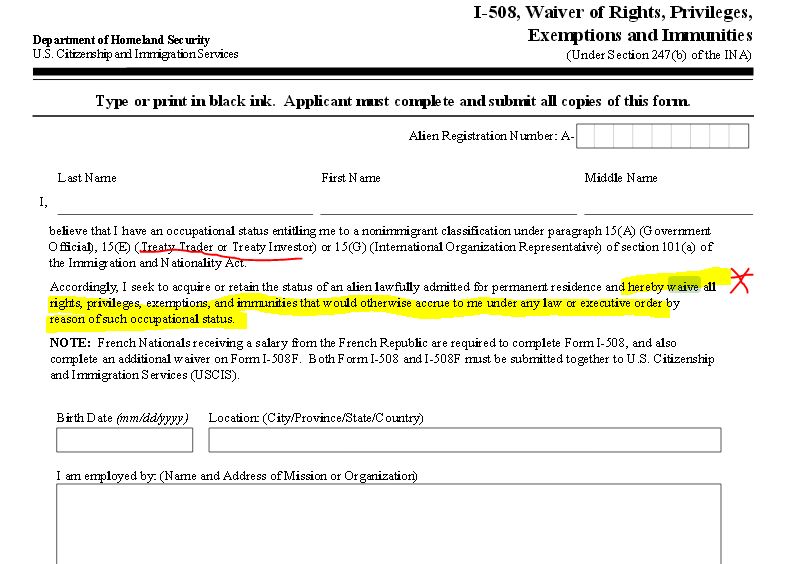
The Court noted this form, I-508, Waiver of Rights, Privileges, Exemptions and Immunities (Under Section 247(b) of the INA) specifically provides that the non-U.S. citizen “waive all rights, privileges, exemptions and immunities which would otherwise accrue to [her] under any law or executive order by reason of [her] occupational status.”
In that case, the individual was a Finnish citizen who eventually applied for lawful permanent residency. The immigration forms were not related to any specific tax form, such as the new IRS Forms W-8BEN; see, IRS Releases New IRS Form W8-BEN. * U.S. citizens and LPRs beware of completing such form at the request of a third party.
The takeaway from this opinion, is that individuals need to be aware of how signing a particular form (that is not a tax form) can have adverse tax consequences. In this case, the Court ruled that she had waived her benefits to IRC Section 893 by signing immigration Form I-508. The opinion of the Tax Court raises an interesting legal question about how signing a form (I-508) can seem to override the statutory protection granted which provides protection to a qualifying “. . . employee [who] is not a citizen of the United States . . . “
Signing various tax forms can cause even greater risks for non-citizen taxpayers; e.g., IRS Form W-9 versus W-8BEN. See, FATCA Driven – New IRS Forms W-8BEN versus W-8BEN-E versus W-9 (etc. etc.) for USCs and LPRs Overseas – It’s All About Information and More Information*
Fortunately for the taxpayer in the Abrahamsen case, she was not subject to the Section 6662 accuracy related penalty (“negligence” penalty) assessed by the IRS.
A subsequent post will analyze some potential U.S. tax consequences for individuals who sign immigration Form I-485, Application to Register Permanent Residence or Adjust Status
IRS Beats the Drums – Re: Foreign Assets, Just Days Before April 15
The IRS is not letting up regarding USCs and LPRs living outside the U.S. Quite the opposite, the most recent announcement of the IRS released yesterday on April 11th, emphasizes the U.S. tax law requirements and their applicability to these individuals.
Specifically, the IRS reiterates as follows in IR-2014-52 – IRS Reminds Those with Foreign Assets of U.S. Tax Obligations:
- The Internal Revenue Service reminds U.S. citizens and resident aliens, including those with dual citizenship who have lived or worked abroad during all or part of 2013, that they may have a U.S. tax liability and a filing requirement in 2014.
- The filing deadline is Monday, June 16, 2014, for U.S. citizens and resident aliens living overseas, or serving in the military outside the U.S. on the regular due date of their tax return. Eligible taxpayers get one additional day because the normal June 15 extended due date falls on Sunday this year. To use this automatic two-month extension, taxpayers must attach a statement to their return explaining which of these two situations applies. See U.S. Citizens and Resident Aliens Abroad for details.
The April 11th date of the notice is ironic, since it is on the eve of the filing deadline for individuals who live within the U.S. Surely, the IRS wants to bring attention to these legal requirements days before the April 15th deadline for those residing in the U.S.
The irony is that the tax law does not require USCs or LPRs who live outside the U.S. and have U.S. tax filing obligations to file by April 15th. The deadline for these individuals who live outside the U.S. is not until June 15th as explained in the IRS notice (June 16th in 2014, since the 15th falls on a Sunday).
In this notice, the IRS does not emphasize the draconian penalties that befall these taxpayers for not filing international information returns or FBARs. The minimum civil penalties for failures to file these forms is almost always at least US$10,000. See, USCs and LPRs Living Outside the U.S. – Key Tax and BSA Forms.
Next, the due date for filing of FBARs is not the same as the due date for income tax returns, June 15th, but always falls on June 30th. There is no extension for FBARs, unlike income tax returns. See, Nuances of FBAR – Foreign Bank Account Report Filings – for USCs and LPRs living outside the U.S.
Will the IRS publish another notice, or beat more drums on the eve of the June 15th (16th for 2014) filing deadline for USCs and LPRs living outside the United States?
???????????????? ?Please click here to view the above in Chinese.?
USCs and LPRs Living Outside the U.S. – Key Tax and BSA Forms
U.S. citizens and Lawful permanent residents living outside the U.S. generally have additional tax and financial account (from the Bank Secrecy Act – “BSA”) reporting requirements. These filings are unique for persons who reside in their home country compared to those who reside in the U.S.
The forms and basic concepts that may be applicable are as follows:
A) Foreign Earned Income Exclusion –
The IRS explains the confusion that commonly exists from this form, which is only available from so-called “earned” income (not passive investment type income):
In addition to filing a U.S. tax return, the taxpayer must meet the residency tests and file IRS Form 2555, Foreign Earned Income
A credit is a “dollar for dollar” (subject to various limitations) reduction in the federal tax burden for taxes paid in another country for income sourced in that country.
Importantly, as the government explains, ” . . . Once you choose to exclude either foreign earned income or foreign housing costs, you cannot take a foreign tax credit for taxes on income you can exclude. If you do take the credit, one or both of the choices may be considered revoked. . . ”
In addition to filing a U.S. tax return, the taxpayer must meet various conditions for eligibility for the foreign tax credit. The calculation is complex and is ultimately reported on IRS Form 1116 and must be attached to the income tax return, which will always be IRS Form Form 1040 for U.S. citizens and LPRs who reside in a country with no U.S. income tax treaty; and could be IRS Form 1040NR for certain LPRs residing in a country with a U.S. income tax treaty.
C) Information Reporting Requirements
There can be multiple reporting requirements, depending upon the type of transaction, foreign asset, etc.
A summary of these reporting requirements is set forth towards the end of the article “Accidental Americans” – Rush to Renounce U.S. Citizenship to Avoid the Ugly U.S. Tax Web” International Tax Journal,CCH Wolters  Kluwer, Nov./Dec. 2012, Vol. 38 Issue 6, p45.
In addition to the forms reflected in the article, IRS Form 8938 Statement of Specified Foreign Financial Assets became part of the law for 2011 tax year filings in 2012. There is often overlap of reporting on this form and the FBAR referred to below.
This form 8938, along with most other forms must be attached to your income tax return (e.g., IRS form 1040) when filed with the IRS. It is common for most types of tax preparation software NOT to have support for this and other particular forms that must be filed regarding non-U.S. assets. Accordingly, the forms often times need to be completed manually by using an Adobe Acrobat version.
D) Foreign Bank Account Reports (“FBAR”)
The definition of “ownership interest in” or “signature authority over” is very broad under the FBAR regulations. See, FOREIGN BANK ACCOUNT REPORTS – 2011 REGULATIONS EXTEND RULES TO MANY UNAWARE PERSONS
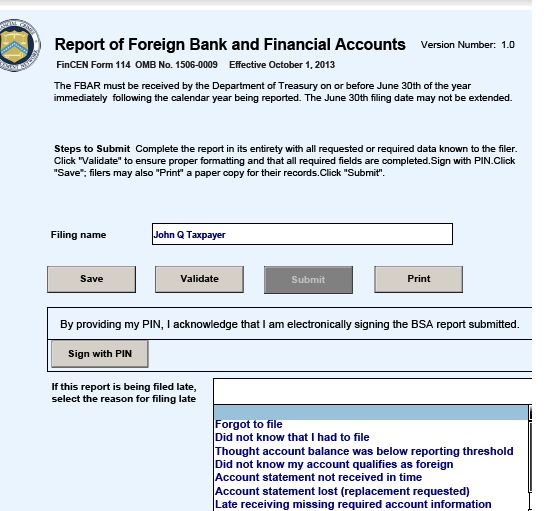 The filing of the FBAR form is not with the IRS, but rather with FinCEN. It must now be filed electronically on Form 114, Report of Foreign Bank and Financial Accounts through the BSA E-Filing System website. The electronic form supersedes TD F 90-22.1 (the FBAR form that was used in prior years).
The penalties for not filing or even filing late are by statute $10,000 for each failure to file (or up to 50% of the account balances when intentionally not filed by the person with the requirement to file).
* Simply More Compliance Obligations for Persons Residing Outside the U.S.
At the end of the day, a USC or LPR residing outside the U.S. necessarily has a much greater burden of tax compliance and filings of these forms, compared to someone living in the U.S. without foreign bank accounts, foreign assets, foreign income, etc.
???????????????? ?Please click here to view the above in Chinese.?
- ← Previous
- 1
- 2
- 3
- Next →