The Treasury Department announced 776 renunciations, which brings the 2014 total to 2,353, on track to match last year’s record breaking 2,999 citizens who renounced.
US Citizen Renunciations 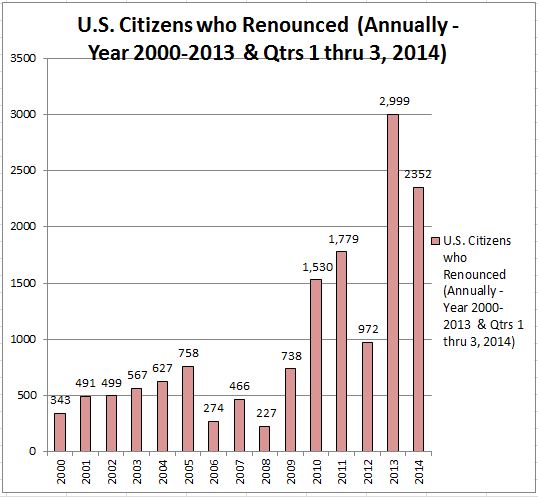 Q1 thru Q3 – 2014
See, Will Qtr 2 Exceed Qtr 1 – 2014, Record of USC Renunciations?
As has been mentioned previously, this list does not include lawful permanent residents who have terminated their LPR status for purposes of these tax law provisions. For further reading on LPRs, see, Oops…Did I “Expatriate” and Never Know It: Lawful Permanent Residents Beware! International Tax Journal, CCH Wolters Kluwer, Jan.-Feb. 2014, Vol. 40 Issue 1, p9
Maybe the LPR list represents several hundred thousands of individuals? The current total estimated number of LPRs is 13.3 million for the year 2012 as reported by the Office of Statistics of the DHS. See, Estimates of the Legal Permanent Resident Population in 2012
There are two distinct ways that LPRs can terminate their tax residency status. First, through the formal immigration law process typically involving filing Form I-407. See, Who is a “long-term” lawful permanent resident (“LPR”) and why does it matter?
Second, they can terminate their LPR status, for tax purposes, by merely meeting the statutory 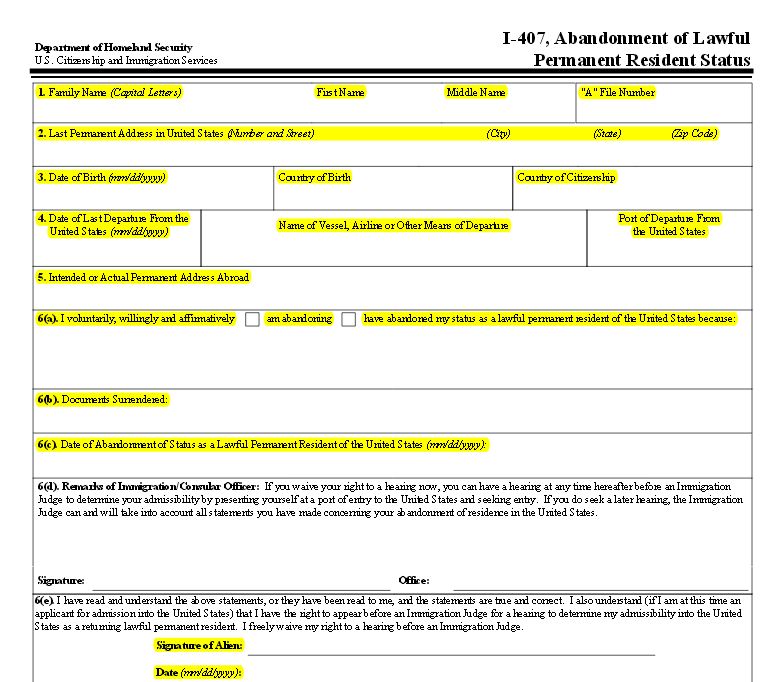 requirements of IRC Section 7701(b)(6). This simply requires the individual to move from the U.S. and live in a country with a U.S. income tax treaty and meet the other two statutory requirements.
This statutory language has three tests for when the individual is no longer a LPR for federal tax purposes:
- The individual is treated as a resident of a foreign country under the provisions of a tax treaty;
- The individual does not waive the benefits of the treaty, and
- Notifies the Secretary of the commencement of such treatment.