Will Congress Repeal the Estate Tax? If so, will the “Inheritance Tax” for “Covered Expatriates” get Repealed too?
The current U.S. Treasury Secretary announced in an April 26, 2017 press briefing the intention of the current Administration to repeal the estate tax.
The current estate tax has been in existence for 101 years (with prior versions in the 19th century). Please see the following articles published some years ago for a history of the estate tax since its enactment with the Revenue Act of 1916; Patrick Fleenor, staff economist at the Tax Foundation, A History and Overview of Estate Taxes in the United States and The Estate Tax: Ninety Years and Counting, by Darien Jacobson, Brian Raub and Barry Johnson.
See Figure C from the article by Jacobson, et. al. that provides a highlight of significant changes in the U.S. estate tax law:

If Congress and the President do repeal a tax that has been in existince for over 100 years, it is hard to imagine that such a repeal will be permanent going forward in other administrations and congressional bodies? In contrast, the U.S. Treasury released its FACT SHEET: Administration’s FY2017 Budget Tax Proposals a little over a year ago where its then stated goal (under a very different Administration) was to increase the scope and amount of the estate and gift tax –
Restore the Estate, Gift, and Generation-Skipping Transfer (GST) Tax Parameters in Effect in 2009. This proposal would make permanent the estate, GST, and gift tax parameters as they applied during 2009. The top tax rate would be 45 percent and the exclusion amount would be $3.5 million per person for estate and GST taxes, and $1 million for gift taxes. The proposal would be effective for the estates of decedents dying, and for transfers made, after December 31, 2016.
The important question for “covered expatriates” (really for their future U.S. beneficiareis) is whether a repeal of the estate tax for U.S. persons will also include the repeal of the “inheritance tax” under Section 2801 that was newly adopted in 2008. See, prior posts relevant to Section 2801,
– The “Hidden Tax” of Expatriation – Section 2801 and its “Forever Taint.”
– Finally – Proposed Regulations for “Covered Gifts” and “Covered Bequests” Issued by Treasury Last Week (Be Careful What You Ask For!)
Will Treasury Ever Finalize the 2801 Regulations? Meanwhile – U.S. beneficiaries are exposed to tax on “covered gifts” and “covered bequests.”
Treasury has not yet finalized the 2801 regulations. The tax that is imposed under Section 2801 was passed into law in 2008, yet the collection of the tax has been suspended until the regulations are finalized.
In May 2014, I submitted comments awaiting expected proposed regulations. Covered Gifts and Bequests: The Need for Guidance (5+ Years Out)
The proposed regulations were eventually published in September 2015 by Treasury; but  still are not final. See, Guidance under Section 2801 Regarding the Imposition of Tax on Certain Gifts and Bequests from Covered Expatriates
See, a prior post from September 2015 – Finally – Proposed Regulations for “Covered Gifts” and “Covered Bequests” Issued by Treasury Last Week (Be Careful What You Ask For!)
In May 2016 the ABA, Real Property, Trust and Estate Law Committee issued – “Comments on Guidance under Section 2801”
I addressed the following issues in my comments:
First, the collection of the tax has been suspended until after guidance is issued along with IRS Form 708.
Second, this is the first U.S. federal tax of its kind as a true “inheritance” tax, in the case of bequests. It is also apparently the first tax of its kind on the recipient of gifts, which are otherwise exempt from income tax.
Third, the IRS has no way to help effectively track the tax, its application, collection and general enforcement.
Fourth, there is no basic guidance beyond the statute for “any United States citizen or resident” who receives such a gift or a bequest to make a host of decisions to properly determine or calculate the tax.
Fifth, presumably no “United States citizen or resident” has ever even paid such a tax, due to its suspension; although the law is now almost six years old.
Sixth, the statute imposes no time requirement for when the tax must be paid.
Seventh, since many of the assets likely to be gifted or bequeathed will be located outside the U.S. in different countries with different currencies and economic variables and legal 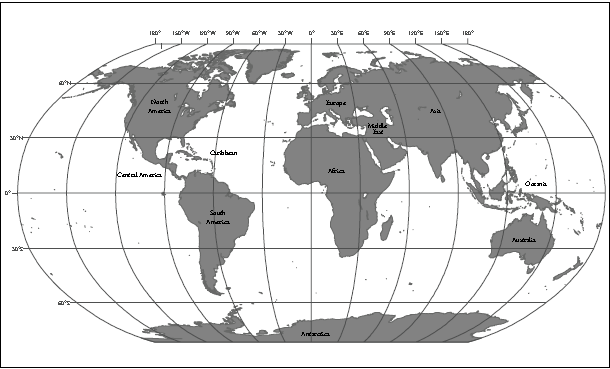 systems compared to the U.S., there is a particular need to know the allowable methods of valuing the property gifted or bequeathed.
Eighth, Chapter 4 of Subtitle A, FATCA will bring greater awareness of U.S. tax law requirements for U.S. citizens and residents living outside the U.S., specifically including Section 2801.
Ninth and finally, there have been a record number of U.S. citizens who have renounced or relinquished their citizenship during the year 2013, which increases the number of affected taxpayers who might receive covered gifts or bequests.
Finally, there have been other thoughtful comments, including from ACTEC regarding the proposed 2801 proposed regulations – but still no final regulations and no statute of limitations periods running against the government to collect taxes which may be owing going back nearly 10 years!!
The U.S. Supreme Court and Tax Cases (e.g., Topsnik and Section 877A)
Individuals around the world are often curious about how and when the U.S. Supreme Court hears tax cases. In some countries, tax cases represent the majority or large percentage of total cases heard by their Supreme Court (e.g., Mexico). 
The Supreme Court typically hears some 100-150 cases per year out of more than 7000 cases a year it is asked to review. Many of these cases deal with the constitutionality of particular laws. They rarely take up tax cases.
The 2013 term was unusual in that the Supreme Court heard three federal tax cases (U.S. v. Woods, U.S. v. Quality Stores, Inc. and U.S. v. Clarke). Similarly, in 2015 the Supreme Court issued opinions in three tax cases (although each dealt with powers of states to impose taxation – Alabama Dept. of Revenue v. CSX Transportation, Inc. a property tax case; Direct Marketing Association v. Brohl a sales tax case; and, Maryland v. Wynne an income tax case).
None of these cases or any Supreme Court case before them has dealt with the U.S. “exit tax” arising out of IRC Sections 877, 877A, 2801, et. seq. Indeed, to date, there have been few cases heard by other courts regarding these provisions. One of the most important and relevant is the Topsnik v. Comm’r (146 T.C. No. 1) case published this year. The Topsnik case will be discussed in more detail in a later post. The short version is that the taxpayer in Topsnik lost the case and was found to have been a “covered expatriate” with the consequent adverse tax consequences that follow.
Taxpayers have a right of appeal from the U.S. Tax Court. If a case is appealed from the U.S. Tax Court, e.g., Topsnik or another federal court (e.g., from Court of Federal Claims) it will go to one of 13 appellate courts. An appeal from one of these 13 appellate courts will lie with the U.S. Supreme Court.
The U.S. Supreme Court is generally not obliged to review cases (per the Certiori Act of 1925), including tax cases, and will rarely take up a tax case, whether or not it addresses a Constitutional question. Hence, a case like Topsnik will almost certainly never become binding precedent to all the courts in the land, e.g., the Court of Federal Claims.
Like Canada’s “Deemed Acquisition” Rules: IRC Section 877A(h)(2)
The Canadian income tax system has a sensible rule that treats immigrants into the country “as if” they had sold their non-Canadian assets just prior to becoming a Canadian income tax resident.
The Canada Revenue Agency (“CRA”) explains it as follows:
- If you owned certain properties, other than taxable Canadian properties, while you were a non-resident of Canada, we consider you to have sold the properties and to have immediately reacquired them at a cost equal to their fair market value on the date you became a resident of Canada. This is called a deemed acquisition.
- Usually, the fair market value is the highest dollar value you can get for your property in a normal business transaction.
- You should keep a record of the fair market value of your properties on the date you arrived in Canada. The fair market value will be your cost when you calculate your gain or loss from selling the property in the future.
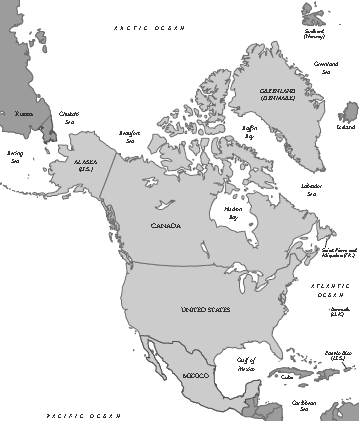
The U.S. does not have such a rule generally for immigrants coming to America. Instead, the non-U.S. citizen will typically have their historic tax basis (by applying U.S. tax principles) in the property they own prior to coming to the U.S. For instance, an immigrant from the South American continent who owns real estate in their country of citizenship, may have a large “unrealized gain” in that property for U.S. federal income tax purposes.
This means that if the South American sells the real estate, while being a U.S. income tax resident (after immigrating to the U.S.), the gain in the South American real estate will be subject to taxation in the U.S. This is very different from the sensible Canadian rule, which exempts the appreciation in the property of the immigrant while living outside of the North American continent.
This can be a very bad result for the uninformed immigrant, since the example above can get worse, when the immigrant to the U.S. has received properties in the form of gifts (e.g., from their family members) which could have very low tax bases per U.S. tax law. Assume a gift of South American real estate received by the immigrant prior to moving to the U.S. with a low historic basis of US$500K. Assume further it is sold for US$3.3M while the immigrant is residing in the U.S. If the property was worth US$3.2M when she immigrated to the U.S., only US$100K of appreciation occurred while residing in the U.S. Nevertheless, under U.S. law, the entire US$2.8M gain (US$2.7M of which occurred while living outside the U.S.) will generally be subject to U.S. federal income tax.
This comes as quite a surprise to many. 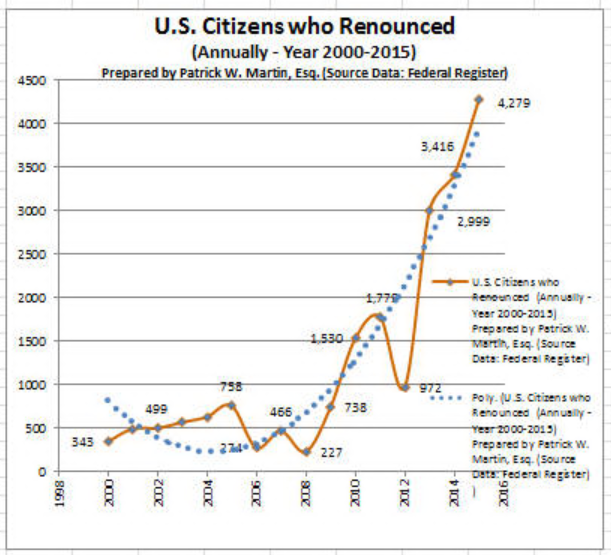
An immigrant to Canada in the same case, would only have US$100K of taxable gain, with the US$2.7M gain being free from taxation under Canada’s “deemed acquisition” rules.
There is one exception in the U.S. tax law. Unfortunately, it applies to “covered expatriates” who readers of this site understand, that the U.S. tax regimes are typically quite undesirable. They are as follows:
The statutory provision under IRC Section 877A(h)(2) provides relief from the first tax; for purposes of calculating the “mark to market” tax. It provides in relevant part that the “covered expatriate” –
- . . . shall be treated as having a basis on such date [the date of immigration to the U.S. in the first place] of not less than the fair market value of such property on such date . . .”
Accordingly, the appreciation of the property owned by the immigrant (see, US$2.7M example above – who is in the process of emigrating out of the U.S. -by way of “covered expatriate” status) will generally escape income taxation under IRC Section 877A(h)(2) on the unrealized gain in the property that arises prior to moving to the U.S. in the first place. This limited rule is similar to the sensible Canadian “deemed acquisition” rules.
Unfortunately, there is no such rule as this “deemed acquisition” concept that could reduce the future tax payable by U.S. beneficiaries of “covered gifts” and “covered bequests.”
Trendlines Show United States Citizens Renouncing at Historical Levels
Graphs and charts are a nice way to show key pieces of information quickly. The charts I create showing the numbers of U.S. citizens (“USCs”) who have renounced their citizenship help me better understand and track the detailed data behind the graphs.
In this vein, I have added trend-lines to two of the graphs that reflect the total annual and quarterly numbers of individuals who have renounced over the last few years.
The trend-lines are the blue dotted lines in each chart. The first chart reflects annual renunciations over a longer period of time, which is compressed much more along the “x axis” – i.e., the horizontal axis. The trend of USCs who are renouncing looks quite dramatic in this chart; a giant ski slope heading upwards fast.
The next chart includes many more data points along the “x axis” spread out over a shorter period of time, which is also reflected by the dotted blue trend-line. Accordingly, the trend-line appears to be a more gradual increase of USC renunciations.

Nevertheless, both show the trend over time as increasing substantially over time.
As has been explained in prior posts, those U.S. citizens who are considering renouncing U.S. citizenship should not take the decision lightly unless they want to be a “covered expatriate” with various adverse U.S. tax and legal consequences.
See, for instance the following prior blogs, Revisiting the consequences of becoming a “covered expatriate” for failing to comply with Section 877(a)(2)(C).
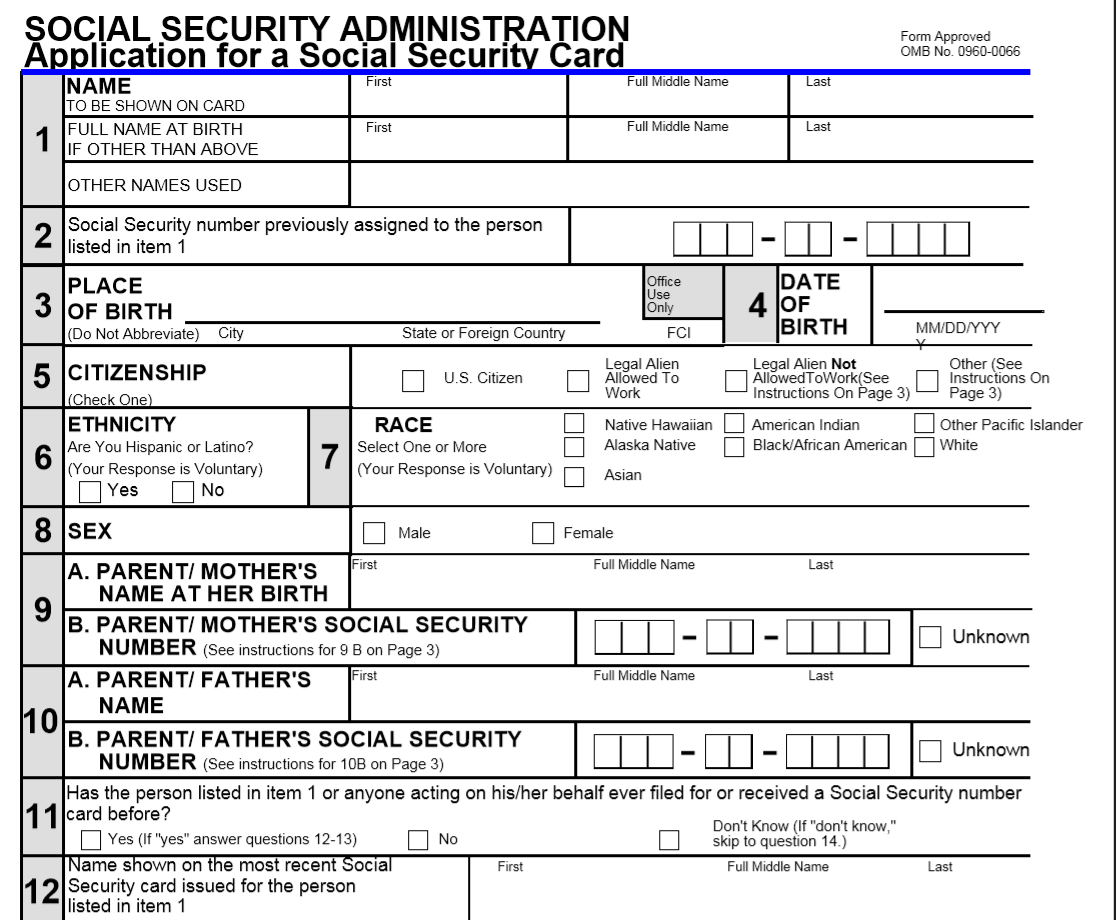
U.S. Citizens Overseas who Wish to Renounce without a Social Security Number will Necessarily be a “Covered Expatriate”
The “Hidden Tax” of Expatriation – Section 2801 and its “Forever Taint.”
Finally – Proposed Regulations for “Covered Gifts” and “Covered Bequests” Issued by Treasury Last Week (Be Careful What You Ask For!)
The U.S. Treasury department has issued proposed regulations implementing the tax on “covered gifts” and “covered bequests.” There have been numerous posts about this tax that was first created in 2008 by new IRC Section 2801 (which has it’s own chapter in Title 26 – aka the Internal Revenue Code or “IRC”: Chapter 15, Gifts and Bequests from Expatriates). The regulations can be reviewed here – Guidance under Section 2801 Regarding the Imposition of Tax on Certain Gifts and Bequests from Covered Expatriates
See prior posts, When does “Covered Expatriate” Status -NOT- matter?, (May 2015); See, The “Hidden Tax” of Expatriation – Section 2801 and its “Forever Taint.” (April 2014) and Proposal to U.S. Treasury and IRS: awaits Final Regulations on “Covered Gifts” and “Covered Bequests” (December 2014).
The tax is levied currently at 40% and can be a big surprise to U.S. beneficiaries who receive so-called “covered gifts” and “covered bequests.” The actual implementation of the tax and its enforcement was suspended until Treasury issued regulations. That day has now come and final regulations will follow shortly.
The proposed regulations create an ingenious mechanism by which assets that are received from foreign trusts (which make an election to be taxed as domestic trusts) cannot escape the 40% taxation. Specifically, there was concern expressed to me by Treasury officials drafting the regulations, when I had submitted a proposal to the U.S. Treasury on the subject in May of 2014. See, COVERED GIFTS & BEQUESTS: THE NEED FOR GUIDANCE (5+ YEARS OUT)
* * *
There was concern by the U.S. Treasury that U.S. persons could escape the tax when assets are received by foreign trusts which elect to be taxed as domestic trusts. In those cases, the statute imposes the tax liability on the trust and not the U.S. beneficiary. Hence, the concern expressed by some of the key drafters at U.S. Treasury of the regulations, was that a foreign trust would make the election and purposefully NOT pay the tax imposed by the statute, since the trustee would be outside the U.S. and largely outside the jurisdiction of the IRS.
The proposed regulations create a mechanism by which the trustee cannot slip away so easily, as they will NOT be treated as a domestic trust (versus a foreign trust) in such circumstances where the tax is not actually paid. In those cases, the U.S. beneficiary will be liable for the tax.
It also has some unique concepts that are not necessarily intuitive under the law. For instance, those individuals who are not U.S. citizens, yet live in the U.S. on a nearly full time basis, might still be able to avoid the application of the tax (at least in certain circumstances) if they are not “domiciled” in the U.S. The term “domicile” is a key estate and gift tax term of tax residency, that is not tied to the number of days an individual spend in the U.S. Rather, it is tied to the subjective intention of whether they expect to spend the rest of their lives in the U.S. See, Section 28.2801-2(b) of the proposed regulations which defines residents as those under “Chapter 11” and “Chapter 12”; which are the rules of “domicile” for transfer tax purposes. These are different from the rules of income tax residency found in IRC Section 7701.
The operative definition is found in (b)(1) of the Regulations: 26 CFR 20.0-1 – Introduction.:
“A person acquires a domicile in a place by living there, for even a brief period of time, with no definite present intention of later removing therefrom. Residence without the requisite intention to remain indefinitely will not suffice to constitute domicile, nor will intention to change domicile effect such a change unless accompanied by actual removal.”
Notice, there is no reference to the number of days physically spent in the U.S.
More to be discussed on the proposed regulations in later posts.
Will 2015 Be a Record Year for Citizenship Renunciations?
U.S. Citizens Overseas who Wish to Renounce without a Social Security Number will Necessarily be a “Covered Expatriate”
U.S. Citizens Overseas who Wish to Renounce without a Social Security Number (“SSN”) will Necessarily be a “Covered Expatriate”
- The Dilemma of SSNs, TINs and USCs Residing Overseas
The prior post discussed some of the complications of United States Citizens (“USCs”) who reside outside the U.S. and do not have a social security number (“SSN”) . This dilemma exists, even though USCs are not generally required to file for or  obtain a SSN (e.g., at birth – See, SSA Publication – “Social Security Numbers For Children” page 2, It is not obligatory to file for a SSN at birth. “Must my child have a Social Security number? No. Getting a Social Security number for your newborn is voluntary. But, it is a good idea to get a number when your child is born. . . . ).
Indeed, it is the U.S. federal tax law that requires the USC must have a SSN for their taxpayer identification number (“TIN”). I will reference various excerpts from a recent paper I drafted and presented titled URGENT NEED FOR U.S. CITIZENS RESIDING OUTSIDE THE U.S. TO BE ABLE TO OBTAIN A TAXPAYER IDENTIFICATION NUMBER (“TIN”) OTHER THAN A SOCIAL SECURITY NUMBER , including the following:
. . . the IRS’ increased focus on international tax compliance has made clear that USCs residing overseas have U.S. tax return filing obligations, even if they have no assets, no income, or no real personal connections in or with the U.S. See IRS notice from 2011 which addresses numerous aspects of tax compliance for USCs overseas, including various penalties under the law[1]:
. . . U.S. Citizens or Dual Citizens Residing Outside the U.S. . . .
The IRS is aware that some taxpayers who are dual citizens of the United States and a foreign country may have failed to timely file United States federal income tax returns or Reports of Foreign Bank and Financial Accounts (FBARs), despite being required to do so. . . . 2. Penalties imposed for failure to file income tax returns or to pay tax . . . 3. Possible additional penalties that may apply in particular cases . . . 6. Possible penalties for failure to file FBAR . . . 7. New reporting requirement for foreign financial assets . . . [emphases added]
USCs residing overseas are subject to the range of tax penalties that apply to all individual taxpayers (e.g., negligence penalties, failure to file penalties, late payment or failure to pay penalties, etc.).[2] Additionally, USCs residing overseas are subject to other, typically much harsher penalties for not timely filing U.S. federal information returns regarding assets located outside the U.S.[3]; alluded to above in the IRS 2011 notice.[4]
These civil penalties typically are a minimum of US$10,000 per statutory violation. USCs who live outside the U.S. necessarily have assets, such as financial accounts in their country of residence. These Title 26 information reporting requirements[5] are referred to herein as “International Information Returns.”
The IRS will not process federal tax returns and International Information Returns without a valid TIN.[6] Plus, the law does not provide for an exception for USCs overseas who do not file returns, if they do not have a SSN. Late filed, or incomplete International Information Returns and tax returns (e.g., lacking a SSN) will typically subject USCs to these penalties even in those cases when the taxpayer has no federal income tax liability.[7]
[1] See, IRS FS-2011-13, December 2011, updated February, 2014.
[2] See, IRS FS-2011-13 and as a sample of some of the many statutory penalties that could typically apply, IRC §§ 6048, 6652(f), 6677, 6654, 6655, 6698, 6699, 6166, 6653, 6675, 6715, 6715A, 6717, 6718, 6719, 6720A, 6725, et. seq.
[3] See, IRC §§ 6038, 6038B, 6038D, 6039F, 6039G, 6046, 6046A, 6048, et. seq.
[4] See, IRS FS-2011-13, December 2011, updated February, 2014.
[5] See, IRC §§ 6038, 6038B, 6038D, 6039F, 6039G, 6046, 6046A, 6048, et. seq.
[6] See, IRS website, “General ITIN Information” – http://www.irs.gov/Individuals/General-ITIN-Information – “IRS no longer accepts, and will not process, forms showing “SSA”, 205c”, “applied for”, “NRA”,& blanks, etc.”
[7] See, IRC §§ 911 (foreign earned income exclusion) and 901 (foreign tax credit), et. seq. A USC residing overseas may have no actual federal income tax liability (for various reasons), typically due to the foreign earned income exclusion and/or foreign tax credit calculation.
The above explains fairly clearly the dilemma facing USCs residing overseas.
The complexity of getting a SSN and the requirements are covered in more detail in the paper. Some key points are:
I. The Social Security Administration Rules Make it Nearly Impossible for Many USCs Overseas to Reasonably Obtain a SSN
The policy and procedures of the SSA regarding issuing SSNs have changed significantly over the years.[1] The Social Security Administration (SSA) provides a detailed chronology of the major changes in policy and procedures  regarding filing for and obtaining a SSN.[2] One of the most significant revisions in the last decade came from The Intelligence Reform and Terrorism Prevention Act of 2004 (P.L. 108-458), which imposes various standards for the verification of documents or records submitted by an individual.
A. Only a Few Countries Around the World have Personnel at U.S. Embassies or Consulate Offices that Can Process SSN Applications – SSA Form SS-5-FS
Applying for SSNs overseas is severely restricted compared to an application in the U.S.
According to the U.S. Department of State, Foreign Affairs Manual (“FAM”), only certain “Claims-Taking Posts” in specific countries “may” include “processing applications for Social Security Numbers.” [3]
These 17 countries (and a city in the case of Jerusalem) with Claims-Taking Posts include:
“Austria, Argentina, Costa Rica, Dominican Republic, France, Germany, Greece, Ireland, Italy, Japan, Jerusalem, Mexico, Norway, Philippines, Poland, Portugal, Spain, and the United Kingdom.”
Noticeably absent are many Western European countries, virtually all of Latin America, virtually all of Asia, virtually all of Eastern Europe, all of the Middle East (except Jerusalem), all of the African continent, all of the Australian continent and surrounding island countries and Russia, among many other significant countries, including OECD member countries.[4]
Nothing in the FAM requires any of these “Claims-Taking Posts” to actually process applications for a SSN. Plus, there are of course hundreds of other countries throughout the world, not listed above, which do not have such a U.S. Department of State Post. For these reasons, USCs in countries such as China must travel to a U.S. Department of State Post (e.g., the Philippines) which is able to process applications for SSNs.
[1] See, SSA website, The Story of the Social Security Number, by Carolyn Puckett, Social Security Bulletin, Vol. 69 NO. 2, 2009 (http://ssa.gov/policy/docs/ssb/v69n2/v69n2p55.html.
[2] See, SSA website, Significant Milestones in Social Security Number Policy. A detailed chronology of the major changes in policy and procedures. http://www.ssa.gov/history/ssn/ssnchron.html.
[3] See 7 FAM 530, page 2 of 64.
[4] In contrast to these 17 countries (and one city – Jerusalem) where a USC residing overseas must travel to apply for a SSN, the Treasury Department has announced it has around 100 countries that have signed, or “have reached agreements in substance” a FATCA IGA. USCs throughout the world are required by the Foreign Account Tax Compliance Act (“FACTA”) to provide their U.S. TIN to financial institutions throughout the world (on IRS Form W-9, or its equivalent), which under current law necessarily must be a SSN. Of course, if they have no SSN, they cannot sign IRS Form W-9 which provides in Part II: “Under penalties of perjury, I certify that: 1. The number shown on this form is my correct taxpayer identification number . . .”
- The Necessary “Covered Expatriate Status” of a USC without a SSN
The core point of this post, with the above SSN background, is to explain how a USC without a SSN will necessarily be a “covered expatriate” since they will not be able to truthfully certify they have complied with the federal tax laws (title 26). See, Certification Requirement of Section 877(a)(2)(C) – (5 Years of Tax Compliance) and Important Timing Considerations per the Statute
As other posts have explained, “covered expatriate” status matters:
See, Why “covered expat” (“covered expatriate”) status matters, even if you have no assets! The “Forever Taint”! (20 May 2014) and The “Hidden Tax” of Expatriation – Section 2801 and its “Forever Taint.” (10 April 2014) and “Covered Expatriate” Status is a “Scarlet Letter” (10 Nov 2014).
If a USC has no SSN, they by definition will never be able to comply with the Certification Requirement of Section 877(a)(2)(C) since they will not be able to comply with IRC § 6109(a) and Treas. Reg. § 301.6109-1. As the SSN/TIN paper explains:
All United States citizens (“USCs”) must have a social security number (“SSN”) under current law as their TIN to file a federal income tax return.[1]
[1] See, IRC § 6109(a) and Treas. Reg. § 301.6109-1.
The IRS will not process federal tax returns and “International Information Returns”, as defined below, without a valid TIN[1]; which currently must be a SSN for a USC.
[1] See, IRS website, – http://www.irs.gov/Individuals/General-ITIN-Information – “IRS no longer accepts, and will not process, forms showing “SSA”, 205c”, “applied for”, “NRA”,& blanks, etc.”
The Problem with PFICs! “Avoid PFICs Like the Plague”
There are typically numerous tax issues that USCs and LPRs need to consider prior to renouncing their citizenship; or abandoning th eir lawful permanent residency status.
One of the most confusing comes from the complex rules of a so-called “PFIC” – the acronym for a “passive foreign investment company.” A prior post in March 2014 discussed the basics of these U.S. tax creatures – “PFICs” – What is a PFIC – and their Complications for USCs and LPRs Living Outside the U.S.
Most USCs and LPRs with basic mutual fund investments in their country of residence have PFICs and probably don’t even know it.
The IRS and Treasury have recently spent much attention and resources to the regulation of PFICs. In January of 2014, temporary regulations were issued regarding PFICs. See, Regulations §1.1291–0T, et. seq.
One of the many new requirements of these regulations are annual information filing requirements. This means that a U.S. taxpayer (e.g., U.S. citizen or LPR) residing outside the U.S., must file an annual report on IRS Form 8621.
- When Might You have a PFIC?
Taxpayers who have simple passive investments in mutual funds based outside the U.S.. e.g., in their country of residence, almost always have PFICs. There is no percentage ownership threshold in the foreign entity that triggers PFIC tax consequences. An ownership interest of 0.000001% triggers the consequences if either the “income test” or “asset test” are satisfied. Other type of investment funds in the form of a legal entity also typically qualify as a PFIC.
Specifically, a PFIC is a foreign corporation in which a U.S. person has some ownership in (without any percentage threshold requirement) if (i) at least 75% of its gross income is passive income (the “income test”), or (ii) at least 50% of its assets produce passive income (the “asset test”). See IRC § 1297(a).
Also, many retirement funds in various countries (including both private and many government run retirement plans) typically fall into the category of a PFIC. For instance, the Singapore retirement fund system, Central Provident Fund (“CPF”), is actually created by the government, but Singapore taxpayers who are obligated to contribute to the retirement fund will select various mutual funds to invest in through the CPF. Hence, these mutual fund investments are PFICs. See also the technical paper regarding Mexican retirement funds that argues, WHY MEXICAN RETIREMENT FUNDS SHOULD NOT BE SUBJECT TO THE NEW REPORTING REQUIREMENTS UNDER IRC SECTION 1298(f).
- Ugly Tax Consequences of a PFIC
PFICs are taxed to the U.S. taxpayer in a very complicated manner compared to taxation of U.S. based mutual funds or other U.S. based investments. In short, the income earned from PFICs, under the default regime, are taxed at the ordinary income rates, and for past years are typically taxed at the highest marginal ordinary income tax rate is 39.6% (even if the income would otherwise qualify for qualified dividend or long-term capital gains rates – which are taxed at no more than 20%).
There are three alternative regimes for how a U.S. investor is taxed in a PFIC: (i) the “excess distribution” regime (which is the default regime); (ii) the qualified electing fund (“QEF”) regime and (iii) the market-to-market (“MTM”) regime. Each of these regimes will be discussed in later posts.
One key point to know is that most foreign investment funds do not keep records and account for income and expenses in a manner that even allows a U.S. taxpayer to report accurately under the QEF or MTM regime, even if such treatment provides a lower overall U.S. tax.
More on how PFICs are taxed in a later post.
- Even Uglier Tax Reporting – Compliance Consequences of PFICs Driven by FATCA
Finally, the 2010 FATCA legislation has led to the new regulations that now require annual reporting of PFICs. This is done on IRS Form 8621. It is a laborious form and requires extensive and detailed information.
The consequences of not reporting can lead to disastrous tax results. See a prior post from March 2014, When the U.S. Tax Law has no Statute of Limitations against the IRS; i.e., for the U.S. citizen and LPR residing outside the U.S.
- Why You Don’t Want to Die with a PFIC or Gift a PFIC Away (even to Your Favorite Charity or Spouse).
Lastly, a later post will explain in more detail why a USC or LPR generally wants to avoid PFICs if at all possible. Many countries require their residents to contribute on a mandatory basis to retirement funds that invest in mutual funds, which may not allow a USC to avoid PFICs. One of the principle reasons to avoid PFICs is the income tax that arises and is owed by the U.S. person, even if he or she tries to give the PFIC away. A gift of a PFIC will typically cause an income tax to the donor in addition to the estate/gift tax rules. This is true for gifts to charity and even to your own spouse.
- Why You Should Avoid PFICs Like the Plague
At the end of the day, the above complications, mean that most USCs and LPRs residing overseas should “avoid PFICs like the plague”.
In the context of USCs who wish to renounce their U.S. citizenship, they will not be able to avoid “covered expatriate” status if they have not complied with these PFIC rules, as they will not be able to “certify under penalty of perjury that he has met the requirements of this title for the 5 preceding taxable years or fails to submit such evidence of such compliance as the Secretary may require.”
The ugly consequences of PFICs can be summarized as follows:
- Higher income tax rate than U.S. based investments on the earnings of the investment, at least under the default method;
- Practically impossible to report the earnings on a more favorable MTM or QEF method;
- Extensive information reporting requirements annually;
- Open ended statute of limitations in favor of the IRS to audit all items on the tax return, for failure to properly file IRS Form 8621;
- Paying a U.S. income tax, even if you gift away the PFIC to charity or to your spouse;
- Trying to even explain effectively the consequences of a PFIC to your tax return preparer; and
- Being subject to the “forever taint” of being a “covered expatriate” for failure to comply with the PFIC rules. See, The “Hidden Tax” of Expatriation – Section 2801 and its “Forever Taint.”
Obama Budget Proposal to “Provide Relief for Accidental Americans”? Will the Proposal to Modify the Expatriation Rules Become Law?
[See follow-on post: The Proposal by the President to Exempt Certain U.S. Citizens from Worldwide Taxation: – Very Small, Select Group– published 18 Feb. 2015]
Every year, the President of the United States, releases his proposed budget. The budget is prepared by his team of advisers at the Treasury Department and is known as the “green book“.
For a complete copy of the proposal, that was released on February 2, 2015, see, General Explanations of the Administration’s Fiscal Year 2016 Revenue Proposals (Released February 2015)
Buried deep into the proposal of the US$3.99 trillion fiscal year 2016 expenditure plan, is a provision to “provide relief for certain accidental dual citizens.” See pages 282 and 283 of the proposal.
It appears someone is listening in the Administration at Treasury; at least a little bit? Will Congress similarly be interested in such proposals? See, Will Congress Intervene to make USC based Tax Laws More User Friendly to USCs and LPRs Residing Outside the U.S.?
The proposal would not adopt residency based taxation for all U.S. citizens, as exists in the rest of the world, but would exclude certain U.S. citizens from the “mark to market” tax on expatriation (i.e., the “exit tax”). See, “Tax Simplification: The Need for Consistent Tax Treatment of All Individuals (Citizens, Lawful Permanent Residents and Non-Citizens Regardless of Immigration Status) Residing Overseas, Including the Repeal of U.S. Citizenship Based Taxation,” by Patrick W. Martin and Professor Reuven Avi-Yonah, 2013.
Those excluded from the exit tax and the tax to their U.S. heirs or beneficiaries who receive gifts or inheritances (See, The “Hidden Tax” of Expatriation – Section 2801 and its “Forever Taint.”) are those individuals who:
- became at birth a citizen of the United States and a citizen of another country,
- at all times, up to and including the individual’s expatriation date, has been a citizen of a country other than the United States,
- has not been a resident of the United States (as defined in section 7701(b)) since attaining age 18½,
- has never held a U.S. passport or has held a U.S. passport for the sole purpose of departing from the United States in compliance with 22 CFR §53.1,
- relinquishes his or her U.S. citizenship within two years after the later of January 1, 2016, or the date on which the individual learns that he or she is a U.S. citizen, and
- certifies under penalty of perjury his or her compliance with all U.S. Federal tax obligations that would have applied during the five years preceding the year of expatriation if the individual had been a nonresident alien during that period.
This would be a significant change from current law. However, the no passport requirement will narrow significantly the number of individuals who may be eligible for this relief; if it becomes law?
Most interesting about the proposal, is that it seems to say these U.S. citizen individuals (who meet all 6 criteria) will not be subject to any U.S. tax as a U.S. citizen. In other words, it seems to say they will be taxed the same as a non-resident alien, which in effect is residency based income taxation for this narrow class of U.S. citizens. The word tax is used generically, to presumably also exclude them from U.S. estate, gift and generation skipping transfer taxes.
The proposal has a window of opportunity that starts to close with time and then shuts in January 1, 2018; i.e., the 2 year period after January 1, 2016. This will mean that those future “Accidental Dual Citizens/Americans” who later learn of their U.S. citizenship, will only have 2 years from the moment they became aware of their U.S. citizenship status. One thing is to know you are a U.S. citizen as you live wherever you may around the world; another is to know and understand the U.S. taxes that are imposed upon you on your worldwide assets.