The President’s Proposal is NOT the Same as Current Law – Section 877A(g)(1)(B)
Some individuals are mistaken that the Obama proposal to exempt certain U.S. citizens from taxation (including the “mark to market” exit tax), is the same as the exception in IRC Section 877A(g)(1)(B).
It’s not. They are not the same, although they have some similar requirements (e.g., 5 years of certification of U.S. tax law compliance under penalty of perjury).
For a brief discussion on the President’s proposal, see –The Proposal by the President to Exempt Certain U.S. Citizens from Worldwide Taxation: – Very Small, Select Group
–
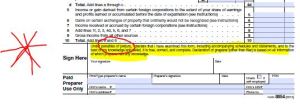
There are important differences. Most importantly, the I
RC Section 877A(g)(1)(B) exception requires the individual not only have been a dual citizen (of at least two or more countries) at birth, along with U.S. citizenship; but also continue to reside and be a tax resident of that country, i.e., the country of which they were also a citizen at the time of their birth. This tax residency/dual citizenship rule is necessarily required by I
RC Section 877A(g)(1)(B). If the person has moved to another country, they will not be eligible for this treatment and will be subject to the mark to market “exit tax” if they renounce their U.S. citizenship. Their U.S. heirs and beneficiaries will also be subject to the 40% (current tax rate) tax on “covered gifts” and “covered bequests.”
–
The President’s proposal (if it ever becomes law) will also apparently exempt all qualifying individuals from any type of U.S. taxation; other than tax that would apply to a “non-resident alien” (which would be no U.S. tax – if the individual had no U.S. source income). Not only would no “exit tax” apply, but so too would no U.S. income tax on their income from their country of residence or any other country outside the U.S. The President’s proposal would also exempt them from all U.S. tax filing requirements (other than the 5 years) and from FBAR filing requirements. See,
Nuances of FBAR – Foreign Bank Account Report Filings – for USCs and LPRs living outside the U.S.–
–
Part II: U.S. Department of State Communications to USCs overseas Regarding Tax Obligations with IRS
A recent post discussed a rather surprising development of how the – U.S. Department of State, Starts Communicating with U.S. Citizens Overseas Regarding Tax Obligations with the IRS
There are several observations to be made about this approach.
First, some USCs living overseas will find this a welcome development, as it provides a method of  basic education of how U.S. tax laws work. The newer U.S. passports do have an obscure reference to U.S. tax obligations of USCs. In the past, there was generally no communications from the U.S. Department of State to USCs, including newly naturalized U.S. citizens about their U.S. tax obligations.
Second, there is much helpful information provided in the U.S. Department of State’s explanation. The key tax forms that are most relevant for USCs and LPRs residing overseas are explained in the government e-mail. See, USCs and LPRs Living Outside the U.S. – Key Tax and BSA Forms
All of the following forms are identified by the U.S. Department of State:
- Substantive Income Tax Forms (Affecting Tax Liability)
- Information Tax Forms (Not Affecting Tax Liability, but with Substantial Penalties for Failure to File)
These are the most relevant forms for the majority of USCs and LPRs; although there are numerous other forms and calculations that may be required depending upon the particular circumstances, income, assets, employment, etc. for each individual
The third observation, relates to how employees of the U.S. Department of State will use this information and communicate with USCs? Will they begin asking (even if infrequently) whether a U.S. citizen overseas is in compliance with their U.S. federal tax requirements? What are the consequences to the U.S. citizen if they state yes, no or refuse to answer? What can happen to an individual if they provide a false statement to a federal employee or file a false document? See What could be the focal point of IRS Criminal Investigations of Former U.S. Citizens and Lawful Permanent Residents?
The fourth and last observation, is whether the IRS will begin providing USC taxpayer information on a regular basis to the U.S. Department of State? The law provides limitations upon how the IRS can disclose and provide taxpayer information. See, 26 U.S. Code § 6103 – Confidentiality and disclosure of returns and return information
However, there are significant exceptions in the law, that do allow disclosure of taxpayer financial and taxpayer information to other agencies (particularly “Intelligence Agencies,” which presumably includes the U.S. Department of State). See, for instance, IRC Section 6103(i)(7). The statutory requirements of 6103(i)(7) are not particularly rigid.
U.S. Department of State, Starts Communicating with U.S. Citizens Overseas Regarding Tax Obligations with the IRS
The IRS is in charge of U.S. federal tax administration. It’s mission statement is set out below and is very different from the mission of the U.S. Department of State:
The IRS Mission
Provide America’s taxpayers top quality service by helping them understand and meet their tax responsibilities and enforce the law with integrity and fairness to all.
This mission statement describes our role and the public’s expectation about how we should perform that role.
- In the United States, the Congress passes tax laws and requires taxpayers to comply.
- The taxpayer’s role is to understand and meet his or her tax obligations.
- The IRS role is to help the large majority of compliant taxpayers with the tax law, while ensuring that the minority who are unwilling to comply pay their fair share.
The U.S. Department of State is in charge of something very different from taxes and tax policy. Below is its Mission Statement –
Department Mission Statement
The Department’s mission is to shape and sustain a peaceful, prosperous, just, and democratic world and foster conditions for stability and progress for the benefit of the American people and people everywhere. This mission is shared with the USAID, ensuring we have a common path forward in partnership as we invest in the shared security and prosperity that will ultimately better prepare us for the challenges of tomorrow.
–From the FY 2014 Agency Financial Report,
released November 2014
In my career of more than 25 years as a tax professional, working in the international tax area, I have never before seen communications sent by the U.S. Department of State, directly discussing U.S. federal tax obligations.
However, there have been many changes in the last few years in how aggressive the IRS (and Tax Division, Department of Justice) has become in enforcing U.S. tax laws overseas. See, Should IRS use Department of Homeland Security to Track Taxpayers Overseas Re: Civil (not Criminal) Tax Matters? The IRS works with Department of Homeland Security with TECs Database to Track Movement of Taxpayers
This seems to be part of a bigger trend of the IRS to use other governmental agencies and their resources in identifying and locating U.S. taxpayers and their assets overseas.
One recent development is the communication sent by the U.S. Department of State via e-mail to U.S. citizens residing overseas. The following is the complete text of the tax compliance communication sent by the U.S. Department of State, which ends with a reference: “I Haven’t Filed All My Tax Returns, What Can I Do?.” It then references the IRS offshore programs (which includes the OVDP, which in my view, should be reserved for only those U.S. taxpayers who have criminal tax liability – see, How Congressional Hearings (Particularly In the Senate) Drive IRS and Justice Department Behavior):
Dear U.S. citizens,
The Internal Revenue Service (IRS) has provided the following guidance for U.S. citizens abroad preparing for the 2015 tax filing season. This IRS guidance is posted under Federal Benefits and Obligations on travel.state.gov. U.S. embassies and consulates cannot mail tax returns on behalf of U.S. taxpayers living abroad.
1. Who Must File?
All U.S. citizens and resident aliens must file a U.S. individual income tax return, even if they permanently live outside the United States and may not owe any tax because of income exclusion or tax credit.
2. When is the 2014 Federal Tax Return Due?
Due date for Form 1040: April 15, 2015
Extensions:
- An automatic extension to June 15, 2015, is granted for taxpayers living outside the United States and Puerto Rico. No form is required; write “Taxpayer Resident Abroad” at the top of your tax return.
- Caution: This extension applies only for filing your tax return, not for payment. If you owe any taxes, you’re required to pay by April 15, 2015. Interest and penalties will generally be applied if payment is made after this date.
- To request an additional extension to October 15, 2015, use Form 4868.
- Caution: This extension applies only for filing your tax return, not for payment. If you owe any taxes, you’re required to pay by April 15, 2015. Interest and penalties will generally be applied if payment make after this date.
- Other extensions may be available on IRS.gov.
3. Can I Mail My Return and Payment?
You can mail your tax return and payment using the postal service or approved private delivery services. A list of approved delivery services is available on IRS.gov. If you mail a return from outside the United States, the date of filing is the postmark date. However, if you mail a payment, separately or with your return, your payment is not considered received until the date of actual receipt.
4. Can I Electronically File My Return?
You can prepare and e-file your income tax return, in many cases for free. Participating software companies make their products available through the IRS. E-File options are listed on IRS.gov.
5. What Forms May I Need?
- 1040, U.S Individual Income Tax Return
- Instructions to Form 1040
- 1116, Foreign Tax Credit
- 2013 Instructions to Form 1116 – 2014 instructions will be available soon, please check on http://www.irs.gov
- 2350, Application for Extension of Time to File U.S. Income Tax Return (for U.S. citizens and residents abroad)
- 2350 in Spanish
- 2555, Foreign Earned Income Exclusion
- Instructions to Form 2555
- 2555-EZ, Foreign Earned Income Exclusion
- Instructions to Form 2555-EZ
- 4868, Application for Automatic Extension of Time To File U.S. Individual Income Tax Return
- 4868 in Spanish
- 8802, Application for United States Residency Certificate
- Instructions to Form 8802
- 8938, Statement of Specified Foreign Financial Assets
- Instructions to Form 8938
- 14653, Certification by U.S. Person Residing Outside of the United States for Streamlined Foreign Offshore Procedures
6. How Do I Pay My Taxes?
You must pay your taxes in U.S. dollars.
- Direct pay. You can pay online with a direct transfer from your U.S. bank account using Direct Pay, the Electronic Federal Tax Payment System, or by a U.S. debit or credit card. You can also pay by phone using the Electronic Federal Tax Payment System or by a U.S. debit or credit card.
- Foreign wire transfers. If you have a U.S. bank account, you can use the Electronic Federal Tax Payment System. If you do not have a U.S. bank account, ask whether your financial institution has a U.S. affiliate that can help you make same-day wire transfers.
- Foreign electronic payments. International taxpayers who do not have a U.S. bank account may transfer funds from their foreign bank account directly to the IRS for payment of their tax liabilities.
7. Other Reporting?
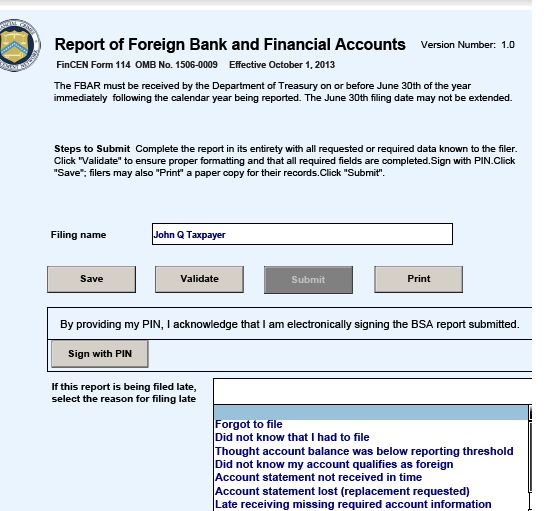
You also may have to file FinCEN Form 114, Report of Foreign Bank and Financial Accounts (FBAR), by June 30, 2015.
8. Does the IRS Provide Help in Other Languages?
The IRS provides tax information in Chinese, Korean, Russian, Spanish, and Vietnamese. Go to http://www.irs.gov and use the drop down box under “Languages” on the upper right corner to select your language.
9. Where Can I Get Help?
Contact the International Taxpayer Service Call Center by phone or fax. The International Call Center is open Monday through Friday, from 6:00 a.m. to 11:00 p.m. (Eastern Time).
Tel: 267-941-1000 (not toll-free)
Fax: 267-941-1055
You may also contact the IRS office in London, Paris, or Frankfurt. For addresses and telephone numbers, contact my local office internationally.
10. I Received a Notice from the IRS, What Do I Do?
If you receive a notice from the IRS and need to contact the IRS, call the number listed on the notice or the International Taxpayer Service Call Center (see above).
11. Where Can I Get More Information?
For information on the IRS website about international taxpayers, see this page.
For general information about international taxpayers, see Publication 54, “Taxation of U.S. Citizens and Residents Abroad.”
For information on the Affordable Care Act and taxpayers outside the United States, see Publication 5187, “Health Care Law.”
12. I Haven’t Filed All My Tax Returns, What Can I Do?
If you have not filed all the returns required of you and want to catch up on your filing obligations, see this announcement: IRS makes changes to offshore-programs.
Why a non-U.S. citizen may wish to be a U.S. income tax resident (“U.S. person”). Sound like a non-sequitur?
Why a non-U.S. citizen may wish to be a U.S. income tax resident (“U.S. person”). Sound like a non-sequitur?
Normally, anyone residing outside the U.S. is far better off if they are NOT a “U.S. income tax resident.” This is for several reasons:
- Plus, those who are married to a non-U.S. citizen have to review and understand in detail the laws of their country of residence, regarding property rights of spouses, whether a spouse is a manager or officer of a foreign company, general and special powers of attorney – such as health care powers of attorney, etc., to know if one has a “financial interest” in such foreign accounts, even if they actually have no signature authority over any foreign accounts. The law is obligatory in how these definitions broadly include many persons who are not aware of how they can apply. See, FOREIGN BANK ACCOUNT REPORTS – 2011 REGULATIONS EXTEND RULES TO MANY UNAWARE PERSONS, published in the International Tax Journal.
- Managers of companies and other legal entities that have an account around the world, may also fall into these unwary traps.
As someone who advises multiple clients before the IRS on FBAR penalties, I have seen many cases where the government will take an approach of levying significant FBAR civil penalties in particular cases, depending upon how the case is handled, the particular facts and who is the IRS revenue agent and their manager.
Now to the point of this post. Notwithstanding all of the above considerations, some individuals may find it advantageous to be a “U.S. person” for U.S. federal income tax purposes. See, Section 7701(a)(30) which uses the technical term “U.S. person” and not a U.S. income tax resident.
If a non-U.S. citizen lives predominantly overseas, they nevertheless can elect to be treated as a U.S. person if they spend at least 31 days in the U.S. during that particular calender year and meet other requirements. Section 7701(b)(4).
Why would an individual prefer to be a U.S. person for U.S. federal income tax purposes, even if they spend little time in the U.S.? There could be several reasons.
- If the non-citizen has a U.S. citizen spouse, they may have a better overall U.S. income tax result (i.e., lower federal income taxes) by filing married filing jointly?
- If the non-citizen has no significant overseas assets or accounts, they may be able to otherwise avoid the labyrinth of rules under the BSA.
What is the burden of proof for civil willful FBAR penalties? Government says – mere “preponderance of the evidence”?
A prior post took part of the government’s brief in the Zwerner case. See, FBAR Penalties for USCs and LPRs Residing Overseas – Can the Taxpayer have no knowledge of the law and still be liable for the willfulness penalty? See government memorandum.
A portion of the post and brief is set out below:
. . . another perplexing aspect of this case is that the government continues to persist in its argument that a mere preponderance of the evidence is the proof standard required. That will be left for another post and another discussion.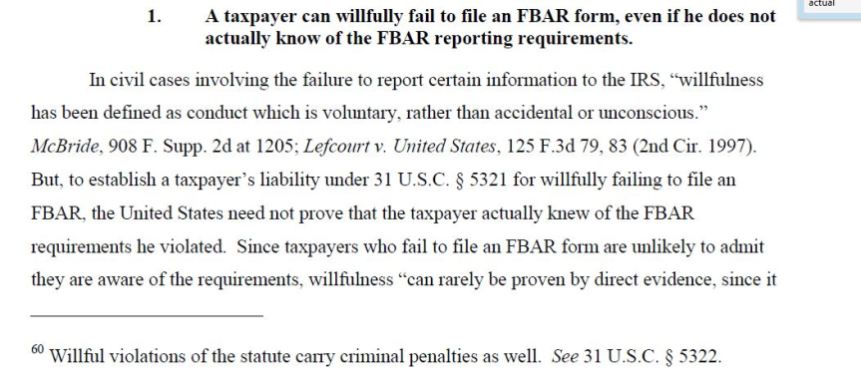
Here is that other post.
The reason this issue is so important for U.S. citizens and lawful permanent residents (LPRs) residing outside the U.S., is that few have historically filed FBARs. Few may have had little knowledge or understanding of what is an FBAR in years past. For more background on FBARs and how the government has assessed penalties as of late, see, Why the Zwerner FBAR Case is Probably a Pyrrhic Victory for the Government – for USCs and LPRs Living Outside the U.S. (Part II)
Also, see a prior post entitled – Nuances of FBAR – Foreign Bank Account Report Filings – for USCs and LPRs living outside the U.S
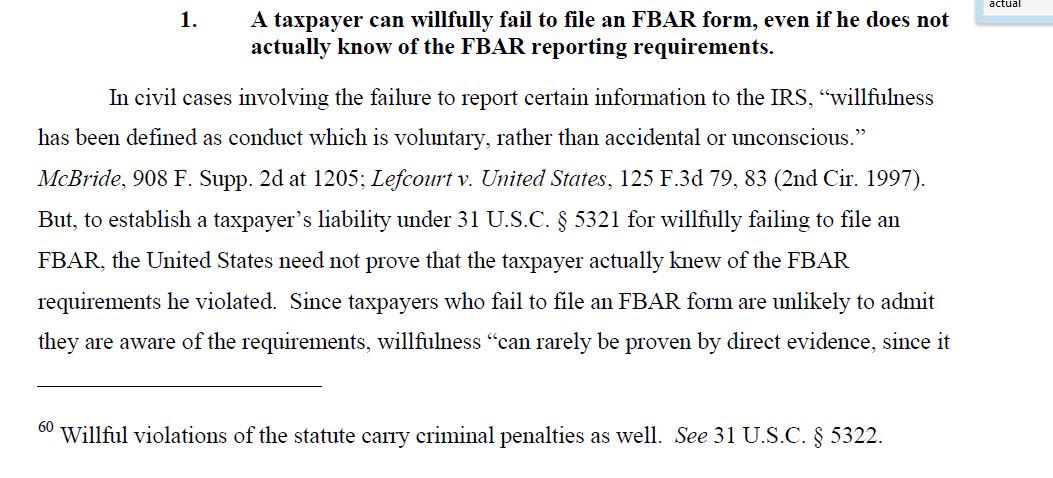
Back to the point at hand: can the government truly take the position that “. . . But to establish a taxpayer’s liability under 31 U.S.C. Section 5321 for willfully failing to file an FBAR, the United States need not prove that the taxpayer actually knew of the FBAR requirements he violated. . . “?
This is a truly low bar and a low level of proof the government has, IF this is the law, particularly when the amounts of the penalties can exceed the value of the individual’s accounts in their country of residency. To date, no appeals court has ruled on the question.
The current state of the law, leaves taxpayers at a terrible disadvantage when the IRS assesses FBAR penalties which seem to have little correlation with their failure to file the form.
The position taken by the Tax Division, Department of Justice in the Zwerner case is also seems contrary to the Internal Revenue Service’s own Internal Revenue Manual, which provides as follows (with highlights in bold):
- The test for willfulness is whether there was a voluntary, intentional violation of a known legal duty.
- A finding of willfulness under the BSA must be supported by evidence of willfulness.
- The burden of establishing willfulness is on the Service.
- If it is determined that the violation was due to reasonable cause, the willfulness penalty should not be asserted.
- Willfulness is shown by the person’s knowledge of the reporting requirements and the person’s conscious choice not to comply with the requirements. In the FBAR situation, the only thing that a person need know is that he has a reporting requirement. If a person has that knowledge, the only intent needed to constitute a willful violation of the requirement is a conscious choice not to file the FBAR.
- Under the concept of “willful blindness” , willfulness may be attributed to a person who has made a conscious effort to avoid learning about the FBAR reporting and recordkeeping requirements. An example that might involve willful blindness would be a person who admits knowledge of and fails to answer a question concerning signature authority at foreign banks on Schedule B of his income tax return. This section of the return refers taxpayers to the instructions for Schedule B that provide further guidance on their responsibilities for reporting foreign bank accounts and discusses the duty to file Form 90-22.1. These resources indicate that the person could have learned of the filing and recordkeeping requirements quite easily. It is reasonable to assume that a person who has foreign bank accounts should read the information specified by the government in tax forms. The failure to follow-up on this knowledge and learn of the further reporting requirement as suggested on Schedule B may provide some evidence of willful blindness on the part of the person. For example, the failure to learn of the filing requirements coupled with other factors, such as the efforts taken to conceal the existence of the accounts and the amounts involved may lead to a conclusion that the violation was due to willful blindness. The mere fact that a person checked the wrong box, or no box, on a Schedule B is not sufficient, by itself, to establish that the FBAR violation was attributable to willful blindness.
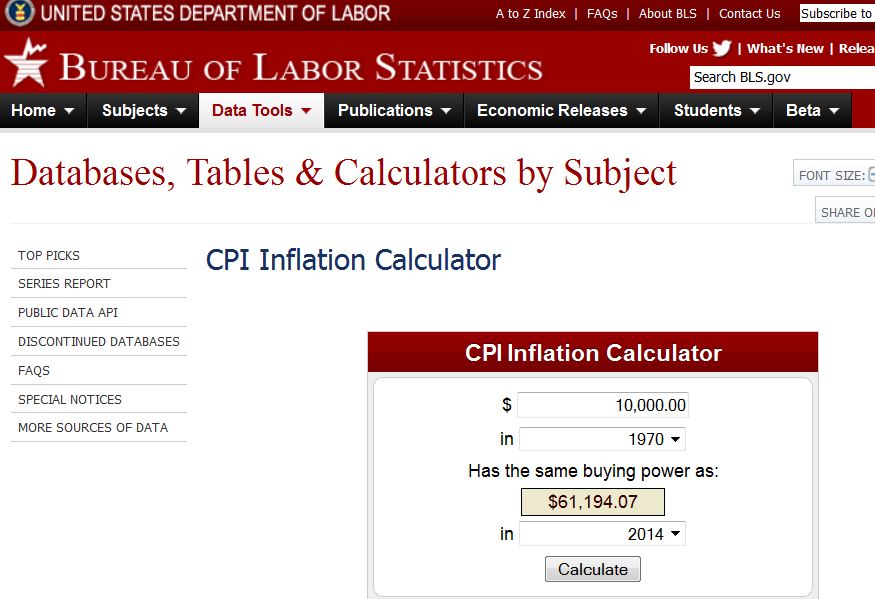
1970 Dollars: The Current Day US$10,000 FBAR Threshold Reporting Requirement (From Instructions Not Statute or Regulations)
The relevant statute that requires reporting of a so-called foreign bank account report (“FBAR”) is Section 5314 of Title 31 .  This is not a federal tax law provision from Title 26 (aka I.R.C. aka Internal Revenue Code.)
There have not been extensive revisions to this Section 5314 over the years and it remains largely as originally drafted and passed in the year 1970.
See, Currency and Foreign Transaction Reporting Act of 1970, P.L. No. 91-508, 84 Stat. 114 (1970).
Curiously, the US$10,000 threshold amount is not reflected in the statutory language, nor in the regulations. Instead, this US$10,000 threshold is set forth in the instructions of the form. See page 4 of the FBAR electronic filing instructions.
This raises numerous legal questions that will be discussed in later posts.
The point of this post is twofold: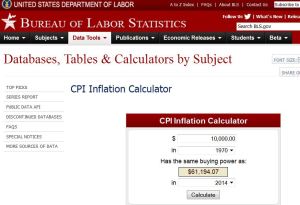
(1) the US$10,000 threshold amount is not part of the statutory or regulatory law; but rather is adopted in the instructions.
(2) US$10,000 in the year 1970 currently equals US$61,194 in inflation adjusted dollars (pursuant to the federal government’s CPI inflation calculator) which is a far different threshold for reporting
See, Nuances of FBAR – Foreign Bank Account Report Filings – for USCs and LPRs living outside the U.S.
Most e-mailed Article from New York Times: “Why I’m Giving Up My Passport”
New York Times: “Why I’m Giving Up My Passport”
A relatively small percentage of the U.S. citizen population is aware of the complex requirements of the U.S. tax law and detailed financial reporting that is imposed under current law against individuals who reside outside the U.S. These same laws apply to both those USCs who live in and outside of the U.S. See, for instance, “PFICs” – What is a PFIC – and their Complications for USCs and LPRs Living Outside the U.S.
The December 7th Op-Ed article in the New York Times by Jonathan Tepper is now the most e-mailed of all NYTimes articles, as of today, which indicates the general public may now start to better understand the scope of U.S. tax and account reporting laws that are unique in the world.
He does summarize well, how the law works in practice:
The United States is an outlier: Its extraterritorial tax laws apply to American citizens and companies no matter where they are. We are the only country (except, arguably, Eritrea) that taxes all of its citizens on worldwide income rather than where the income is earned. Expatriate Americans have to pay taxes once, wherever they live, and then file again in the United States.
The I.R.S. doesn’t tax the first $97,600 of foreign earnings, and usually doesn’t double-tax the same income. So most expatriates owe no money to the I.R.S. each year — and yet many of us have to pay thousands of dollars to accountants because the rules are so hard to follow.
The extraterritorial reach of the income tax dates from the Civil War, . . .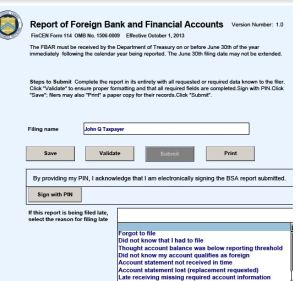
These legal requirements also impose detailed reporting on all financial accounts in the country of residence that meet a modest threshold of US$10,000 at any time during the year. See, Nuances of FBAR – Foreign Bank Account Report Filings – for USCs and LPRs living outside the U.S.
One of the consequences of the U.S. law, is that the Department of Justice argues (and has done so successfully at two different trial courts) that a USC does not need to actually know of the requirements of the FBAR law to still be liable for a civil willfulness penalty that can represent more than 300% of the value of all financial accounts of the individual. See, Why the Zwerner FBAR Case is Probably a Pyrrhic Victory for the Government – for USCs and LPRs Living Outside the U.S. (Part I)
Many legal analysts would like to think Zwerner is just an outlier result that will not happen to most USCs residing outside the U.S. At the same time, most legal experts never thought the facts of the case in Zwerner would compel the government to assess what represented more than 200% of his foreign accounts as a civil penalty (i.e., a penalty of US$3.6M on an account of $1.69M).
The information reporting requirements are extensive and the government has argued the individual does not need to have actual knowledge of the law. See, FBAR Penalties for USCs and LPRs Residing Overseas – Can the Taxpayer have no knowledge of the law and still be liable for the willfulness penalty? See government memorandum.
In the government brief, they argue “ . . . the United States need not prove that the taxpayer actually knew of the FBAR requirements he violated . . . ”
This puts a very low burden on the government when they pursue penalties that represent multiples of the amounts any individual has in their accounts.
Ironically, the facts of Boris Johnson, the mayor of London would indicate he has easily violated such laws (assuming he does not file his annual FBARs); by his statement that he will not pay the tax owing under U.S. federal tax laws. Surely, the U.S. government will be able to pursue him under the “willful blindness” theory they are using against other U.S. citizens who did not file FBARs. See, According to news press, London Mayor, dual citizen, refuses to pay United States income taxes
For those practitioners who are handling cases before the IRS and Department of Justice on a regular basis, we understand well how the threat of ominous FBAR penalties can be bandied about against individuals to try to get them to settle on terms favorable to the government. See Mr. Zwerner, who indeed paid more than 100% of his entire foreign account (some US$1.69M) in settlement of his case.
Does the U.S. Government Assume U.S. Citizens Having Assets Outside the U.S. are Hiding Assets from the IRS?
Does the IRS Assume U.S. Citizens Having Assets Outside the U.S. are Tax Cheats?
This rhetorical question is asked for a simple reason. In IRS training materials, which are part of the basic core training provided to IRS agents investigating individuals with assets outside the U.S. and international matters and transactions, the IRS makes the following bold statement:
“Most U.S. taxpayers using an offshore entity or structure of entities to hold foreign accounts are simply hiding the accounts from the Internal Revenue Service and other creditors . . . 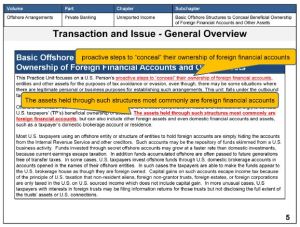 “
“
A slide from these IRS training materials has this statement along with tax evasion activities that IRS agents are to be on the look out. Certainly, the identification of illegitimate tax evasion activities is appropriate for tax authorities, but such a bold statement ignores the larger reality of the international business world.
Unfortunately, such a bold statement by the IRS does not reflect the reality of millions of U.S. citizens and lawful permanent residents residing outside the U.S.; or indeed maybe millions more who live in the U.S. and have offshore business and investment activities.
For additional background of the estimated millions of USCs residing outside the U.S., see an earlier post: Key Take Aways from Senate Investigations re: Foreign Banks and “Offshore Tax Evasion”: U.S. Citizens Residing Overseas have Become a Focus of the Government.
The world is a very global and international marketplace with international commercial activities undertaken throughout at a scale that rivals the volume of international business just a few years ago. The IRS seems to ignore this important consideration, which is supported by the Department of 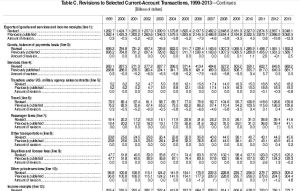 Commerce – Bureau of Economic Analysis, in their reporting of international export transactions in goods and services. According to these statistics, the amount of exported services has more than doubled from the year 2004 ($336 billion in services) to 2013 ($682 billion) and total exports for 2013 exceeded $3 trillion.
According to the federal government itself in reports prepared by the Department of Commerce – Bureau of Economic Analysis, these international transactions continue to grow robustly in the year 2014.
Therefore, a more balanced understanding and view of how, when and where international business is conducted by U.S. citizens around the world should help IRS agents when they conduct tax audits and not assume – erroneously that – “Most U.S. taxpayers using an offshore entity or structure of entities to hold foreign accounts are simply hiding the accounts from the Internal Revenue Service and other creditors . .”
“Neither Confirm nor Deny the Existence of the TECs data”: IRS Using the TECs Database to Track Taxpayers Movements –
There have been a series of previous posts that discussed the IRS and other government agencies ability to track taxpayers and their assets outside the U.S.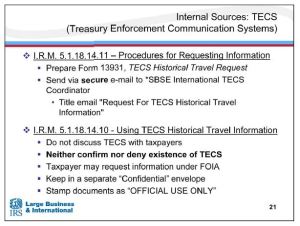
See for instance, the following posts: Should IRS use Department of Homeland Security to Track Taxpayers Overseas Re: Civil (not Criminal) Tax Matters? The IRS works with Department of Homeland Security with TECs Database to Track Movement of Taxpayers
and Does the IRS investigate United States Citizens (USCs) and Lawful Permanent Residents (LPRs) residing overseas?
Interestingly, the release of IRS internal training manuals and materials (which were obtained through a Freedom of Information Act – FOIA – request) and includes the Power Point slide in this post, describes the TECs database and how it can be used by IRS agents regarding foreign assets and individuals as follows:
The Treasury Enforcement Communications System (TECS) is a database maintained by the Department of Homeland Security (DHS), and it is used extensively by the law enforcement community. TECS contains historical travel information such as records of commercial airline flights, border crossings, and specific dates that individuals have traveled to and from the United States.
All this information could provide you with potential leads to pursue.
For example, the discovery of where the taxpayer may hold assets or accounts or where the taxpayer conducts business. It may also assist in determining taxpayer’s residency and the credibility of taxpayer testimony. TECS may have gaps in the information captured, caution is advised. For example, it might contain incomplete information about border crossings, private plane and private boat information. It does not contain enough stand alone data to determine residency. It should be used together with other sources of information.
In addition, the IRS training materials demonstrates the secrecy of the TECs database and what steps the IRS tells their agents to take regarding the TECs database. The following excerpt directly from the IRS “Matrix Application Training International Individual Compliance: Basic Structures Part II: Pre-Audit, Investigative Techniques & Statutes”
• IRM 5.1.18.14.10 – Covers using TECS Historical Travel Information
First and foremost, do not discuss the existence of TECS with the taxpayers. We must neither confirm nor deny the existence of TECS data.
Part I: How the IRS “Non-Filer Program” Affects USCs and LPRs Residing Outside the U.S.
U.S. citizens who have spent most all of their lives outside the U.S. are often times shocked to learn about the scope of the U.S. citizenship based taxation system. In recent years, due to the aggressive pursuit of the IRS and Tax Division of the Department of Justice, there has become a keen focus on assets and accounts located outside the U.S.
Most recently in August of this year, the IRS has articulated its position for U.S. citizens and lawful permanent residents residing outside the U.S. in a document titled – “New Filing Compliance Procedures for Non-Resident U.S. Taxpayers”
For a brief chronology of the actions taken by the IRS and DOJ and the U.S. Congress in the offshore world during the last few years see, How Congressional Hearings (Particularly In the Senate) Drive IRS and Justice Department Behavior
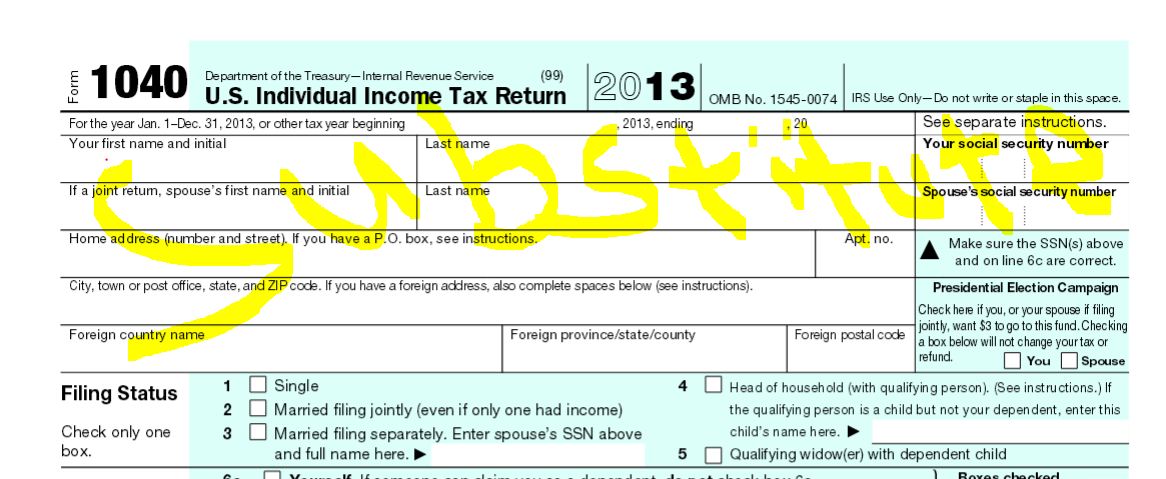
See, also IRS Audit Techniques – Expatriation, How the IRS Can file a “Substitute Return” for those USCs and LPRs Residing Overseas
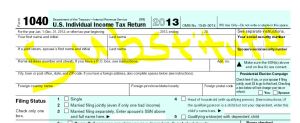 The IRS has had for years a specific program for “non-filers”; i.e., those persons who do not file U.S. income tax returns. See, How the IRS Can file a “Substitute Return” for those USCs and LPRs Residing Overseas
The program is detailed in the Internal Revenue Manual, set out below. A follow-up post will discuss some uniquely complex issues affecting U.S. citizens and lawful permanent residents who reside outside the U.S.
Read the Q&A format here.