Part II: Who is a “long-term” lawful permanent resident (“LPR”) and why does it matter?
A post in August 2014 explained the basic rule of who is a “long-term resident” as that technical term is defined for tax purposes in IRC Section 877 (e)(2). There is much confusion about how the tax law defines a “lawful permanent resident” (“LPR”) versus 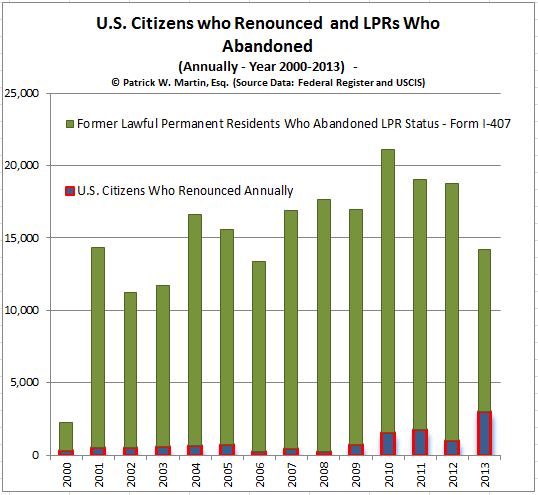 how immigration law defines what is almost the same concept. The statutes are different and have definitions in two separate federal codes (Title 26, the federal tax provisions and Title 8, the immigration law provisions).
See –
Posted on August 19, 2014
This follow-up comment is to highlight some key concepts about why it matters if you become a “long-term” resident as that term is defined in the tax law.
- A LPR can reside for substantially shorter periods in the U.S. (shorter than the apparent 7 or 8 years identified in the statute), and still be a “long-term resident” per IRC Section 877 (e)(2) depending upon the facts of any particicular case.

- There are far more LPRs who abandon their status (formally) than U.S. citizens who formally take the oath of renunciation. See the table above reflecting those who have formally renounced U.S. citizenship versus those who have formally abandoned their LPR status.
- Plenty of LPRs informally abandon their LPR status for immigration purposes by moving and living permanently outside the U.S.
- There are plenty of timing issues for LPRs surrounding how and when they have “abandoned” their LPR status for purposes of IRC Section 877 (e)(2). See –
Timing Issues for Lawful Permanent Residents (“LPR”) Who Never “Formally Abandoned” Their Green Card, Posted on August 15, 2015
Expatriation Tax Form 8854 is Part of Criminal Tax Case
The U.S. Department of Justice announced a US$100M FBAR penalty and criminal guilty plea in an international tax evasion case. The government’s press release on November 4, 2016, provided as follows:
- A Rochester, New York emeritus professor of business administration pleaded guilty today to conspiring with others to defraud the United States and to submitting a false expatriation statement to the Internal Revenue Service (IRS), announced Principal Deputy Assistant Attorney General Caroline D. Ciraolo, head of the Justice Department’s Tax Division, and U.S. Attorney Dana J. Boente of the Eastern District of Virginia, after the plea was accepted by U.S. District Judge T.S. Ellis III.

The case is extraordinary in the steps apparently taken by the business investor/professor in hiding some US$200M of assets overseas. The facts are egregious as reported and tie directly to IRS Form 8854. Hence, this seems to be a very good criminal tax case for the government. See a prior post that briefly discusses IRC Section 7206(1), see, What could be the focal point of IRS Criminal Investigations of Former U.S. Citizens and Lawful Permanent Residents?
Prior posts have discussed the importance of certifying truthfully and accurately as to all items of information requested on IRS Form 8854, Initial and Annual Expatriation  Statement; which is made under penalties of perjury (like all U.S. tax statements). See, Part II: C’est la vie Ms. Lucienne D’Hotelle! Tax Timing Problems for Former U.S. Citizens is Nothing New – the IRS and the Courts Have Decided Similar Issues in the Past (Pre IRC Section 877A(g)(4))
Also, prior posts have discussed the steps taken by the government to track taxpayers and their assets globally, to help assure they comply with U.S. federal tax law. See a prior related post, 19 Jan 2014 – Should IRS use Department of Homeland Security to Track Taxpayers Overseas Re: Civil (not Criminal) Tax Matters? The IRS works with Department of Homeland Security with TECs Database to Track Movement of Taxpayers
The recent press release explains how a false IRS Form 8854 was prepared by a co-conspirator of the taxpayer, as follows:
The importance of a complete and accurate IRS Form 8854, is to enable a taxpayer (if they meet other statutory requirements) to avoid “covered expatriate” status. See, the Tax Court case earlier this year 2016, Topsnik v. Commissioner (2016), where the Court found the taxpayer had failed to meet the certification requirements and was necessarily a “covered expatriate.” 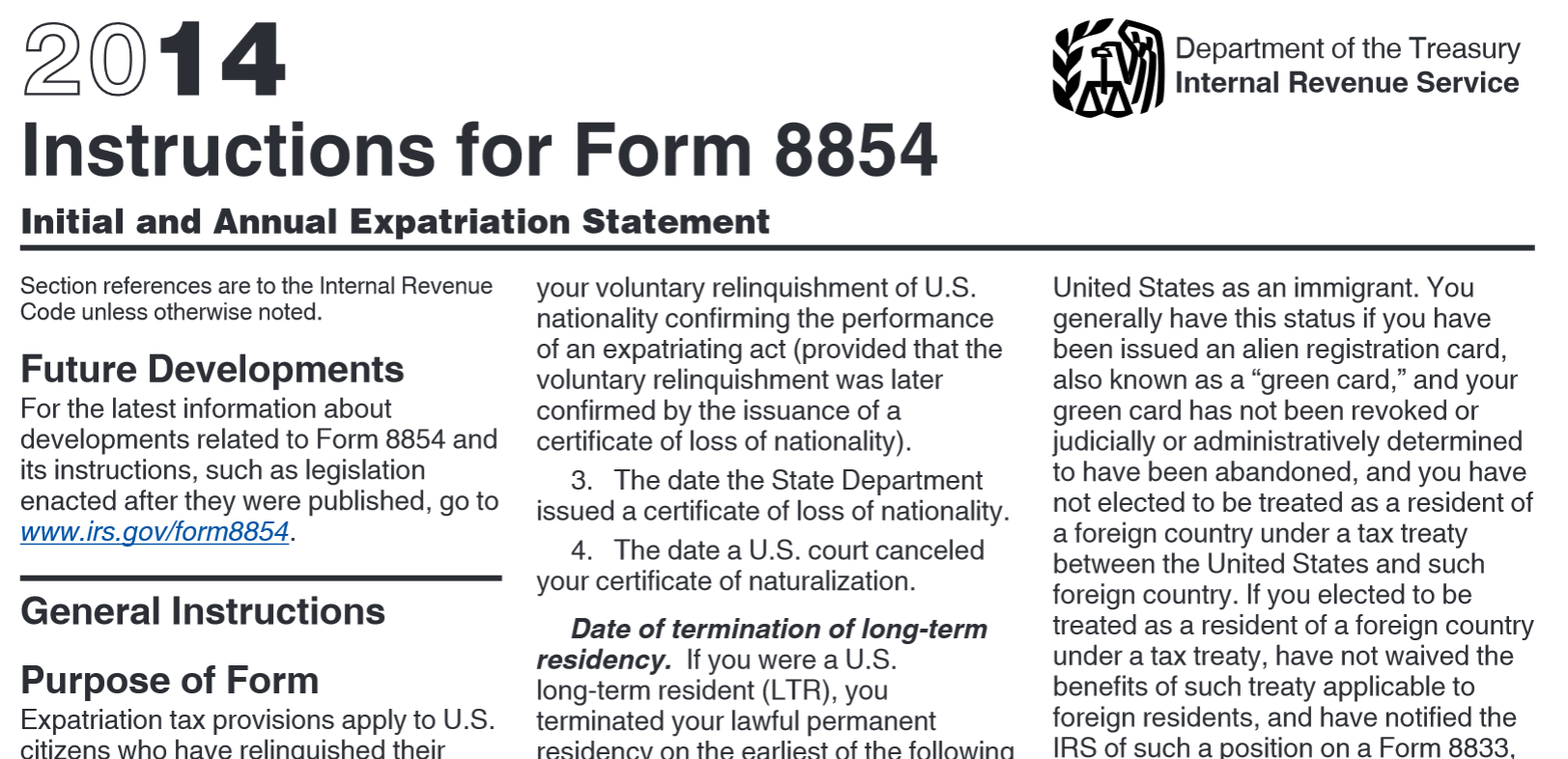
Whether criminally or civilly, taxpayers should never underestimate the importance of filing complete and accurate tax returns; specifically including IRS Form 8854, Initial and Annual Expatriation Statement.
Maybe most important of all, it is crucial the taxpayer understands the full range of legal and tax consequences to them regarding the important steps that might lead to “tax expatriation.” The law is complex and fraught with potential minefields. It’s always advisable to have thoughtfully analyzed and considered the consequences of “tax expatriation” long before taking specific steps (pre as opposed to post-expatriation) of renunciation of U.S. citizenship or abandonment of lawful permanent residency.
The U.S. Supreme Court and Tax Cases (e.g., Topsnik and Section 877A)
Individuals around the world are often curious about how and when the U.S. Supreme Court hears tax cases. In some countries, tax cases represent the majority or large percentage of total cases heard by their Supreme Court (e.g., Mexico). 
The Supreme Court typically hears some 100-150 cases per year out of more than 7000 cases a year it is asked to review. Many of these cases deal with the constitutionality of particular laws. They rarely take up tax cases.
The 2013 term was unusual in that the Supreme Court heard three federal tax cases (U.S. v. Woods, U.S. v. Quality Stores, Inc. and U.S. v. Clarke). Similarly, in 2015 the Supreme Court issued opinions in three tax cases (although each dealt with powers of states to impose taxation – Alabama Dept. of Revenue v. CSX Transportation, Inc. a property tax case; Direct Marketing Association v. Brohl a sales tax case; and, Maryland v. Wynne an income tax case).
None of these cases or any Supreme Court case before them has dealt with the U.S. “exit tax” arising out of IRC Sections 877, 877A, 2801, et. seq. Indeed, to date, there have been few cases heard by other courts regarding these provisions. One of the most important and relevant is the Topsnik v. Comm’r (146 T.C. No. 1) case published this year. The Topsnik case will be discussed in more detail in a later post. The short version is that the taxpayer in Topsnik lost the case and was found to have been a “covered expatriate” with the consequent adverse tax consequences that follow.
Taxpayers have a right of appeal from the U.S. Tax Court. If a case is appealed from the U.S. Tax Court, e.g., Topsnik or another federal court (e.g., from Court of Federal Claims) it will go to one of 13 appellate courts. An appeal from one of these 13 appellate courts will lie with the U.S. Supreme Court.
The U.S. Supreme Court is generally not obliged to review cases (per the Certiori Act of 1925), including tax cases, and will rarely take up a tax case, whether or not it addresses a Constitutional question. Hence, a case like Topsnik will almost certainly never become binding precedent to all the courts in the land, e.g., the Court of Federal Claims.
Like Canada’s “Deemed Acquisition” Rules: IRC Section 877A(h)(2)
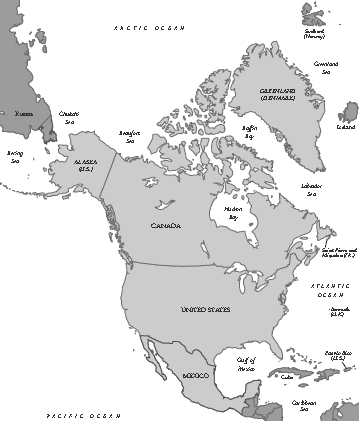
The Canadian income tax system has a sensible rule that treats immigrants into the country “as if” they had sold their non-Canadian assets just prior to becoming a Canadian income tax resident.
The Canada Revenue Agency (“CRA”) explains it as follows:
- If you owned certain properties, other than taxable Canadian properties, while you were a non-resident of Canada, we consider you to have sold the properties and to have immediately reacquired them at a cost equal to their fair market value on the date you became a resident of Canada. This is called a deemed acquisition.
- Usually, the fair market value is the highest dollar value you can get for your property in a normal business transaction.
- You should keep a record of the fair market value of your properties on the date you arrived in Canada. The fair market value will be your cost when you calculate your gain or loss from selling the property in the future.
The U.S. does not have such a rule generally for immigrants coming to America. Instead, the non-U.S. citizen will typically have their historic tax basis (by applying U.S. tax principles) in the property they own prior to coming to the U.S. For instance, an immigrant from the South American continent who owns real estate in their country of citizenship, may have a large “unrealized gain” in that property for U.S. federal income tax purposes.
This means that if the South American sells the real estate, while being a U.S. income tax resident (after immigrating to the U.S.), the gain in the South American real estate will be subject to taxation in the U.S. This is very different from the sensible Canadian rule, which exempts the appreciation in the property of the immigrant while living outside of the North American continent.
This can be a very bad result for the uninformed immigrant, since the example above can get worse, when the immigrant to the U.S. has received properties in the form of gifts (e.g., from their family members) which could have very low tax bases per U.S. tax law. Assume a gift of South American real estate received by the immigrant prior to moving to the U.S. with a low historic basis of US$500K. Assume further it is sold for US$3.3M while the immigrant is residing in the U.S. If the property was worth US$3.2M when she immigrated to the U.S., only US$100K of appreciation occurred while residing in the U.S. Nevertheless, under U.S. law, the entire US$2.8M gain (US$2.7M of which occurred while living outside the U.S.) will generally be subject to U.S. federal income tax.
This comes as quite a surprise to many. 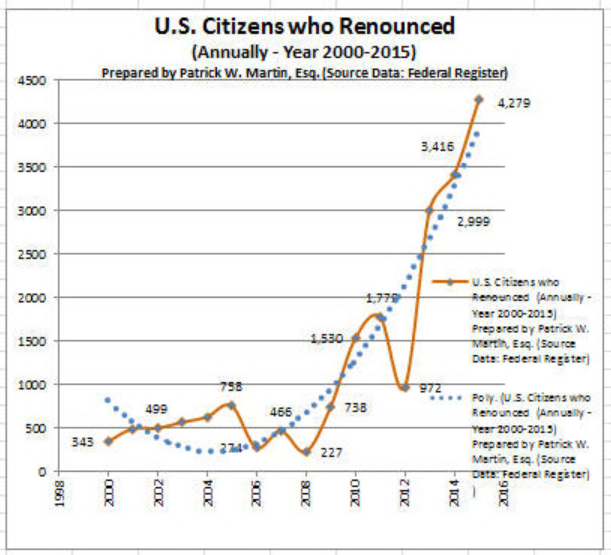
An immigrant to Canada in the same case, would only have US$100K of taxable gain, with the US$2.7M gain being free from taxation under Canada’s “deemed acquisition” rules.
There is one exception in the U.S. tax law. Unfortunately, it applies to “covered expatriates” who readers of this site understand, that the U.S. tax regimes are typically quite undesirable. They are as follows:
The statutory provision under IRC Section 877A(h)(2) provides relief from the first tax; for purposes of calculating the “mark to market” tax. It provides in relevant part that the “covered expatriate” –
- . . . shall be treated as having a basis on such date [the date of immigration to the U.S. in the first place] of not less than the fair market value of such property on such date . . .”
Accordingly, the appreciation of the property owned by the immigrant (see, US$2.7M example above – who is in the process of emigrating out of the U.S. -by way of “covered expatriate” status) will generally escape income taxation under IRC Section 877A(h)(2) on the unrealized gain in the property that arises prior to moving to the U.S. in the first place. This limited rule is similar to the sensible Canadian “deemed acquisition” rules.
Unfortunately, there is no such rule as this “deemed acquisition” concept that could reduce the future tax payable by U.S. beneficiaries of “covered gifts” and “covered bequests.”
Trendlines Show United States Citizens Renouncing at Historical Levels
Graphs and charts are a nice way to show key pieces of information quickly. The charts I create showing the numbers of U.S. citizens (“USCs”) who have renounced their citizenship help me better understand and track the detailed data behind the graphs.
In this vein, I have added trend-lines to two of the graphs that reflect the total annual and quarterly numbers of individuals who have renounced over the last few years.
The trend-lines are the blue dotted lines in each chart. The first chart reflects annual renunciations over a longer period of time, which is compressed much more along the “x axis” – i.e., the horizontal axis. The trend of USCs who are renouncing looks quite dramatic in this chart; a giant ski slope heading upwards fast.
The next chart includes many more data points along the “x axis” spread out over a shorter period of time, which is also reflected by the dotted blue trend-line. Accordingly, the trend-line appears to be a more gradual increase of USC renunciations.

Nevertheless, both show the trend over time as increasing substantially over time.
As has been explained in prior posts, those U.S. citizens who are considering renouncing U.S. citizenship should not take the decision lightly unless they want to be a “covered expatriate” with various adverse U.S. tax and legal consequences.
See, for instance the following prior blogs, Revisiting the consequences of becoming a “covered expatriate” for failing to comply with Section 877(a)(2)(C).
U.S. Citizens Overseas who Wish to Renounce without a Social Security Number will Necessarily be a “Covered Expatriate”
The “Hidden Tax” of Expatriation – Section 2801 and its “Forever Taint.”
1st Qtr 2016 Renunciations – New Normal
Revocation or Denial of U.S. Passport: More on new section 7345 (Title 26/IRC) and USCs with “Seriously Delinquent Tax Debt”
New Section 7345 completely modifies how U.S. citizens (“USCs”) living and traveling around the world have to now consider very seriously actions taken by the Internal Revenue Service (“IRS”). It is the IRS which now holds the power under this new law that requires the U.S. Department of State (“DOS”) to revoke or deny to issue a U.S. passport in the first place.

New Section 7345(e) provides in relevant part as follows: “upon receiving a certification described in section 7345 of the Internal Revenue Code of 1986 from the Secretary of the Treasury, the Secretary of State shall not issue a passport to any individual who has a seriously delinquent tax debt described in such section. . . ” [emphasis added].
This new law mandates (not at the discretion of the DOS) that various U.S. passports be denied at the direction of the IRS. Once the IRS issues the certification of “seriously delinquent tax debt.”
All it takes, is for the IRS to claim tax or penalties are owing of at least US$50,000 through an assessment (plus start a lien or levy action).
Of course, US$50,000 sounds like a large sum for many modest USCs, until an individual understands that there are a host of international reporting requirements for taxpayers. Specifically, the IRS can impose a US$10,000 penalty for each violation of failing to complete and file various IRS information forms; EVEN IF NO income  taxes are owing. See IRS website – FAQs 5 and 8 regarding civil penalties (see also How is the offshore voluntary disclosure program really working? Not well for USCs and LPRs living overseas).
For a summary of these forms and filing requirements, see a prior post, Oct. 17, 2015, Part II: C’est la vie Ms. Lucienne D’Hotelle! Tax Timing Problems for Former U.S. Citizens is Nothing New – the IRS and the Courts Have Decided Similar Issues in the Past (Pre IRC Section 877A(g)(4))
Indeed, our office has seen and assisted numerous taxpayers around the world where the IRS has assessed tens of thousands, hundreds of thousands and in some cases in excess of US$1M (in proposed assessments) against an individual for failure to simply file information reporting forms. See, for instance, a prior post on Nov. 2, 2015, Why Most U.S. Citizens Residing Overseas Haven’t a Clue about the Labyrinth of U.S. Taxation and Bank and Financial Reporting of Worldwide Income and Assets
Also, we have seen several IRS assessments of income tax (not just penalties) against individuals of hundreds of thousands of dollars which are not supported by the law. For instance, it is not uncommon for the IRS to issue a “substitute for return” alleging income taxes owing. See, How the IRS Can file a “Substitute for Return” for those USCs and LPRs Residing Overseas, posted Nov. 8, 2015. We have a number of those cases pending, where the IRS has taken erroneous information and made such assessments against USCs residing and working outside the U.S. for much if not most of their professional lives.
New Section 7345 requires that USCs, wherever they might reside, take great care in knowing about any actions the IRS might be taking against them; as to tax and penalty assessments, whether or not they are supported under the law.
One basic method of learning more about the activities of the IRS is to make a transcript request directly to the IRS regarding the status of a USC’s federal tax status according to IRS records. See, IRM, Part 21. Customer Account Services . . . Section 3. Transcripts.
It is also possible for the USC to obtain additional tax information from the IRS through a Freedom of Information Act (“FOIA”) request.
Survey of the Law of Expatriation from 2002: Department of Justice Analysis (Not a Tax Discussion)
Most discussions regarding renunciation/relinquishment of U.S. citizenship are highly focused towards the U.S. federal tax consequences. Today, the focus is on a 2002 report prepared by the DOJ for the Solicitor General, who supervises and conducts government litigation in the United States Supreme Court.
The report is found here, and I have highlighted some key excerpts: Survey of the Law of Expatriation: Department of Justice Analysis:
You have asked us for a general survey of the laws governing loss of citizenship, a process known as “expatriation” (also known within the specific context of naturalized citizens as “denaturalization”). See, e.g.,Perkins v. Elg, 307 U.S. 325, 334 (1939) (“Expatriation is the voluntary renunciation or abandonment of nationality and allegiance.”). Part I of this memorandum provides a general description of the expatriation process. Part II notes the relative difficulty of expatriating a person on the grounds that he has either obtained naturalization in, or declared allegiance to, a foreign state, absent evidence of a specific intention to relinquish U.S. citizenship apart from the act of naturalization or declaration itself. Part III analyzes the expatriation of a person who serves in a foreign armed force
engaged in hostilities against the United States.1
*
1 Editor’s Note: The original footnote 1 has been removed in order to preserve the confidentiality of internal government deliberations.
* * *
*
. . . In 1868, Congress declared that “the right of expatriation is a natural and inherent right of all people, indispensable to the enjoyment of the rights of life, liberty, and the pursuit of happiness.” Act of July 27, 1868, ch. 249, pmbl., 15 Stat. 223, 223; see also 8 U.S.C. § 1481 note (2000) (quoting Rev. Stat. § 1999 (2d. ed. 1878), 18 Stat. pt. 1, at 350 (repl. vol.)) (same).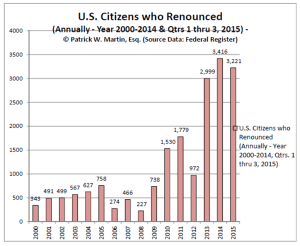
*
That declaration further stated that “any declaration, instruction, opinion, order, or decision of any officers of this government which denies, restricts, impairs, or questions the right of expatriation, is hereby declared inconsistent with the fundamental principles of this government.” 15 Stat. at 224. Similarly, the Burlingame Treaty of 1868 between the United States and China recognized “the inherent and inalienable right of man to change his home and allegiance, and also the mutual advantage of . . . free migration and emigration . . . for purposes of curiosity, of trade, or as permanent resident s.” U.S.-China, art. 5, July 28, 1868, 16 Stat. 739, 740. Congress provided specific legislative authority for nullifying citizenship when, in 1907, it enacted the predecessor of the modern federal expatriation statute.
* * *
*
II. Foreign Naturalization or Declaration of Foreign Allegiance
*
Under federal law, a U.S. citizen can lose his nationality if he voluntarily “obtain[s] naturalization in a foreign state… after having attained the age of eighteen years.” 8 U.S.C. § 1481(a)(1). Likewise, a citizen of the United States could be expatriated if he voluntarily “tak[es] an oath or mak[es] an affirmation or other formal declaration of allegiance to a foreign state or a political subdivision thereof, after having attained the age of eighteen years.” Id. § 1481(a)(2). In either case, however, no loss of citizenship may result unless the citizen acts “with the intention of relinquishing United States nationality.” Id. § 1481(a).
*
The most common obstacle to expatriation in cases involving foreign naturalization or declaration of foreign allegiance is sufficient proof of a specific intention to renounce U.S. citizenship. Intent need not be proved with direct evidence, to be sure. It can be demonstrated circumstantially through conduct. Thus, in some cases, such as service in a hostile foreign military at war with the United States, the act of expatriation itself may even constitute “highly persuasive evidence…of a purpose to abandon citizenship.” Terrazas , 444 U.S. at 261 (quotations omitted).
*
* * *
Dual nationality, the Supreme Court has explained, is “a status long recognized
in the law.” Kawakita, 343 U.S. at 723. See also id. at 734 (“Dual nationality . . . is
the unavoidable consequence of the conflicting laws of different countries. One
who becomes a citizen of this country by reason of birth retains it, even though by
the law of another country he is also a citizen of it.”) (citation omitted); Savorgnan, 338 U.S. at 500 (although “[t]he United States has long recognized the general undesirability of dual allegiances[,] . . . [t]emporary or limited duality of citizenship has arisen inevitably from differences in the laws of the respective nations as to when naturalization and expatriation shall become effective . . .
*
IT AIN’T FAIR: First (1) taxing me as a U.S. citizen and then (2) taxing me on my relinquishment or renunciation of U.S. citizenship or LPR abandoment and further (3) taxing my children on their inheritance from me!@!@!
This sums up the argument of many critics of U.S. citizenship based taxation of worldwide income.
Many may agree with this conclusion from an equity or sense of fairness argument. See proposal below at the end of this post. 
However, the argument of fairness has little place in interpretations of Title 26, the U.S. federal tax law. For example, the U.S. Tax Courts are not courts of equity. See, The United States Tax Court – An Historical Analysis, Dubroff and Hellwig, footnote 668.
Also, virtually no courts of the U.S. find U.S. tax laws to be unconstitutional. It is a very rare occurrence that the U.S. Supreme Court even takes up a tax case to determine its constitutionality. The “Obamacare” with broad application throughout society was a case heard by the Supreme Court which upheld a law signed by President Obama on March 23, 2010, more correctly called the Patient Protection and Affordable Care Act. That law increased Medicare taxes and imposed a penalty surcharge on individuals who do not maintain certain health coverage.
In contrast, U.S. citizens and lawful permanent residents (LPRs) residing overseas are a relatively small population of the U.S. taxpayer population. Accordingly, it was only until late the U.S. government even began focusing on this population to collect taxes from them. See, Is the new government focus on U.S. citizens living outside the U.S. misguided or a glimpse at the new future?, posted March 6, 2014. 
Finally, see various proposals to modify the law: e.g., U.S. Citizenship Based Taxation – Proposals for Reform – “Tax Simplification: The Need for Consistent Tax Treatment of All Individuals (Citizens, Lawful Permanent Residents and Non-Citizens Regardless of Immigration Status) Residing Overseas, Including the Repeal of U.S. Citizenship Based Taxation,” by Patrick W. Martin and Professor Reuven Avi-Yonah, September 2013.
Executive Summary
This paper proposes to eliminate the U.S. citizenship based taxation and create a consistent exit tax system. The complex web of the current U.S. tax law has made it nearly impossible for all but the most sophisticated U.S. citizens and lawful permanent residents (“LPRs”) residing overseas to file complete and accurate tax returns. The proposal should bring consistency, tax simplicity for taxpayers residing outside the U.S., and do so in part by eliminating the U.S. citizenship based tax system, which is unique in the world, dates to the civil war and is inappropriate for the global world we live in.
- Summary of Current Status of the Law
To date, there is no serious and comprehensive proposal to modify the U.S. federal tax law imposing U.S. taxation of the worldwide income of USCs and LPRs residing outside the U.S.
There are also no serious proposals to repeal the current U.S. “expatriation tax” on (1) mark to market income and gains (When does “Covered Expatriate” Status -NOT- matter?) and (2) the 40% tax on covered gifts and inheritances (see, Proposed Regulations for “Covered Gifts” and “Covered Bequests” Issued by Treasury Last Week (Be Careful What You Ask For!)
Part II: C’est la vie Ms. Lucienne D’Hotelle! Tax Timing Problems for Former U.S. Citizens is Nothing New – the IRS and the Courts Have Decided Similar Issues in the Past (Pre IRC Section 877A(g)(4))
This is Part II, a follow-on discussion of older U.S. case law and IRS rulings that address how and when individuals are subject to U.S. taxation before and after they assert they are no longer U.S. citizens.
I might point out that I am of the belief that we humans always like to hear the news we want to hear; and/or interpret it in the way we find most beneficial to us. Who doesn’t like good news versus bad news? Whether we (laypeople and tax lawyers alike) interpret Section 877A(g)(4) in any particular way; it is of no real consequence when it is the IRS that will enforce the law and ultimately the Department of Justice, Tax Division who will handle any such case interpreting this provision before a U.S. District Court or the Court of Federal Claims. For those who have not litigated before these Courts and seen how aggressive are the government lawyers in advocating for the government, the following discussion will hopefully be illustrative.
See, Part I: Tax Timing Problems for Former U.S. Citizens is Nothing New – the IRS and the Courts Have Decided Similar Issues in the Past (Pre IRC Section 877A(g)(4)), dated October 16, 2015.
The question is what is the correct date of “relinquishment of citizenship” as defined in the statute; IRC Section 877A(g)(4)? Many argue the law cannot be applied retroactively?
However, the specific case discussed here, did just that; applied the law retroactively to determine U.S. citizenship status of an individual and corresponding tax obligations. This was also in a time of a much simpler tax code with (i) no international information reporting requirements (e.g., IRS Forms 8938, 8858, 5471, 8865, 3520, 3520-A, 926, 8621, etc.), (ii) no Title 31 “FBAR” reporting requirements and (iii) no constant drumbeat by the IRS of international taxpayers and enforcement. See, recent announcement by IRS on Oct. 16, 2015 (one day after tax returns were required to be filed by many) Offshore Compliance Programs Generate $8 Billion; IRS Urges People to Take Advantage of Voluntary Disclosure Programs. However, for cautionary posts on the IRS OVDP and the deceptive numbers published (e.g., “$8 Billion”), see How is the offshore voluntary disclosure program really working? Not well for USCs and LPRs living overseas posted May 10, 2014 and The 2013 GAO Report of the IRS Offshore Voluntary Disclosure Program, International Tax Journal, CCH Wolters Kluwer, January-February 2014. PDF version here.
Of course, the answer to this question helps determine if and when will the individual be subject to the federal tax laws of the U.S. on their worldwide income and global assets. In the case of Ms. Lucienne D’Hotelle (an interesting 1977 appellate opinion from the firs circuit) she had spent little time in the U.S. and had sent a letter in her native language French to the U.S. Department of State, which stated “I have never considered myself to be a citizen of the United States.” This is not unlike many individuals around the world today; at least as of late – in the era of FATCA, who assert they are not a U.S. citizen because they “relinquish[ed] it by the performance of certain expatriating acts with the required “intent” to give up the US citizenship” and did not notify the U.S. federal government.
The Court nevertheless found Ms. Lucienne D’Hotelle retroactively subject to U.S. income taxation on her non-U.S. source income (up until she received a certificate of loss of nationality from the Department of State); for specific years even when the immigration law provisions of the day said she was no longer a U.S. citizen during that same retroactive period.
There have been many contemporary commentators who argue an individual does not need to (i) have, (ii) do, or (iii) receive any of the following, and yet still should be able to successfully argue they have shed themselves of U.S. citizenship and hence the obligations of U.S. taxation and reporting on their worldwide income and global assets –
(i) receive a U.S. federal government issued document (e.g., a certificate of loss of nationality “CLN” per 877A(g)(4)(C)),
(ii) receive a cancelation of a naturalized citizen’s certificate of naturalization by a U.S. court (per 877A(g)(4)(D)),
(iii) provide a signed statement of voluntary relinquishment from the individual to the U.S. Department of State (per 877A(g)(4)(B)), or
(iv) provide proof of an in person renunciation before a diplomatic or consular officer of the U.S. (per paragraph (5) of section 349(a) of the Immigration and Nationality Act (8 U.S.C. 1481(a)(5)), in accordance with 877A(g)(4)(C)).
Some older tax cases that interpreted similar concepts are worthy of consideration. They will certainly be in any brief of the attorneys for the U.S. Department of Justice, Tax Division and/or Chief Counsel lawyers for the IRS in any case where the individual challenges that none of the above items are required in their particular case to avoid U.S. taxation and reporting requirements.
The D’Hotelle case is illustrative of the efforts taken by the Department of Justice, Tax Division in collecting U.S. income tax on a naturalized citizen. You will notice they did not take a sympathetic approach to her case. Ms. Lucienne D’Hotelle was born in France in 1909 and died in 1968 in France, yet the U.S. government continued to pursue collection of U.S. income taxation on her foreign source income from the Dominican Republic, France and apparently Puerto Rico even after her death during a period of time when she used a U.S. passport. Lucienne D’Hotelle de Benitez Rexach, 558 F.2d 37 (1st Cir.1977). She, not unlike many individuals today, claimed she was not a U.S. citizen – or at least stated “I have never considered myself to be a citizen of the United States.”
Some of the particularly interesting facts relevant to Ms. D’Hotelle, a naturalized citizen, which are relevant to the question of U.S. taxation of citizens, were set forth in the appellate court’s decision as follows:
Lucienne D’Hotelle was born in France in 1909. She became Lucienne D’Hotelle de Benitez Rexach upon her marriage to Felix in San Juan, Puerto Rico in 1928. She was naturalized as a United States citizen on December 7, 1942. The couple spent some time in the Dominican Republic, where Felix engaged in harbor construction projects. Lucienne established a residence in her native France on November 10, 1946 and remained a resident until May 20, 1952. During that time s 404(b) of the Nationality Act of 1940 provided that naturalized citizens who returned to their country of birth and resided there for three years lost their American citizenship. On November 10, 1947, after Lucienne had been in France for one year, the American Embassy in Paris issued her a United States passport valid through November 9, 1949. Soon after its expiration Lucienne applied in Puerto Rico for a renewal. By this time she had resided in France for three years.
* * *
On May 20, 1952, the Vice-Consul there signed a Certificate of Loss of Nationality, citing Lucienne’s continuous residence in France as having automatically divested her of citizenship under s 404(b). Her passport . . . was confiscated, cancelled and never returned to her. The State Department approved the certificate on December 23, 1952. Lucienne made no attempt to regain her American citizenship; neither did she affirmatively renounce it.
* * *
Predictably, the United States eventually sought to tax Lucienne for her half of that income. Whether by accident or design, the government’s efforts began in earnest shortly after the Supreme Court invalidated *40 the successor statute to s 404(b). In in Schneider v. Rusk, 377 U.S. 163 (1964), the Court held that the distinction drawn by the statute between naturalized and native-born Americans was so discriminatory as to violate due process. In January 1965, about two months after this suit was filed, the State Department notified Lucienne by letter that her expatriation was void under Schneider and that the State Department considered her a citizen. Lucienne replied that she had accepted her denaturalization without protest and had thereafter considered herself not to be an American citizen.
There are other facts that make clear the government was not fond of her husband, the income that he earned and how he managed his and his wife’s assets during and after her death. The Court also discusses at length the fact that she had used a U.S. passport during the years when she alleges she was not a U.S. citizen. The Court goes on to analyze her U.S. citizenship, and the following discussions are illustrative of the ultimate tax consequences.
LUCIENNE’S CITIZENSHIP
The government contends that Lucienne was still an American citizen from her third anniversary as a French resident until the day the Certificate of Loss of Nationality was issued in Nice. This case presents a curious situation, since usually it is the individual who claims citizenship and the government which denies it. But pocketbook considerations occasionally reverse the roles. United States v. Matheson, 532 F.2d 809 (2nd Cir.), cert. denied 429 U.S. 823, 97 S.Ct. 75, 50 L.Ed.2d 85 (1976). The government’s position is that under either Schneider v. Rusk, supra, or Afroyim v. Rusk, 387 U.S. 253, 87 S.Ct. 1660, 18 L.Ed.2d 757 (1967), the statute by which Lucienne was denaturalized is unconstitutional and its prior effects should be wiped out. Afroyim held that Congress lacks the power to strip persons of citizenship merely *41 because they have voted in a foreign election. The cornerstone of the decision is the proposition that intent to relinquish citizenship is a prerequisite to expatriation.
12 Section 404(b) would have been declared unconstitutional under either Schneider or Afroyim. The statute is practically identical to its successor, which Schneider condemned as discriminatory. Section 404(b) would have been invalid under Afroyim as a congressional attempt to expatriate regardless of intent. Likewise it is clear that the determination of the Vice-Consul and the State Department in 1952 would have been upheld under then prevailing case law, even though Lucienne had manifested no intent to renounce her citizenship. Mackenzie v. Hare, 239 U.S. 299, 36 S.Ct. 106, 60 L.Ed. 297 (1915). Accord, Savorgnan v. United States, 338 U.S. 491, 70 S.Ct. 292, 94 L.Ed. 287 (1950). See also Perez v. Brownell, 356 U.S. 44, 78 S.Ct. 568, 2 L.Ed.2d 603 (1958), overruled, Afroyim v. Rusk, supra.
411 F.Supp. at 1293. However, the district court went too far in viewing the equities as between Lucienne and the government in strict isolation from broad policy considerations which argue for a generally retrospective application of Afroyim and Schneider to the entire class of persons invalidly expatriated. Cf. Linkletter v. Walker, supra. The rights stemming from American citizenship are so important that, absent special circumstances, they must be recognized even for years past. Unless held to have been citizens without interruption, persons wrongfully expatriated as well as their offspring might be permanently and unreasonably barred from important benefits. Application of Afroyim or Schneider is generally appropriate.* * *
During the interval from late 1949 to mid-1952, Lucienne was unaware that she had been automatically denaturalized.
* * *
Fairness dictates that the United States recover income taxes for the period November 10, 1949 to May 20, 1952. Lucienne was privileged to travel on a United States passport; she received the protection of its government.
_
It’s quite interesting that the Court uses and focuses on fairness as to the U.S. government, more than a discussion of “fairness” to the individual. The use of the passport seems to be an integral fact. Here, the Court determined she was retroactively a U.S. citizen and hence subject to taxation on her worldwide income during those crucial periods (1949 through 1952) even though (1) the U.S. Department of State said she was not a U.S. citizen during that time, and (2) she stated “I have never considered myself to be a citizen of the United States.”
_
101112 Although the government has not appealed the decision with respect to taxes from mid-1952 through 1958, the district court was presented with the issue. We wish to explain why the government should be allowed to collect taxes for the two and one-half year interval but not for the subsequent period. The letter from Lucienne to the Department of State official in 1965, which appears in English translation in the record, states that after the Certificate of Loss of Nationality, “I have never considered myself to be a citizen of the United States.” We think that in this case this letter can be construed as an acceptance and voluntary relinquishment of citizenship. We also find that in this particular case estoppel would have been proper against the United States. Although estoppel is rarely a proper defense against the government, there are instances where it would be unconscionable to allow the government to reverse an earlier position. Schuster v. Commissioner of Internal Revenue, 312 F.2d 311, 317 (9th Cir. 1962). This is one of those instances. Lucienne cannot be dunned for taxes to support the United States government during the years in which she was denied its protection. In Peignand v. Immigration and Naturalization Service, 440 F.2d 757 (1st Cir. 1971), this court refused to decide whether estoppel could apply against the government. A decision on the question was unnecessary, since the petitioner had not been led to take a course of action he would not otherwise have taken. Id. at 761. Here, Lucienne severed her ties to this country at the direction of the State Department. The right hand will not be permitted to demand payment for something which the left hand has taken away. However, until her citizenship was snatched from her, Lucienne should have expected to honor her 1952 declaration that she was a taxpayer.
_
Of particular note, the Court highlighted that the Department of State (one hand) cannot take away citizenship, the individual’s passport and issue a certificate of loss of nationality (“CLN”), and the IRS (on the other hand) impose taxation for the time period after the CNL was issued.
–
One point of emphasis by the Court was how U.S. citizenship rights are a highly protected right; as articulated by the U.S. Supreme Court. That high protection granted, serves to aid those individuals who defend against a government arguing they somehow ceased to be a U.S. citizen. Of course, for those trying to escape U.S. taxation, the result is not a desired one “. . . a curious situation, since usually it is the individual who claims citizenship and the government which denies it. . . “
–
C’est la vie Ms. Lucienne D’Hotelle!

 I keep and track all names of USCs who are reported by the U.S. Treasury in the


