International Tax · Citizenship Renunciation · LPR Abandonment
International Tax Shareholder
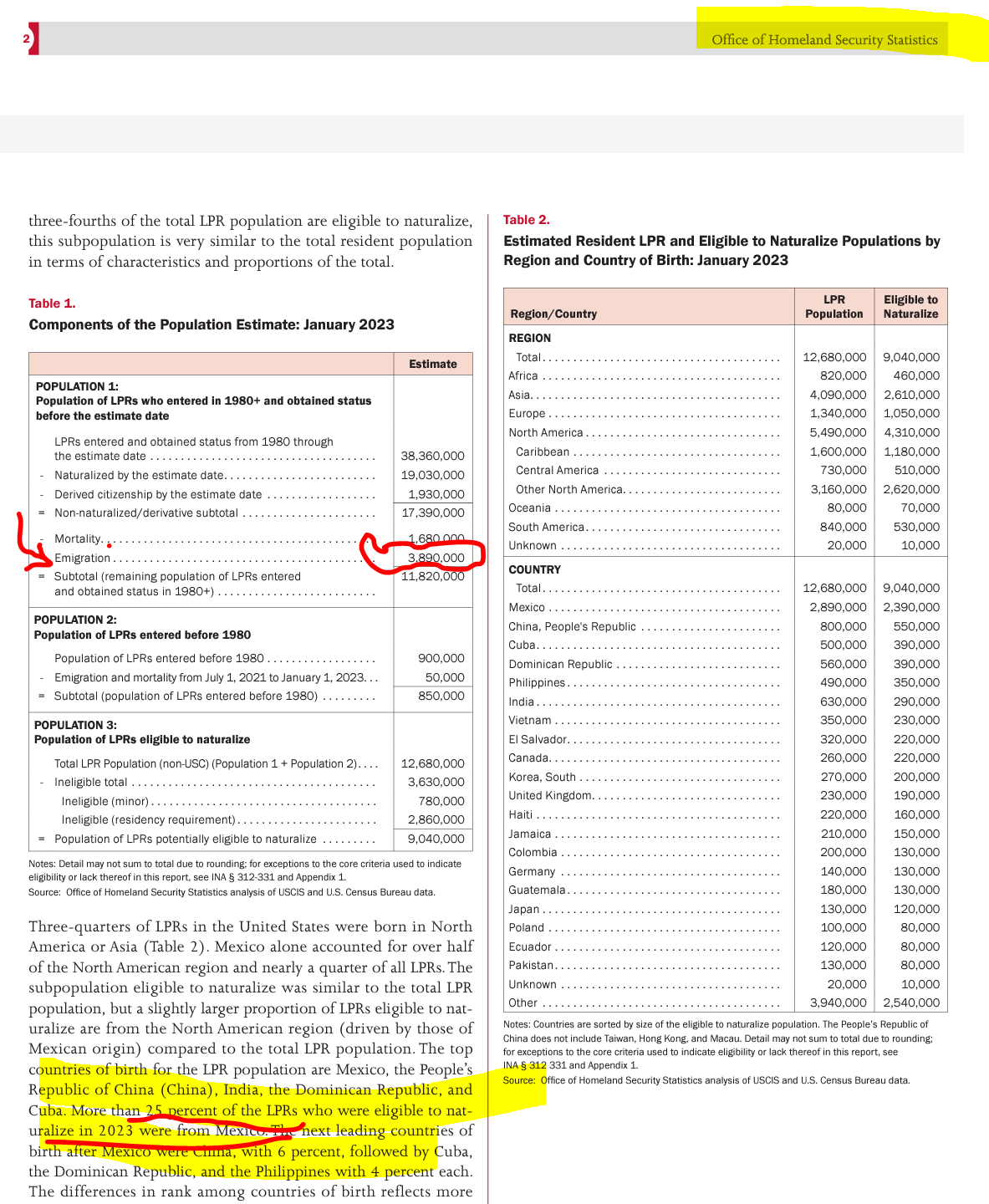
DHS Report: 3.89M Emigrated LPRs — Who Falls Under the Tax Treaty Escape Hatch?
Clear U.S. tax and legal relief now exists for a significant portion of the 3.89 million Lawful Permanent Residents (LPRs) who never formally abandoned their U.S. immigration status. This relief stems from two sources in the law:
(i) Tax treaty laws that apply to individuals residing in one of the 67 income tax treaty countries with the United States, recently including Chile.
(ii) Legal principles, recently confirmed by the Federal Court in Aroeste v. United States, that establish that individuals can apply tax treaty laws (when applicable) even if they missed certain filing deadlines set by the Internal Revenue Service. The Court termed this provision an “escape hatch,” allowing individuals, depending on specific circumstances, to be considered non-residents of the United States (not “United States persons”). This can be true under the relevant treaty, even if they never formally abandoned their LPR status.
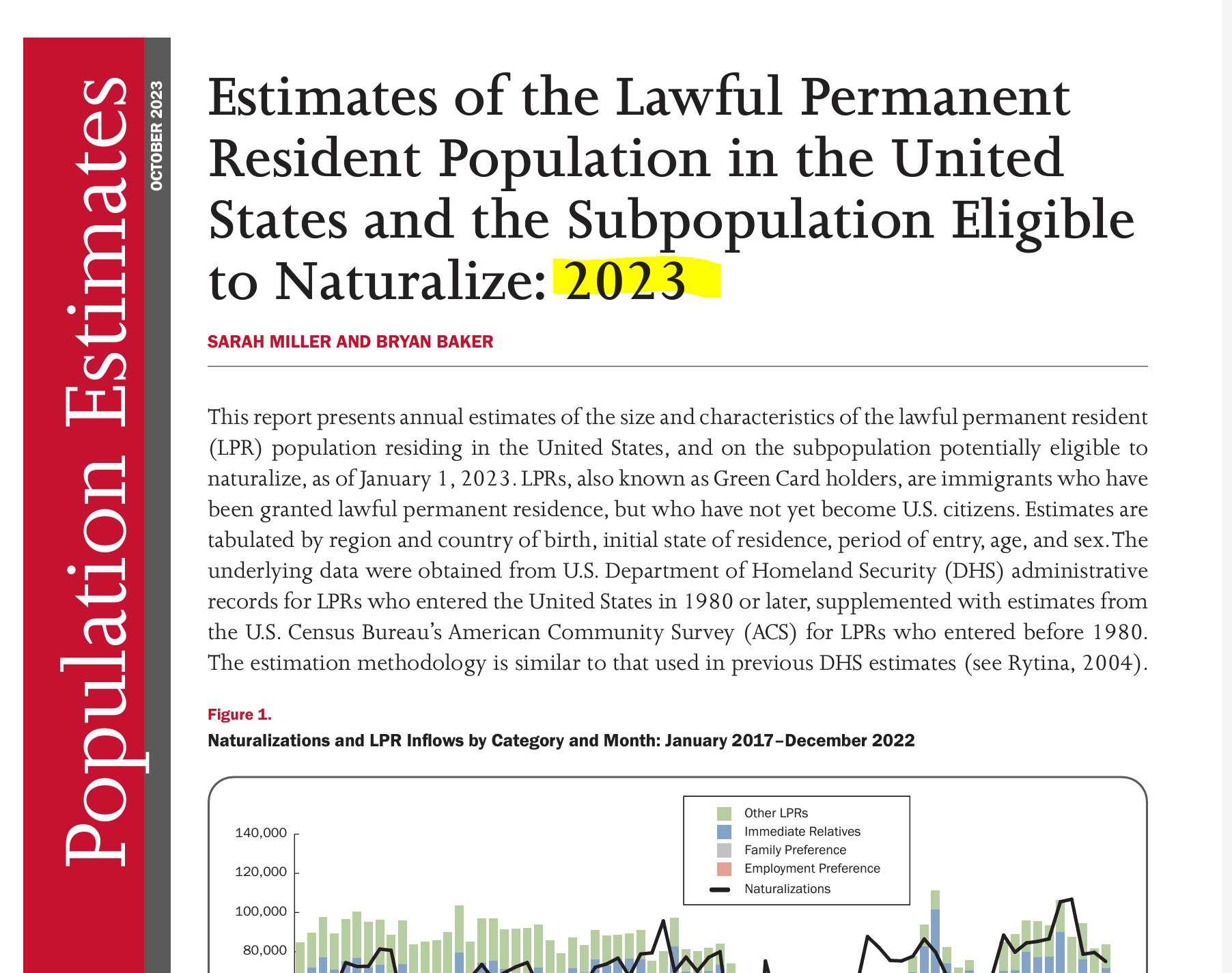
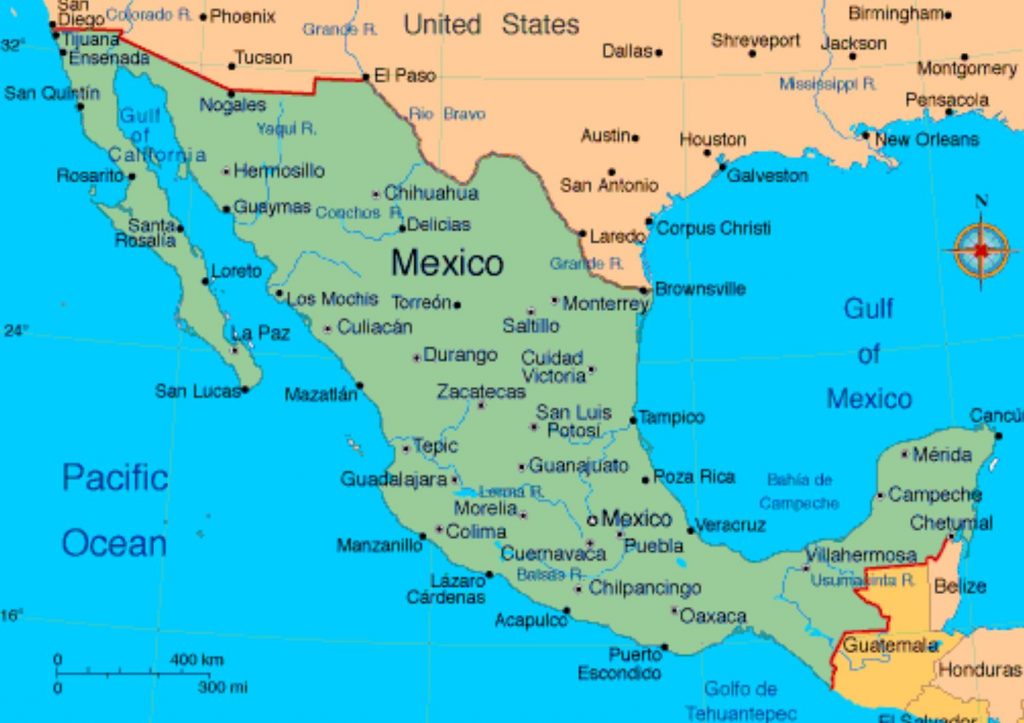
The 2023 DHS report estimates that nearly 4 million individuals have emigrated from and left the United States and are now living somewhere around the world. Notably, Mexico constitutes the largest share at about 25% of the total LPR population who have left the United States.
The DHS report allows the reader to extrapolate that around 1 million individuals, similar to Mr. Aroeste, are living in Mexico and did not formally abandon their LPR status by filing Form I-407, Record of Abandonment of Lawful Permanent Resident.
Aroeste v. United States is the third case I’ve litigated, examining whether individuals with a “green card” residing outside the United States in a tax treaty country are considered U.S. income tax residents. The previous two cases (involving Mexican and German citizens) didn’t progress to the oral argument stage; as the government conceded both before trial. See, IRS Chief Counsel Concedes Tax Treaty Residency Position for LPR German Taxpayer in Tax Court
A FOIA response yielded surprising information; the government records indicate that only 46,364 Forms I-407 were filed from 2013 to 2015.
(Source: Federal Government Response to FOIA Request: Office of Performance and Quality (OPQ), Performance Analysis and External Reporting (PAER), JJ)
SOURCE: Federal Government Response to FOIA Request: Office of Performance and Quality (OPQ), Performance Analysis and External Reporting (PAER), JJ
What can we glean from the DHS report and the LPR – I-407 information obtained through the FOIA response? There is a substantial gap in the millions; millions of individuals who have physically left the U.S. to reside elsewhere globally, compared to the relatively smaller number of tens of thousands who have officially filed Form I-407, Record of Abandonment of Lawful Permanent Resident.
Conclusion
Importantly, now under the legal principles established in Aroeste v. United States, individuals residing in one of the 67 countries covered by an income tax treaty have specific legal relief from the worldwide reporting of income to the United States government.
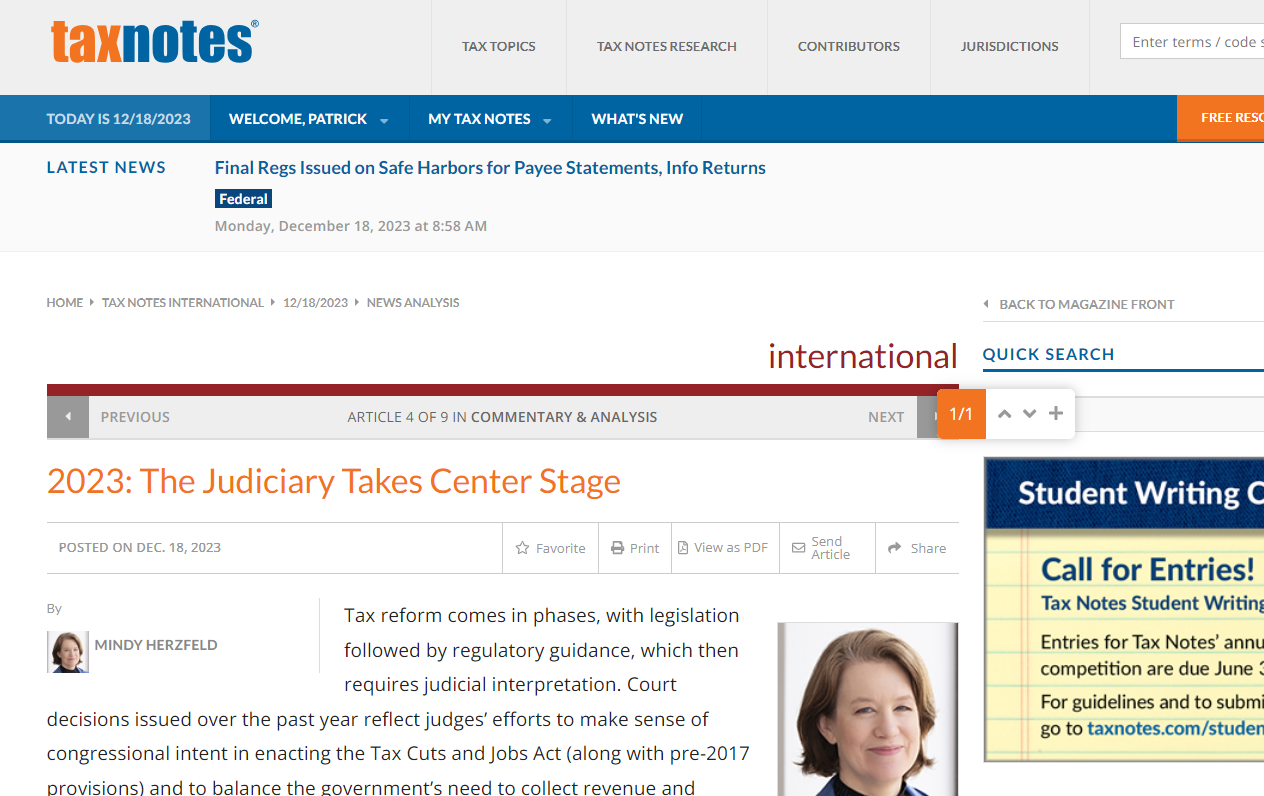
2023: The Judiciary Takes Center Stage; Professor – Mindy Herzfeld’s article in Tax Notes International –
Professor Herzfeld has an excellent article posted the 18th of December 2023. You can access it here with a paid subscription – titled: 2023: The Judiciary Takes Center Stage. She has lots to cover regarding recent international tax law decisions by the U.S. federal courts (United States Tax Court, Federal District Courts & Court of Federal Claims).
She covers Christensen v. United States, which is another tax treaty case regarding the ability to take a foreign tax credit against the Section 1411 tax on net investment income; authored by Judge Marion Blank Horn of the Court of Federal Claims. Judge Horn is no stranger to important international tax issues. She authored the 2002 decision of Estate of Jack vs. United States regarding “domicile” for U.S. estate tax purposes and the impact of the Canadian decedent’s visa status. More recently the Estate of Margaret J. Jones vs. the United States (2022) was a lengthy case of Judge Horn’s denying the Estate a refund. This Estate of Margaret J. Jones is also Canadian citizen (decedent) case; but addressed a very different issue – re: the 5% “miscellaneous offshore penalty” she paid that is identified by the IRS’ rules they created in the “Streamlined Domestic Offshore Procedures” instructions (it is not a treaty case).
TCJA, U.S. Trade or Business – SCOTUS & Moore
The Professor also addresses Moore v. United States (which she has written about before) and Altria Group Inc. v. United States and the subpart F rules under the TCJA.
The recent U.S. Tax Court (USTC) case of YA Global Investments LP v. Commissioner, is discussed by Professor Herzfeld regarding U.S. trade or business activities. Of course, another key USTC case regarding Section 6038 penalties is reviewed which has been appealed by the government – Farhy v. Commissioner. See, Six Weeks, Three International Information Reporting Decisions –
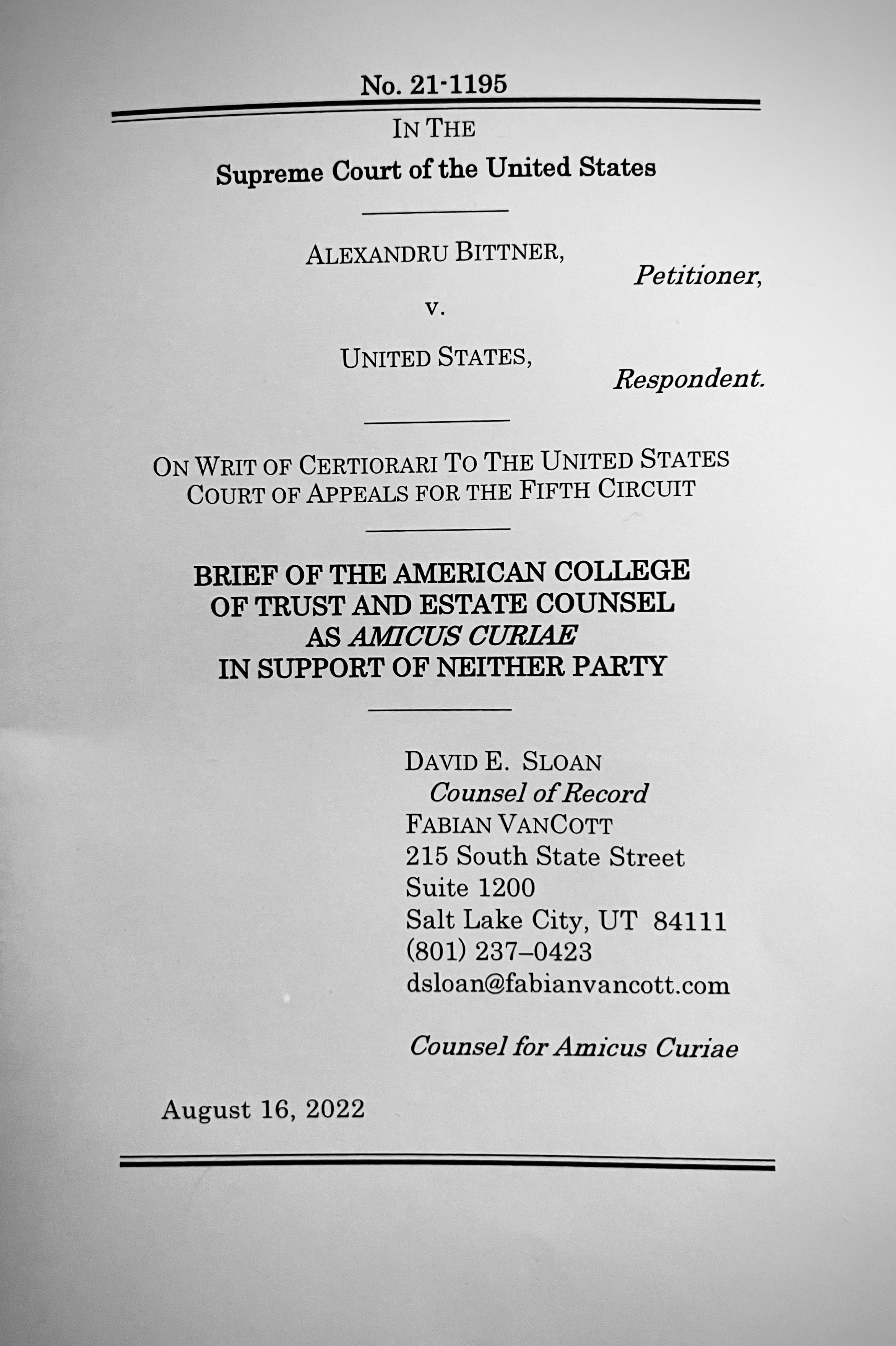
The SCOTUS decision near and dear to my heart (as I personally worked on the ACTEC amicus brief) of Bittner v. United States, is also reviewed briefly by Professor Herzfeld. In that case the SCOTUS held penalties are limited to $10,000 per year for a non-willful violation of the statute (not $2.72 million as the government asserted based upon each account).
She reviews some important transfer pricing cases Coca-Cola Co. v. Commissionerand 3M Co. v. Commissioner.
Do read Professor Herzfeld’s article when you get a chance. More details about her background and how to follow her is set out below:
Mindy Herzfeld is professor of tax practice at University of Florida Levin College of Law, counsel at Potomac Law Group, and a contributor to Tax Notes International. Follow Mindy Herzfeld (@InternationlTax) on X, formerly known as Twitter.
Never in my 30 year career practicing international tax law have I seen the judiciary so active in international tax matters – particularly when you take into consideration various SCOTUS cases.
Recent Articles re: Aroeste v. United States (Tax Treaty – Nonresident; Lawful Permanent Resident) – IRS Notice 2009-85 Lacks Authority
There have been numerous articles being written about the key case of the author (Patrick W. Martin) who has represented Mr. and Mrs. Aroeste for nearly 8 years.
Federal Court Determines IRS “Guidance for Expatriates Under Section 877A” – IRS Notice 2009-85: “Is Not Binding Authority”
The Federal District Court made numerous key legal findings in its Order on November 20, 2023; in Aroeste v. United States, Case No. 22-cv-00682-AJB-KSC. One of the more significant findings was that IRS Notice 2009-85 is not binding authority. This blog is dedicated to tax expatriation related matters under U.S. law.
IRS Notice 2009-85 is Not Binding Authority per the Court
expatriation.com has represented him for several years throughout the IRS audits and the on-going U.S. Tax Court cases along with his wife.
While many may consider this case to be a Title 31/FBAR case (which it is), it has greater ramifications under the tax expatriation laws in the author’s view. The finding by this Court regarding IRS Notice 2009-85 is significant with far reaching implications. The IRS Notice 2009-85 is broad in its scope and is more than 60 pages in length. It notes that, “Section 877A(i) provides that the Secretary shall prescribe such regulations as may be necessary or appropriate to carry out the purposes of section 877A.” (p.4)
No Treasury Regulations Ever Issued – After 15 Years of IRS Notice 2009-85
The Treasury Department never issued regulations under 877A, which is now 15 years old. The notice provides the historical background as follows:
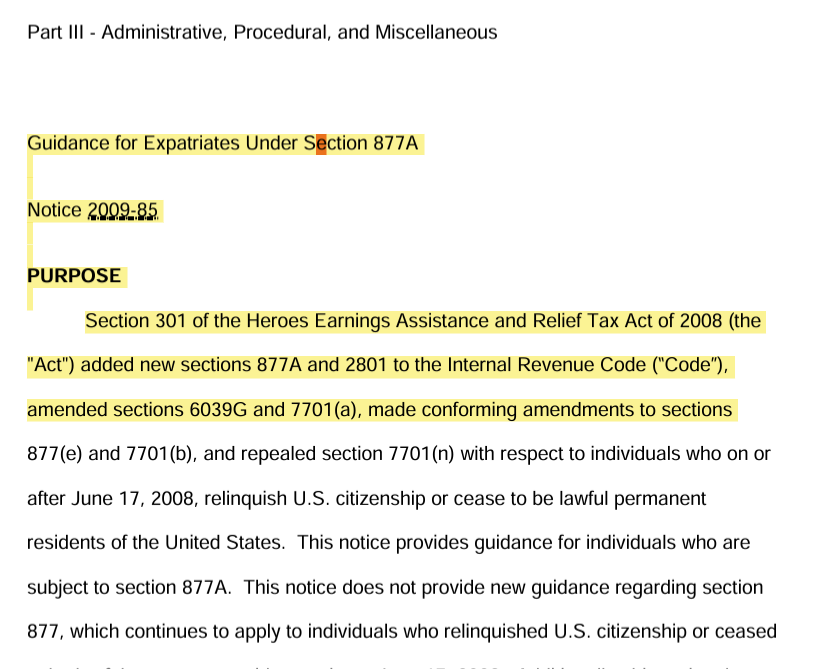
Notice 2009-85 PURPOSE Section 301 of the Heroes Earnings Assistance and Relief Tax Act of 2008 (the “Act”) added new sections 877A and 2801 to the Internal Revenue Code (“Code”), amended sections 6039G and 7701(a), made conforming amendments to sections 877(e) and 7701(b), and repealed section 7701(n) with respect to individuals who on or after June 17, 2008, relinquish U.S. citizenship or cease to be lawful permanent residents of the United States. This notice provides guidance for individuals who are subject to section 877A.
The Court in Aroeste concluded that Mr. Aroeste ceased to be a lawful permanent resident.
Specifically, the Court finds Aroeste . . . ceased to be treated as a lawful permanent resident of the United States because he commenced to be treated as a resident of Mexico under the Treaty, did not waive the benefits of such Treaty, and notified the Secretary of the commencement of such treatment.
Many practitioners have questioned the accuracy and validity of many of the conclusions asserted in the 2009 notice; such as the timing of when someone becomes a “covered expatriate”. How and why they become a “covered expatriate” by the concepts introduced in the 2009 notice. The multiple examples presented, reflecting various tax outcomes according to the IRS, were never commented on by the public.
Another question many have raised is the effectiveness of IRS Form 8854? Throughout the notice, the IRS uses the word “must” some 88 times regarding the individual who ceased to be a U.S. citizen or a “lawful permanent resident” (or in some instances references to third parties). Does the IRS imply that if any of these “must”/conditions imposed under the notice are not satisfied, the individual is necessarily a “covered expatriate” with the adverse tax consequences that might follow?
Are their other adverse tax consequences that might follow? For instance, can the IRS repeatedly assert international information penalties regarding the individual’s
companies in her own country,
beneficiary rights of a trust or an estate in her own country, or
other investment assets or financial accounts in her country of residence that might be deemed a “specified foreign financial asset” if the individual is a United States person”?
For instance, the 2009 notice provides that a “covered expatriate” must file a “dual status return” and file a Form 1040NR with a 1040 attached as a schedule for the “year of expatriation”. See, IRS Notice 2009-85, p. 49.
The IRS goes on to say in that notice that individuals “must file Form 8854 in order to certify, under penalties of perjury, that they have been in compliance with all federal tax laws during the five years preceding the year of expatriation.” Id., p. 50. The government asserts that if this condition is not satisfied, the individual will necessarily be treated as ” . . . covered expatriates within the meaning of section 877A(g) whether or not they also meet the tax liability test or the net worth test.“
These would be pretty damning consequences to an individual, if they otherwise met the statutory test of certifying compliance with the tax laws for the preceding five years.
Importantly, the Court in Aroeste v. United States concluded as a matter of law that 2009-85 is not binding authority as it fails to comply with the Administrative Procedures Act (“APA”). It concluded Mr. Aroeste did not need to file Form 8854 with his amended returns. He had filed Form 8833 – treaty based reporting.
The court cited to ” . . . Green Valley Investors, LLC v. Comm’r of Internal Revenue, 159 T.C. No. 5, at *4 (Nov. 9, 2022)) (under the APA, agencies must follow a three-step procedure for “notice-and-comment” rulemaking, but this requirement does not apply to “interpretive rules, general statements of policy, or rules of agency organization, procedure, or practice.”).) The Court agrees. In Mann Construction, Inc. v. United States, 27 F.4th 1138 (6th Cir. 2022), the court found that Notice 2007-83 failed to comply with the APA’s notice-and-comment procedure. Similarly here, because Notice 2009-85 has not been subject to a notice-and-comment procedure, it does not comply with the APA and thus is not binding. As such, Aroeste was not required to file Form 8854 with his amended returns.”
None of these comments represent legal advice. Complex laws applied to specific facts require a legal expert to opine on the consequences and recommended courses of action. It is worth noting that individuals who have a “green card” and who have not previously articulated the application of a U.S. income tax treaty, should consider taking proactive steps to protect their rights under the law. Also, United States citizens who formally renounced their citizenship, who may never have taken specific tax reporting positions should consider taking proactive steps to help avoid the risk the IRS might assert substantial penalties or conclude the individual became a “covered expatriate”.
Federal District Court Rules in Favor of Mexican Citizen – Aroeste vs. United States (LPR) – Tax Treaty Applies: Government’s Motion for Summary Judgment is Denied
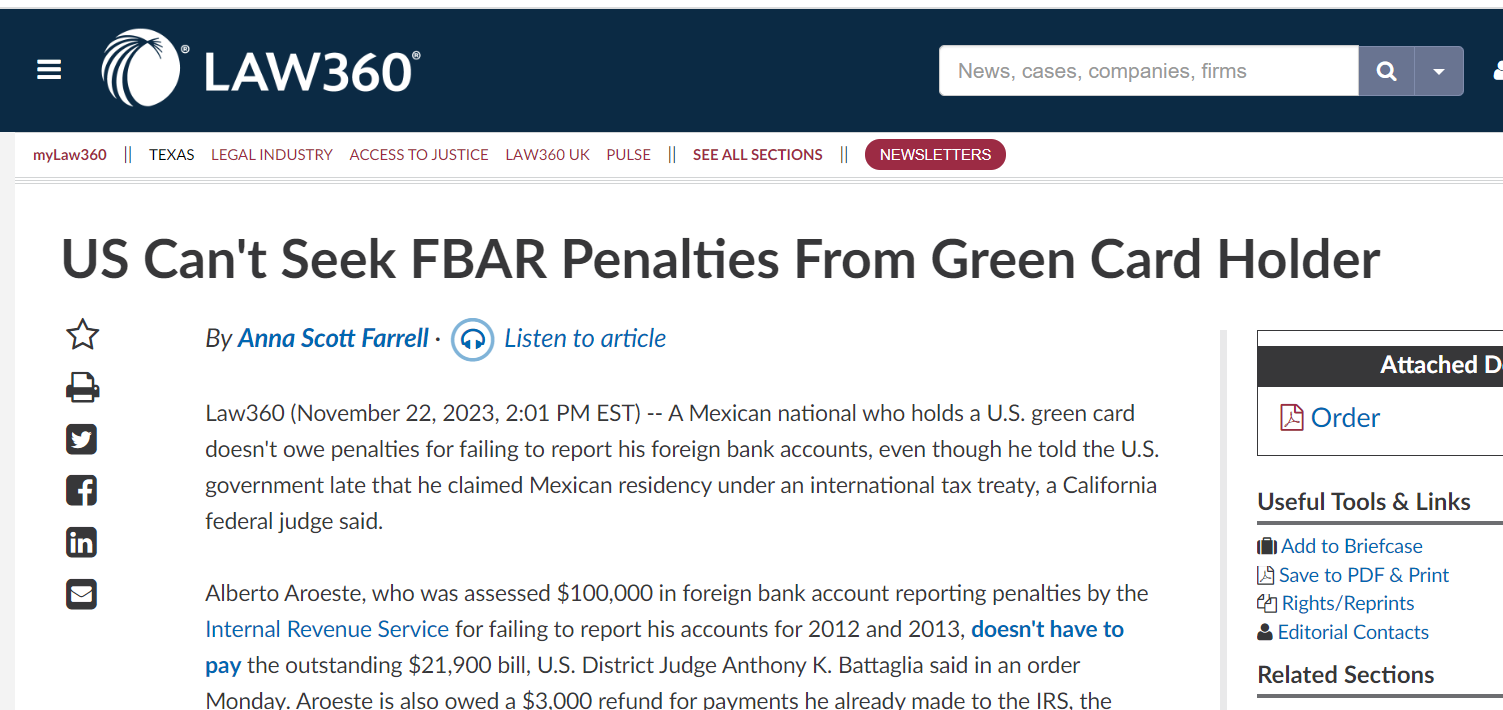
Last week (Nov. 20, 2023), Judge Battaglia in the Southern District of California (San Diego) ruled in favor of our client Mr. Alberto Aroeste regarding the application of the U.S.-Mexico Tax Treaty. The DOJ, Tax Division arguments on behalf of the Internal Revenue Service in the case (and their Motion for Summary Judgment – MSJ) were largely rejected by the Court.
A thorough read of the Order from the Court is recommended to understand the substantial legal findings and legal analysis made by the Court relevant to those who possess a “green card” referred to as “lawfully admitted for permanent residence” in Title 8, § 1101(a)(13) [Immigration and Nationality Act]. Key to this case, Title 26, § 7701(b)(6) [Federal Tax Code] then rather contorts the concept by saying an individual is a “lawful permanent resident” in accordance with immigration laws; but then goes on to put conditions on who apparently is a “lawful permanent resident” for federal tax purposes. While immigration law requires the individual be ” . . . accorded the privilege of residing permanently in the United States as an immigrant in accordance with the immigration laws, such status not having changed”; the tax definition seems to ignore that status (i.e., has it changed and is the personal no longer accorded the privilege of residing permanently in the U.S.?).
The Board of Immigration Appeals (the “Board”), has long recognized that an alien’s status may change by operation of law, such that an alien may abandon his LPR status without a finding of removability (or, formerly, deportability or excludability) after a formal adjudicatory process. See United States v. Yakou, 428 F.3d 241, 247 (D.C. Cir. 2005); at 247-51 (discussing case law regarding abandonment and holding that an alien may abandon LPR status without formal administrative action); see also Matter of Quijencio, 15 I. & N. Dec. 95 (B.I.A. 1974); Matter of Kane, 15 I. & N. Dec. 258 (B.I.A. 1975); Matter of Muller, 16 I. & N. Dec. 637 (B.I.A. 1978); Matter of Abdoulin, 17 I. & N. Dec. 458, 460 (B.I.A. 1980); Matter of Huang, 19 I. & N. Dec. 749 (B.I.A. 1988).
The Court did not need to get into the nuances of immigration law to rule against the government in this case.
Some of the substantial takeaways from the decision are:
Waiver of the Tax Treaty: The government cannot assert an individual waived the treaty law because she initially filed the wrong IRS forms (1040) instead of the non-resident form (1040NR) and IRS Form 8833.
The Court agrees with Aroeste. Although Aroeste gave untimely notice of his treaty position, the Court finds this does not waive the benefits of the Treaty as asserted by the Government. Rather, I.R.C. § 6712 provides the consequences for failure to comply with I.R.C. § 6114, namely a penalty of $1,000 for each failure to meet § 6114’s requirements of disclosing a treaty position.
Aroeste v United States – Order 20 Nov 2023 (p. 17)
Expatriation Tax form – IRS Form 8854: Validity and its Failure to Comply with the Administrative Procedure Act (“APA”)
C. Whether Aroeste Was Required to File Form 8854 The Government next argues that even if the IRS had accepted Aroeste’s amended returns, neither amended return would have properly notified the IRS of a commencement of treaty benefits because both failed to attach Form 8854, as required by IRS Notice 2009-85. (Doc. No. 76-1 at 4–5.) The Government concedes Aroeste attached Form 8833 to both amended forms. (Id.) Aroeste responds that Notice 2009-85 is not binding authority as it fails to comply with the Administrative Procedures Act (“APA”). (Doc. No. 78-1 at 8 (citing Green Valley Investors, LLC v. Comm’r of Internal Revenue, 159 T.C. No. 5, at *4 (Nov. 9, 2022)) (under the APA, agencies must follow a three-step procedure for “notice-and-comment” rulemaking, but this requirement does
not apply to “interpretive rules, general statements of policy, or rules of agency organization, procedure, or practice.”).) The Court agrees. In Mann Construction, Inc. v. United States, 27 F.4th 1138 (6th Cir. 2022), the court found that Notice 2007-83 failed to comply with the APA’s notice-and-comment procedure. Similarly here, because Notice 2009-85 has not been subject to a notice-and-comment procedure, it does not comply with the APA and thus is not binding. As such, Aroeste was not required to file Form 8854 with his amended returns.
Aroeste v United States – Order 20 Nov 2023 (p. 11)
Tax Treaty Law Applies – Article 4 Regarding Tax Residency
Various detailed analysis and discussions from the Court –
Aroeste v United States – Order 20 Nov 2023 (p. 11-14)
The Preamble to the FBAR Regulations is Not the Law –
. . . the Government points to the preamble to the 31 C.F.R. Part 1010 regulations, providing that “[a] legal permanent resident who elects under a tax treaty to be treated as a non-resident for tax purposes must still file the FBAR.” Amendment to the Bank Secrecy Act Regulations—Reports of Foreign Financial Accounts, 76 Fed. Reg. 10234-01 (Feb. 24, 2011). The Court finds this unavailing. The Government’s argument does not refute the plain language of the FBAR regulations, which explicitly invoke provisions of Title 26, including the provision that requires consideration of an individual’s status under an applicable tax treaty for the purpose of determining whether an individual is a “United States person” subject to FBAR filing. Specifically, Title 31 C.F.R. § 1010.350, which governs reporting of FBARs, subsection (b)(2) states that a “resident of the United States is an individual who is a resident alien under 26 U.S.C. 7701(b) and the regulations thereunder . . . .” The Government fails to cite to any case law or statue indicating otherwise, and the Court finds none. As such, because the Court finds the Treaty applicable to Aroeste, then the residence provisions of the Treaty, or the “tie breaker rules” dictates whether Aroeste may be treated as a nonresident alien.
Aroeste v United States – Order 20 Nov 2023 (p. 14)
This is the third court case (the other two were in U.S. Tax Court) I have had over the last several years where the IRS tried to assess substantial penalties and taxes against LPRs who resided substantially outside the United States. The other two cases were conceded by the IRS prior to going to trial. One case had over US$40M at stake as assessed by the IRS. This case, in federal district court, was pushed all the way to this favorable (to Mr. Aroeste and those around the world in similar circumstances) outcome by the government. We were successful with all of these non-U.S. citizen cases (two brothers from Mexico and an individual from Germany).
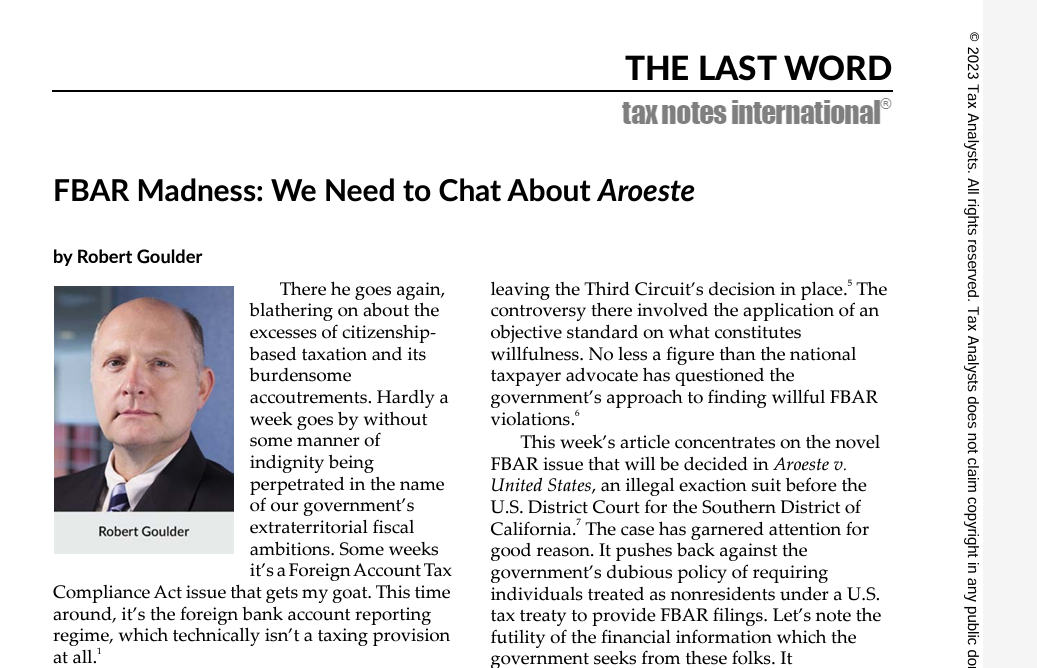
Tax Notes International: Article by Robert Goulder: FBAR Madness: We need to Chat About Aroeste
On Monday 11 Sept 2023, Robert Goulder wrote a detailed article about the implications of what he calls “The Green Card From Hell”! His article can be reviewed in its entirety through the subscription service provided by Tax Notes International – FBAR Madness: We Need to Chat About Aroeste.
Goulder made some key observations that are worth repeating for anyone who has been a green card holder for basically more than seven years. That can trigger the “expatriation” tax provisions – the focus of this blog.
The facts of the case of Mr. Alberto Aroeste are covered extensively and accurately in Goulder’s article.
He noted:
This week’s article concentrates on the novel FBAR issue that will be decided in Aroeste v. United States, an illegal exaction suit before the U.S. District Court for the Southern District of California.7 The case has garnered attention for good reason. It pushes back against the government’s dubious policy of requiring individuals treated as nonresidents under a U.S. tax treaty to provide FBAR filings. Let’s note the futility of the financial information which the government seeks from these folks. It concurrently exempts treaty nonresidents from the need to file IRS Form 8938 (“Statement of Specified Foreign Financial Assets”), the tax code’s counterpart to the FBAR.8 It remains problematic that the government should demand reporting from treaty nonresidents as if they were residents.9
The one issue not explained well relates to how and when lawful permanent residency (i.e. a “green card”) under Title 8 is even valid in the first place. Goulder’s article explains some of the rights of lawful permanent residency status, but also addresses some key areas of the immigration law the same as most tax law experts cover a different area of the law. See, SCOTUS’ observations of the law in this context: Unplanned Expatriation: Lawful Permanent Residents’ Deportation Risks for Filing U.S. Federal False Tax Returns
For instance, Goulder claims green card holders cannot be deported as long as the immigration status remains valid. True – but what is not explained is how easy it is to cease to have a valid one in the first place. What he doesn’t explain is how and when an individual can “abandon” or “relinquish” the status as a green card holder (as a matter of law) by not residing permanently in the United States. See, Fundamentals of Immigration Law, written by Charles A. Wiegand, III, Former Immigration Judge, Oakdale, Louisiana. The law is complex as described by Wiegand.
Goulder does not seem to find the government’s arguments persuasive (“ain’t buying it“!):
For Aroeste, there seems to be little doubt his closer personal and economic ties are with Mexico. The IRS knows this. An analysis conducted by an IRS agent concluded that he spent no more than 67 days in the United States during 2012 and 57 days in the United States in 2013, with three-quarters of the remaining time spent in Mexico.
Goulder –
The IRS doesn’t care where Aroeste had closer personal and economic ties. That’s because it doesn’t care about the tiebreaker. As the government sees it, the treaty is a distraction that has no meaningful role to play in this litigation. The plaintiff’s immigration status is conclusive, end of story. His green card settles the matter, such that all further inquiries are superfluous and should cease.
Id.
What bothers me about that argument is how the government’s position selectively wishes away the existence of the U.S. tax treaty network — but only for application of the FBAR regime. The Mexico treaty would still mean something in another context, but not on the pivotal issue of Aroeste’s status as a U.S. person for FBAR purposes. Sorry, I ain’t buying it.
Id.
The government argues the treaty is only relevant for income and excise tax purposes, and what we have here are penalties based on violations of the Bank Secrecy Act — not the Internal Revenue Code. As the government sees it, no plaintiff can successfully challenge penalties authorized by Title 31 with legal remedies based on Title 26. I’m still not buying it.
Id, Goulder
I would recommend you take a read through his article that also addresses a discussion on how the government prefers to keep internal memoranda from the eyes of the public. He discusses at some length – Tax Analysts and Coastal States. How the Court in Aroeste took an approach different from the D.C. Circuit in articulating 9th Circuit law regarding attorney client privileged documents in the possession of the government.
Dual Nationality has Been Permitted in the U.S.A. since 1967: U.S. Supreme Court Confirmed Constitutional Rights of Citizenship (Afroyim v. Rusk, 387 U.S. 253 (1967))
There is a common myth that still persists about U.S. citizenship. It is often stated (erroneously) that someone becoming a U.S. naturalized citizen must forsake citizenship to another country. Or a U.S. citizen becoming a naturalized citizen of another country must forsake U.S. citizenship. There are good reasons for this “myth.”
First, the federal government used to have a policy that discouraged (if not outright prohibited) nationality in another country while being a U.S. citizen in various circumstances. This despite the language in the 14th Amendment of the Constitution which provides in
relevant part:
“All persons born or naturalized in the United States, and subject to the jurisdiction thereof, are citizens of the United States and of the state wherein they reside. No state shall make or enforce any
law which shall abridge the privileges or immunities of citizens of the United States; nor shall any state deprive any person of life, liberty, or property, without due process of law; nor deny to any person within its jurisdiction the equal protection of the laws.“
Congress then imposed various restrictions on citizens and provided they would lose nationality in various circumstances. Specifically the Nationality Act of 1940 imposed a strict statutory rule that a:
” . . . national of the United States . . . shall lose their nationality by: . . . “(e) Voting in a political election in a foreign state” [since repealed]
Section § 401(e) of the Nationality Act of 1940
The Supreme Court in 1967 found that specific provision as violating the U.S. Constitution. In
that case, Mr. Afroyim was Polish born and become a U.S. naturalized citizen in 1926. The Court concluded he had voted in elections in Israel (after emigrating from the U.S. to Israel in 1950 – without formally renouncing his U.S. citizenship). The opinion of the Court concluded:
We hold that the Fourteenth Amendment was designed to, and does, protect every citizen of this Nation against a congressional forcible destruction of his citizenship, whatever his creed, color, or race. Our holding does no more than to give to this citizen that which is his own, a constitutional right to remain a citizen in a free country unless he voluntarily relinquishes that citizenship.
U.S. Supreme Court in Afroyim (1967)
The decision in Afroyim is in stark contrast to the earlier Supreme Court decision of Perez v. Brownell, 356 U.S. 44 (1958). In the earlier decision SCOTUS cited to the same 1940s Nationality Act – [Section § 401(e) of the Nationality Act of 1940]. The Court explained that the petitioner was born in the U.S. (unlike Afroyim who was born in Poland per the Court); explaining the individual was born in Texas, yet found that he lost his citizenship by voting in political elections in Mexico. The odd notion in Perez is that although he was born in the U.S. the Court referred to him as a “native-born Mexican citizen”. The key facts summarized by that Court were as follows:
Petitioner was born in Texas in 1909. He resided in the United States until 1919 or 1920, when he moved with his parents to Mexico, where he lived, apparently without interruption, until 1943. In 1928 he was informed that he had been born in Texas. At the outbreak of World War II, petitioner
knew of the duty of male United States citizens to register for the draft, but he failed to do so. In 1943 he applied for admission to the United States as an alien railroad laborer, stating that he was a native-born citizen of Mexico, and was granted permission to enter on a temporary basis. He returned to Mexico in 1944 and shortly thereafter applied for and was granted permission, again as a native-born Mexican citizen, to enter the United States temporarily to continue his employment as a railroad laborer. Later in 1944 he returned to Mexico once more. In 1947 petitioner applied for admission to the United States at El Paso, Texas, as a citizen of the United States. At a Board of Special Inquiry hearing (and in his
Mexico
subsequent appeals to the Assistant Commissioner and the Board of Immigration Appeals), he admitted having remained outside of the United States to avoid military service and having voted in political elections in Mexico. He was ordered excluded on the ground that he had expatriated himself; this order was affirmed on appeal. In 1952 petitioner, claiming to be a native-born citizen of Mexico, [356 U.S. 44, 47] was permitted to enter the United States as an alien agricultural laborer. He surrendered in 1953 to immigration authorities in San Francisco as an alien unlawfully in the United States but claimed
the right to remain by virtue of his American citizenship. After a hearing before a Special Inquiry Officer, he was ordered deported as an alien not in possession of a valid immigration visa; this order was affirmed on appeal to the Board of Immigration Appeals.
It does not seem that either Mr. Perez of Mr. Afroyam were much concerned about U.S. federal
tax consequences of their U.S. citizenship. Indeed, Mr. Perez was only a boy of about 10 years old when his parents left Texas to reside in Mexico where he remained for about 23 years before returning to the U.S. Afroyam tried to return to the U.S. apparently after his marriage failed in Israel.
Today, the U.S. Department of State articulates their policy and law of dual nationality for U.S. citizens seeking foreign citizenship. See, U.S. Department of State website:
U.S. law does not impede its citizens’ acquisition of foreign citizenship whether by birth, descent, naturalization or other form of acquisition, by imposing requirements of permission from U.S. courts or any governmental agency. If a foreign country’s law permits parents to apply for citizenship on behalf of minor children, nothing in U.S. law impedes U.S. citizen parents from doing so.
Three Precedent Setting Cases in International Information Reporting (“IIR”) in 6 Weeks: * Aroeste, * Bittner, and * Farhy: all Interconnected via Title 26, Title 31 and U.S. Income Tax Treaties
In just over six weeks, there have been three key judicial precedents favorable to international individuals. These cases have helped clarify the requirements of individuals and the limitations on the powers of the IRS in assessing IIR penalties. Please see the full article on tax notes. These IIR decisions relate to:
Title 31 penalties for Foreign Bank Account Reports (“FBARs”),
How these two federal statutory regimes of Title 31 and 26 crossover into international law as set forth in U.S. income tax treaties negotiated with different countries around the world.
Each of these three cases are interconnected and have significant impact to individuals with global lives, global assets, multi-national family members and those who have businesses or accounts in different parts of the world.
Aroeste v. United States
First, on February 13th, 2023, the Southern District of California District Court (the “District Court”) made a key determination in a Joint Discovery Motion decision in Aroeste.[2] The District Court concluded in Aroeste that the IRS/DOJ[3] could not ignore the U.S.-Mexico income tax treaty (“Treaty”) and its application to a Mexican national who has resided almost all of his life in Mexico City and has maintained a “green card” for immigration purposes in the United States. It is a non-willful FBAR case. The District Court applied the interconnected statutes and regulations of Titles 31 and 26 to help determine who qualifies as a “United States person”; specifically with reference to international law and obligations set forth in the Treaty. The key question in that case that remains to be answered is who (specifically Mr. Aroeste and by extension to a pool of millions of green card individuals residing outside the United States who are not citizens[4]) must file FBARs?
Second, on February 28th, 2023, the Supreme Court of the United States (“SCOTUS”) resolved in Bittner[5], that the applicable non-willful FBAR penalty is not measured by every foreign account of the individual as the Service has argued for years. That case also dealt with non-willful filing of FBARs and the SCOTUS concluded the IRS cannot impose penalties of $10,000 on each and every account held; but rather the penalty is “per report” that was not correctly filed. Hence, the total maximum penalty per year is $10,000. A maximum penalty of $50,000 (x5 years) applied per the SCOTUS versus the IRS determined amount of US$2.7M+.
Farhy v. Commissioner
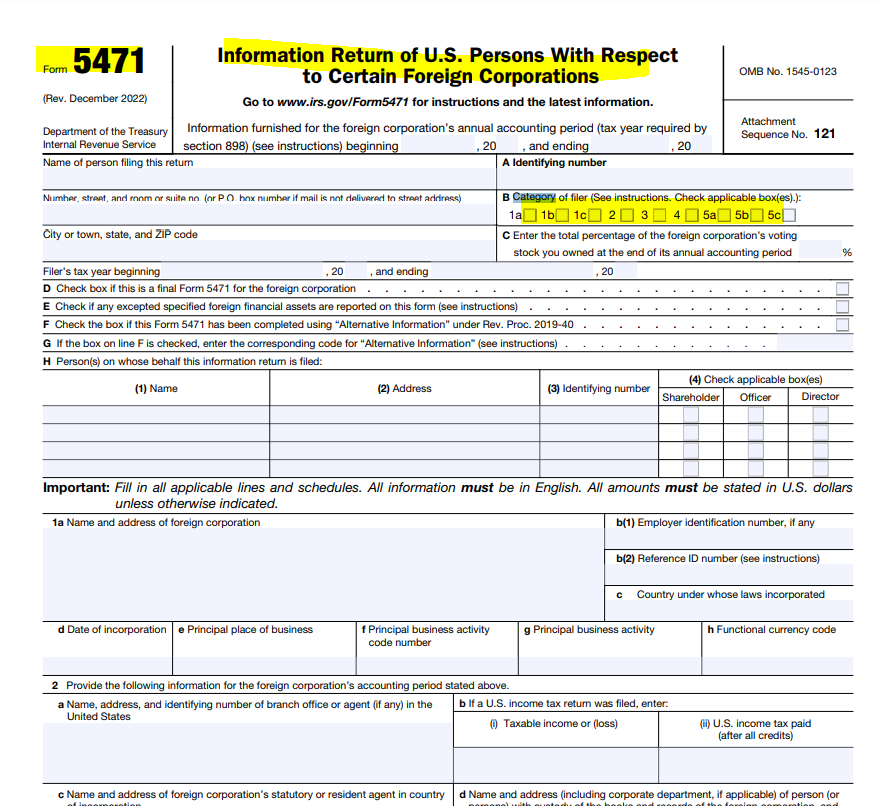
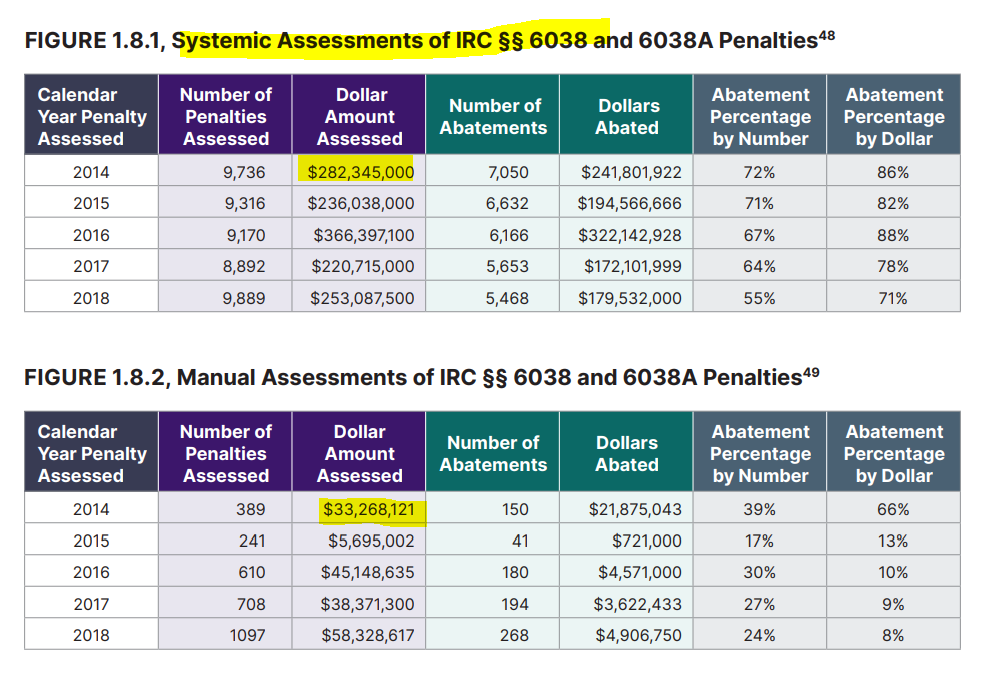
Lastly, on April 3rd, 2023, the United States Tax Court (the “Tax Court”) issued a decision in Farhy,[6] stating that the IRS does not have statutory authority to assess IIR penalties under section 6038(b). The IIR that is required by this statute is IRS Form 5471, which includes multiple filing categories. This has far reaching implications about how the government will be able to collect the IIR penalties the Service administratively determines are owed.[7] The Taxpayer Advocate previously issued a report on point titled: The IRS’s Assessment of International Penalties Under IRC §§ 6038 and 6038A Is Not Supported by Statute, and Systemic Assessments Burden Both Taxpayers and the IRS[8] In that report, the Taxpayer Advocate identified more than $310M of penalties just for the tax year 2014 the IRS “assessed” under Sections 6038 and 6038A.[9] We now know these “assessments” were invalid.
[1] See, footnote 19 regarding United States Tax Court’s Order in the case of Alberto Aroeste & Estela Aroeste vs. Commissioner.
[3] The “IRS” or the “Service” are used as shorthand for the Internal Revenue Service; and the Department of Justice; Tax Division is referred to as the “DOJ.”
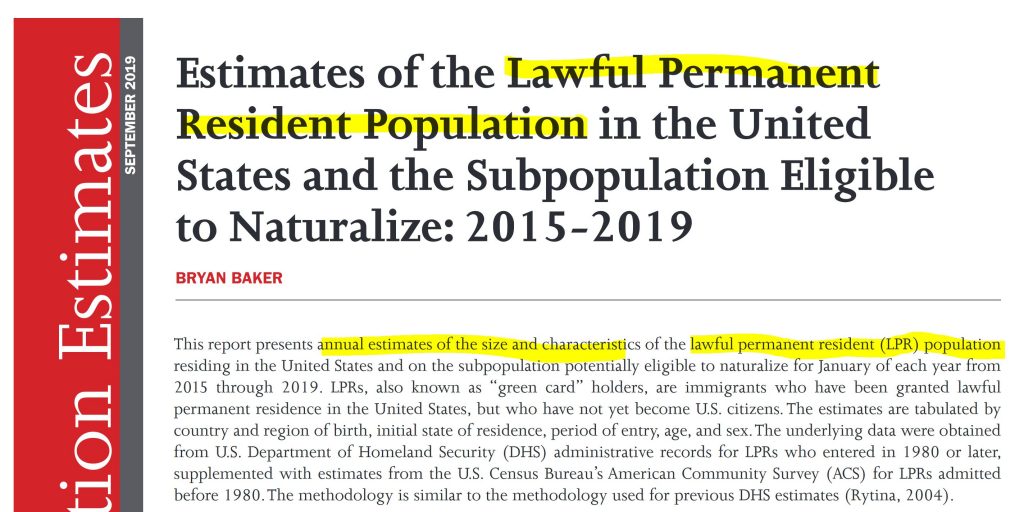
[4] See, the Homeland Security, Office of Immigration Statistics – Estimates of the Lawful Permanent Resident Population in the United States and the Subpopulation Eligible to Naturalize: 2015-2019. According to the report, more than 1 million individuals become LPRs each year and 4.8 million are estimated to have died and/or emigrated. The authors have extrapolated from these estimates in the report to conclude that more than 3 million of these individuals have emigrated and left the United States. The millions of individuals do not reside in the U.S. of which Mr. Aroeste is one of these individuals; although a tax treaty must exist in the country of residence for the analysis of the District Court in Aroeste v. United States to be applicable.
[5] No. 31—1195 (U.S. Feb. 28, 2023); 598 U. S. ____ (2023); The majority opinion by Justice Gorsuch cited to the ACTEC amicus brief (where Patrick W. Martin, the author of tax-expatriation.com and a fellow of ACTEC worked on the drafting of the brief) and concluded:
“Best read, the BSA treats the failure to file a legally compliant report as one violation carrying a maximum penalty of $10,000, not a cascade of such penalties calculated on a per-account basis.” The ACTEC brief was cited by the majority opinion- “ We see evidence, too, that the point of these reports is to supply the government with information potentially relevant to various kinds of investigations, criminal and civil alike. But what we do not see is any indication that Congress sought to maximize penalties for every nonwillful mistake (whether a late filing, a transposed account number, or an out-of-date bank address). See Brief for American College of Trust and Estate Counsel as Amicus Curiae 5–7.”
[7]See, Patrick W. Martin, Megan L. Brackney, Robert Horowitz, and Javier Diaz de Leon Galarza: Problems Facing Taxpayers with Foreign Information Return Penalties, November 12, 2020.
The Number of LPRs Declined in the Corona-virus Pandemic
Not surprisingly, the number of new LPRs into the U.S. dropped substantially in correlation with the Corona-virus pandemic. See, the Office of Immigration Statistics, 28 Sept. 2021: Fiscal Year 2021 U.S. Lawful Permanent Residents Annual Flow Report. The Figure 1 (highlighted by me) and that report notes:
Just over 700 thousand persons became LPRs in 2020, as reduced international travel during the COVID-19 pandemic and policy changes brought new LPR admissions in 2020 to their lowest
level since 2003. The majority of these LPRs (62 percent) were already present in the United States when they were granted lawful permanent residence. A little under two-thirds (63 percent) were granted LPR status based on a family relationship with a U.S. citizen or current LPR. The leading countries of birth of new LPRs were Mexico, India, and People’s Republic of China (China). In 2020, there was a 31 percent reduction in U.S. grants of LPR status compared to 2019.
Largely due to the COVID-19 pandemic, LPR flows in 2020 were not representative of typical trends (Figure 1). Travel restrictions and processing slowdowns generally resulted in fewer inflows, while foreign-born residents within the United States also confronted immigration status-specific COVID-19 vulnerabilities.5
The key tax question for LPRs who no longer live in the U.S. (or who are planning to leave the U.S. to live in another country) is: Are they (or will they become) a so-called “long-term resident” as defined in the federal “expatriation” tax law?
IRC Section 877(e)(1) and (2) define a “long-term resident” and these paragraphs are included below in their entirety:
(1) In general
Any long-term resident of the United States who ceases to be a lawful permanent resident of the United States (within the meaning of section 7701(b)(6)) shall be treated for purposes of this section and sections 2107, 2501, and 6039G in the same manner as if such resident were a citizen of the United States who lost United States citizenship on the date of such cessation or commencement.
(2) Long-term resident
For purposes of this subsection, the term “long-term resident” means any individual (other than a citizen of the United States) who is a lawful permanent resident of the United States in at least 8 taxable years during the period of 15 taxable years ending with the taxable year during which the event described in paragraph (1) occurs. For purposes of the preceding sentence, an individual shall not be treated as a lawful permanent resident for any taxable year if such individual is treated as a resident of a foreign country for the taxable year under the provisions of a tax treaty between the United States and the foreign country and does not waive the benefits of such treaty applicable to residents of the foreign country.
The Next Post on this topic will break down the elements of –
(1) who will necessarily be a “long-term resident”?
(2) who may be “long-term resident”?
(3) what steps can be taken to necessarily avoid “long-term resident” status?
Finally, a discussion will be had in the last post in this series of some of the potential adverse tax consequences to “long-term residents” depending upon different factual scenarios.
“LPR Tax Limbo” – Formal Abandonment of LPR (Form I-407) – BIG GAP with Actual Emigration of LPRs
Millions of lawful permanent residents (LPRs) who have left the U.S. and not “formally abandoned” their LPR status (by filing Form I-407, Record of Abandonment of Lawful Permanent Resident) typically remain in some kind of “LPR U.S. tax limbo.” How many individuals worldwide are in this LPR U.S. tax limbo?
Why are these numbers important for the tax-expatriation analysis? See, a recent post, Why Most LPRs Residing Overseas Haven’t a Clue about the Labyrinth of U.S. Taxation and Bank and Financial Reporting of Worldwide Income and Assets (Part I). Indeed, most individuals probably do not think they are a U.S. federal income tax resident when they leave the U.S. to reside overseas back to their home country. Why would they? There is no tax training manual provided to LPRs who leave the U.S. and no tax advisories – reflected on the card itself (unlike the last page of the U.S. passport, paragraph D). More precisely, most are probably not giving much, if any thought, to the complex U.S. federal tax residency rules and their extraterritorial application.
The “big gap” referred to above can be identified from the the Office of Immigration Statistics (OIS) report titled: Estimates of the Lawful Permanent Resident Population in the United States and the Subpopulation Eligible to Naturalize: 2015-2019. According to the report, more than 1 million individuals become LPRs each year. Between naturalization, mortality and emigration the report shows that the LPR population, year over year, has remained stable. In 2019 the total number of LPRs per this report was 13.6 million, up from just 13.0 million in 2015.
The “gap” is the difference between the numbers of LPRs who have left-emigrated the U.S. (some 3+ million) compared to something like an annual average of 15-19 thousand who have filed Form I-407. The gap is in the millions of persons who are in LPR U.S. tax limbo.
Mexico
The report is also worth reading if you want to understand the demographics of the LPR population. Mexico has about 2.5 million (which is by far the greatest number) of the total 13+ million LPR population.
As the report points out there is no reliable direct measurements of LPR emigration. They do not exist. This lack of information is what drove me to file a FOIA request with the government to request information about the number USCIS Forms I-407 that are filed with the government. See, also quarterly statistics of the USCIS – Form I-407, Record of Abandonment of Lawful Permanent Resident Status (partial information for years 2016-2019).
The information I obtained in the FOIA response was surprising, since the government had records showing only 46,364 Forms I-407 were filed in the years 2013 through 2015, as follows:
SOURCE: Federal Government Response to FOIA Request: Office of Performance and Quality (OPQ), Performance Analysis and External Reporting (PAER), JJ
This represents an average of only 15,455 individuals who formally abandoned their LPR status. Contrasted with more than 3.6 million estimated to have emigrated in 2019 per the DHS report leaves a massive gap of well over 3 million persons who held a “green card” and have left. They are now in LPR U.S. tax limbo.
What about the tax consequences? How many of these LPRs who left the U.S. know, understand or have any idea whatsoever of the federal tax filing obligations regarding their status?
What is the takeaway from the DHS report and LPR – I-407 information provided to me by the FOIA response? There is a discrepancy in the millions of people. Millions of individuals who actually leave or have left the U.S. to reside somewhere else around the world; compared to only some tens of thousands of individuals who have formally filed Form I-407, Record of Abandonment of Lawful Permanent Resident.
What can these individuals do to get out of the LPR U.S. tax limbo?