Does the IRS investigate United States Citizens (USCs) and Lawful Permanent Residents (LPRs) residing overseas?
One issue on the minds of many United States Citizens (USCs) and Lawful Permanent Residents (LPRs) living overseas (overseas from a U.S. perspective – i.e., offshore from a U.S. perspective) is whether the IRS investigates these individuals.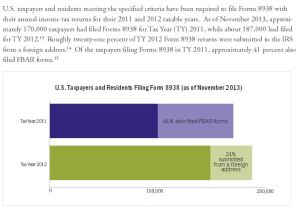
The short answer is yes, with varying degrees of investigation; reviews or audits. Of course, not all individuals are audited or investigated. However, the new data that will be collected under FATCA will be an increasingly valuable source of information for the IRS. In practice, I am increasingly seeing the IRS automatically generate “substitute for returns” for individuals living overseas where no U.S. federal income tax return has been filed. In these cases, the IRS is receiving some type of income information (e.g., from a bank or company) and then issuing the substitute for return. See, IRM regarding “Substitute for return (SFR) and delinquent return procedures were developed to deal with taxpayers who do not file required tax returns.”
There are a host of techniques used by the IRS. A series of posts will discuss some of these techniques. There are also legal limitations imposed on the IRS and Justice Department when assets are located overseas. See, U.S. Enforcement/Collection of Taxes Overseas against USCs and LPRs – Legal Limitations
First, there has been a much greater focus during the last 6 years on foreign, international tax matters. That focus continues under the current Commissioner.
Second, the IRS has been opening offices internationally in different countries. Most recently, an office in Beijing, China.
To learn more about the functions of the Tax Attachés (TA) and Deputy Tax Attachés (DTA) and how they serve in the IRS overseas Posts, see the IRM, 4.30.3 Overseas Posts
Third, with additional information that will be collected under FATCA (starting in 2015 for information for the calendar year 2014), the IRS will have additional information to sort, examine, audit, etc. This will undoubtedly cause more substitute for returns to be automatically generated by the IRS for those individuals who have not been filing U.S. income tax returns.
Fourth, the offshore voluntary disclosure program has been a treasure trove of information for the government regarding non-U.S. banks and non-U.S. advisers (bankers, accountants and attorneys).
Fifth, the deferred prosecution agreements entered into with various Swiss financial institutions will be an additional source of information regarding USCs and LPRs and their accounts and assets.
Sixth, the IRS has developed a number of methods of collecting, sorting and identifying information (including the information that will be collected above). For instance, in the Internal Revenue Manual provides the following, regarding USCs and LPRs, including those living overseas –
* * *
5.1.18.13.3 (05-20-2008)
Using Passport Information
- Use any new address or new asset information received from the passport office as discussed above.
- See IRM 5.1.12.25, Outgoing Mutual Collection Assistance Requests, if you determine that the taxpayer:
- resides in a treaty country, or
- has assets in a treaty country.
5.1.18.14 (03-27-2012)
Treasury Enforcement Communications System
- The Treasury Enforcement Communications System (TECS) is a database maintained by the Department of Homeland Security (DHS), and it is used extensively by the law enforcement community. It contains information about individuals and businesses suspected of, or involved in, violations of federal law.
- For IRS field Collection,TECS provides two sources to help make contact with taxpayers or locate assets :
- Revenue officers can request that delinquent balance due taxpayers be entered into TECS, and the Department of Homeland Security (DHS) will then advise IRS when those taxpayers travel into the United States for business, employment, or personal reasons. The taxpayers entered into TECS for this purpose are on a DHS lookout indicators list. IRS employees must help maintain the TECS database by requesting that appropriate taxpayers be entered into TECS or be deleted from TECS. (See IRM 5.1.18.14.6.1 for criteria for including taxpayers in TECS data base.)
- Revenue officers can also request information housed in TECS on past travel that a taxpayer has made to and from the United States.
5.1.18.14.1 (03-27-2012)
TECS: DHS Lookout Indicators
- Many of the taxpayers entered into TECS for a DHS lookout indicator are International ones because the cases usually concern persons who reside abroad. However, domestic taxpayers may also be entered into TECS if we have been unable to locate them and if they are believed to travel outside the US . Taxpayers placed on TECS are often not subject to ordinary administrative and judicial collection procedures because they frequently reside outside the jurisdiction of the US Courts. Information derived from placing a taxpayer on TECS can facilitate contact with these taxpayers or provide asset information which, in turn, may facilitate collection of their delinquent liabilities.
Note:
IRM 9.4.2.4.2.5.3, Other IRS Functions, also discusses TECS and prescribes the use of Form 5523, TECS Query Request, to request information from TECS. However, SB/SE Collection Field (FC) employees should not use Form 5523.
- Consider the following example as an illustration of how using TECS to place a taxpayer on the DHS lookout indicator list could help in your casework.
Example: A FC RO has a balance due taxpayer in his/her inventory and he determines the taxpayer resides in Norway. The RO transfers the case to International. The International RO determines the taxpayer is “Unable to Contact” and closes the case from open inventory. The RO requests that the taxpayer be placed on TECS. One year later, the taxpayer travels to the US and initially arrives at an airport in New York. Upon the taxpayer’s arrival, Customs and Border Protection (CBP) informs the TECS Coordinator where the taxpayer is ultimately traveling to, how long the taxpayer plans to stay, and on which flight(s) the taxpayer will be departing. The taxpayer will be staying in Denver for one week. The ROs who had previously worked the case had not been aware of any connection the taxpayer had to Denver. The TECS Coordinator notifies the group manager (GM) in International who is responsible for cases in Norway (the country in which the taxpayer resides). The International GM issues an OI to the Collection group working the location in Denver where the taxpayer is staying. The GM in Denver assigns the case to an RO, and the RO meets with the taxpayer and secures a financial statement. When this happens, the IRS learns about the taxpayer’s assets for the first time as other research methods and attempted contacts were unsuccessful. The RO provides the information to International and closes the OI. After the OI is closed, the International RO does further research once he/she is aware of the Denver nexus. He/she discovers the taxpayer has real property held in the name of a trust and files a nominee lien.
* * *
More posts to follow on specific steps taken regarding investigations by IRS of USCs and LPRs living outside the U.S.
Supreme Court’s Decision in Cook vs. Tait and Notification Requirement of Section 7701(a)(50)
The U.S. Supreme Court upheld as Constitutional the concept of citizenship based taxation in 1924 in Cook v. Tait. In that case, the U.S. citizen resided permanently and was domiciled in Mexico City with his Mexican citizen wife.
In those years, the Revenue Act of 1921 imposed a top income tax rate of 8%. The IRS made a demand against Mr. Cook to pay his tax. Mr. Cook paid it and sued for refund of the US$1,193 paid. That amount represents about  US$16,893 in 2014 inflation adjusted dollars. Neither amounts are significant in current actions taken by the IRS.
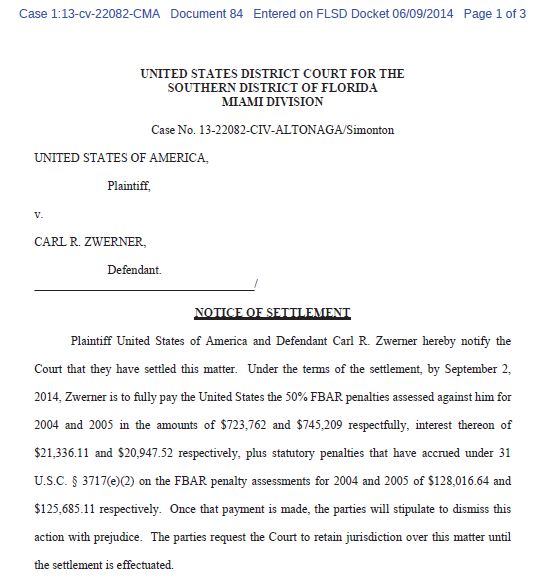
As a point of reference, Mr. Zwerner was alleged to owe US$3,630,119 (on an account with a maximum value during the years at issue of apparently no more than US$1.69M) and ultimately paid about US$ 1.75M (more than he even had in his account?) per the Notice of Settlement filed with the Court referenced here:
Even in 1922 dollars when Mr. Cook was living in Mexico City, the payment by Zwerner of about US$ 1.75M in current dollars, would represent about $123,581 in those dollars. See, Why the Zwerner FBAR Case is Probably a Pyrrhic Victory for the Government – for USCs and LPRs Living Outside the U.S. (Part II)
There was no Foreign Account Tax Compliance Act (“FATCA”) in the days of Cook in Mexico City, so it would be interesting to know how and why the audit and tax assessment collection was commenced. This was long before e-mails and internet, and there was a very different system of international travel. Communication and technology in 2014 is quite different from technology nearly 100 years ago when the first transcontinental (not transnational) telephone call was made in 1915 a few years before the tax issue arose in the case of Mr. Cook.
Now to the key point of this post. The Supreme Court in Cook vs. Tait framed the question before the Court as follows:
- The question in the case . . . as expressed by plaintiff [Mr. Cook], whether Congress has power to impose a tax upon income received by a native citizen of the United States who, at the time the income was received, was permanently resident and domiciled in the city of Mexico, the income being from real and personal property located in Mexico.
Can the United States impose worldwide taxation on U.S. citizens who permanently live overseas and who only have income from property or services outside the U.S.? Of course, the Supreme Court, said, that such a citizenship based rule was Constitutional. The rationale of the Court was explained in the opinion as follows, specific to the rights of citizenship:
- . . . the scope and extent of the sovereign power of the United States as a nation and its relations to its citizens and their relation to it.’ And that power in its scope and extent, it was decided, is based on the presumption that government by its very nature benefits the citizen and his property wherever found, and that opposition to it holds on to citizenship while it ‘belittles and destroys its advantages and blessings by denying the possession by government of an essential power required to make citizenship completely beneficial.’ In other words, the principle was declared that the government, by its very nature, benefits the citizen and his property wherever found, and therefore has the power to make the benefit complete. Or, to express it another way, the basis of the power to tax was not and cannot be made dependent upon the situs of the property in all cases, it being in or out of the United States, nor was not and cannot be made dependent upon the domicile of the citizen, that being in or out of the United States, but upon his relation as citizen to the United States and the relation of the latter to him as citizen. [emphasis added]
The Supreme Court emphasizes at several points that it is because of the benefits of citizenship and the rights conferred to the citizen of the United States, that the United States government has the Constitutional power to impose worldwide taxation.
What is the difference, if someone is NOT a U.S. citizen? How can the U.S. federal government impose worldwide taxation on property outside the U..S. when the individual is not a citizen, has no right to even enter the United States and generally has no benefits or protections afforded to a U.S. citizen? Indeed, a recent interpretation of the U.S. government in a Justice Department memo spells out the rights of certain U.S. citizens. See New York Times recent article, Court Releases Large Parts of Memo Approving Killing of American in Yemen Targeting Anwar al-Awlaki Was Legal, Justice Department Said
Back on topic, the rationale in Cook v. Tait did not extend to someone who was not a citizen. For example, the Internal Revenue in the 1920s was of course not attempting to impose taxation on Mr. Cook’s Mexican national wife who lived exclusively in Mexico.
Herein, is a most interesting problematic and possibly (maybe – probably?) unconstitutional aspect of current law under the provisions off IRC Section 7701(a)(5)(if the loss of nationality is retroactive to a date long ago in the past but the tax code/IRS is not recognizing that past date as the expatriation date.
See, Why Section 7701(a)(50) is so important for those who “relinquished” citizenship years ago (without a CLN)
If someone has lost all rights to U.S. citizenship years or decades ago, how can the U.S. federal government continue to impose worldwide income taxation for all of the intervening years?
How can the tax law impose a “Constitutional fiction” that a person continues to be “. . . treated as a United States citizen . . . ” simply because they did not file a paper notification with the U.S. federal government. See, Section 7701(a)(50) was adopted and has a very clear timing rule about when a person “. . . cease[s] to be treated as a United States citizen. . . ” It is not the same as for immigration law purposes. It’s a fiction in the tax law as to when one ““. . . cease[s] to be . . . a United States citizen. . . ”
The statute says ” . . . An individual shall not cease to be treated as a United States citizen before the date on which the individual’s citizenship is treated as relinquished under section 877A (g)(4). . .”
How can the U.S. federal government continue to impose U.S. worldwide income taxation on former U.S. citizens because of the provisions under Section 7701(a)(50) and 877A (g)(4)?
The U.S. Supreme Court in Cook vs. Tait found the U.S. citizenship based taxation system as Constitutional since ” . . . government by its very nature benefits the citizen and his property wherever found . . .” and because of “ . . . his relation as citizen to the United States and the relation of the latter to him as citizen. . . . ” [emphasis added]
A person who is not a citizen, obviously does not receive these benefits from the government as does a United States citizen.
In practice, the only body that can determine whether a law is Constitutional or not, is the U.S. Supreme Court. It’s not likely that this question will reach the Supreme Court any time soon; if ever. Meanwhile, the IRS generally has the duty to enforce the law as currently written.
More on the New 2014 “Streamlined” Process for USCs and LPRs Residing Overseas
The June 2014 changes by the IRS in its offshore voluntary disclosure (“OVD”) program are significant and worthy of discussion for USCs and LPRs residing overseas.
I will dedicate several blogs to this topic over the next few weeks. See, these posts on the topic for additional background: See, “IRS Makes Changes to Offshore Programs; Revisions Ease Burden and Help More Taxpayers Come into Compliance” – How Will These Changes Affect USCs and LPRs Living Outside the U.S.?
See, New 2014 “Streamlined” Process for USCs and LPRs Residing Overseas – The Thorny “Certification Requirement”
See,earlier post –Why the so-called “Streamlined” Process is “Much Ado About Nothing” – Legally Speaking,
This post is dedicated to some background, about the legal framework of the OVD and what the IRS calls “streamlined” filing.
First, it is worth reiterating, that the tax law, Title 26, is not the source of the terms of either the OVD or Streamlined. For some basic background of the statutory regime and Title 26 (along with Title 31, et. seq), see, Why the FBAR (late filed or never filed) is not a requirement for the Certification Requirement of Section 877(a)(2)(C) – (5 Years of Tax Compliance)
In addition, the Bank Secrecy Law, title 31, is not the source of the terms of either the OVD or Streamlined.
Rather, the Internal Revenue Service (the agency responsible for enforcing Title 26) has created its own terms and conditions as part of both the OVD and the “Streamlined” process. See,the “FAQs” that are published by the IRS: Offshore Voluntary Disclosure Program Frequently Asked Questions and Answers: Effective for OVDP Submissions Made On or After July 1, 2014
The terms of these FAQs are not law. The IRS can change them at anytime and without notice to anyone. Indeed the IRS has changed and modified them on numerous occasions since the initial OVD program in 2009.
Second, it is crucial to understand the basic framework of the law from Title 26 that all USCs living overseas are subject to; and the various consequences of the law. Plus, many LPRs living overseas are subject to Title 26 (but not all of them – depending upon a number of factors). The U.S. tax law is complex and there are numerous compliance requirements with onerous penalties that can be assessed. For instance, see, “PFICs” – What is a PFIC – and their Complications for USCs and LPRs Living Outside the U.S.
Also, see, US Citizenship Based Taxation. In addition, see, What could be the focal point of IRS Criminal Investigations of Former U.S. Citizens and Lawful Permanent Residents?
In that post, I summarize the principle criminal statutory rules in Title 26 – which are set out below:
1. Criminal Offenses under Title 26 (Federal Tax Law)
a. Tax Evasion (IRC Section 7201)
b. Filing a False Return or Other Document – Perjury (IRC Section 7206(1) )
- (i) Aiding or assisting in the perpetration of a false or fraudulent document (26 U.S.C. § 7206(2))
- (ii) Removal or concealment with intent to defraud, commonly related to untaxed liquor (26 U.S.C. § 7206(4))
- (iii) Compromises and closing agreements involving fraud or concealment (26 U.S.C. § 7206(5))
c. Failure to File Return, Supply Information, or Pay Tax – (IRC § 7203 – Misdemeanor – up to 12 months imprisonment)
d. Fraudulent Returns, Statements, or Other Documents (IRC § 7207)
e. “Structuring” Transactions to Evade Cash Reporting (IRC § 6050I)
In addition to these tax specific crimes, other key crimes commonly used by IRS CI agents in tax cases, particularly international cases, include:
2. Tax Related Criminal Offenses under Titles 18 and 31 (Not Tax Law Specific)
a. Conspiracy (Section 371 of Title 18)
- (i) Elements of the Offense
- (ii) Penalties and Statute of Limitations
b. False Statements (Title 18 U.S.C. § 1001)
- (i) Penalties and Statute of Limitations
c. Perjury
d. Mail fraud
e. Principals and those Who Aid and Abet (Title 18)
f. Accessory After the Fact
You may be asking – “If the terms and conditions of OVD and Streamlined are not the law – why should I consider either in my circumstances?”
The OVD is a bargain between the IRS/Justice Department and taxpayers. In short, if you participate by its terms, you will not (at least “should not”) be criminally prosecuted. The OVD program is in my view a program worthy of consideration for those who have committed any of the above tax and tax related crimes; and this will depend entirely upon the facts of each case. How, when and if these laws have been violated, can only be analyzed and considered for each particular case, based upon the detailed factual circumstances of each individual.
For those individuals, who have not committed any of the above tax related crimes, the OVD program is probably not a good option for such USC or LPR residing overseas. See an earlier article I published titled – The 2013 GAO Report of the IRS Offshore Voluntary Disclosure Program, International Tax Journal, CCH Wolters Kluwer, January-February 2014. PDF version here.
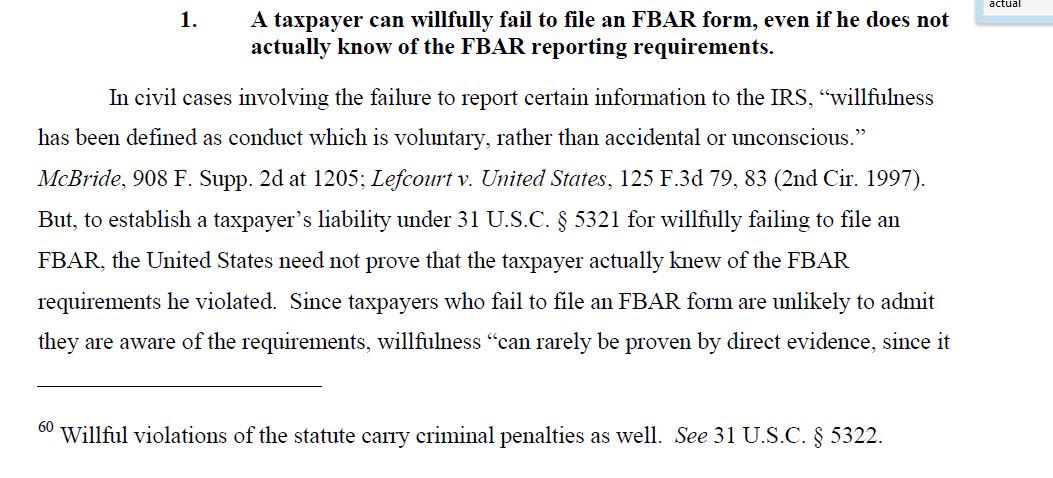
There is one caveat to this issue, which arises from the willfulness FBAR penalty. The government has argued (at least in one case) that multiple year 50% willfulness penalties can apply, even if the individual had no knowledge of the law – See, FBAR Penalties for USCs and LPRs Residing Overseas – Can the Taxpayer have no knowledge of the law and still be liable for the willfulness penalty? See government memorandum.
Clearly, the facts of the Zwerner case need to be considered carefully in how and why the government argued their position. It seems, maybe the biggest fact used against the taxpayer was that he had “touched the money”; i.e., drawn and spent some of the funds over the years?
Next, if there is little risk of a 50% willfulness penalty and there is no criminal liability, the so-called “Streamlined” process is an option. However, again, the terms of the “Streamlined” are not terms set forth in Title 26; they are made up by the IRS. They also do not bind the IRS. I strongly recommend reading the post, –Why the so-called “Streamlined” Process is “Much Ado About Nothing” – Legally Speaking, which provides the following about the process (before modified in its current form – which continues to be applicable today):
Does any of the above [referring to Streamlined] protect the USC residing outside the U.S. from an audit for any year a U.S. federal income tax return was not filed? The short answer is – NO!
Does any of the above statements in the IRS announcement mean that a USC residing overseas could not be subject to late payment or late filing penalties for not previously filing U.S. tax returns. The short answer is – NO!
Does any provision in the IRS announcement mean the FBAR penalties could not apply for failure to file. The short answer is – NO! See, When does the Statute of Limitations Run Against the U.S. Government Regarding FBAR Filings?
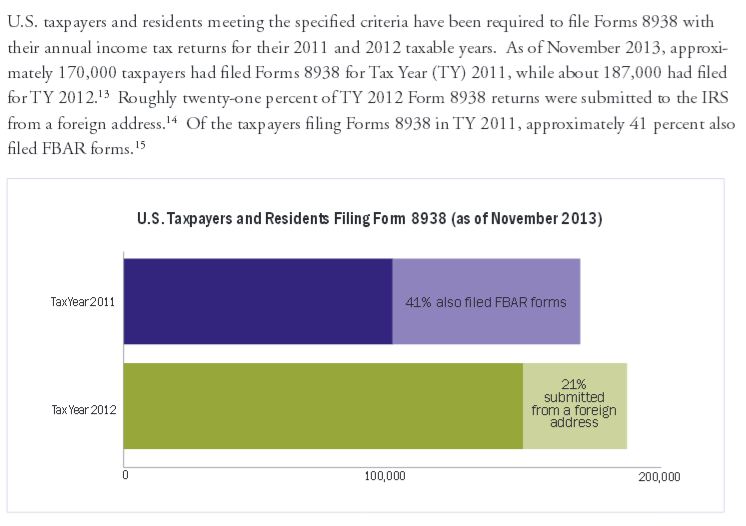
Does any of the above statements in the IRS announcement mean that a USC residing overseas can never be subject to penalties for not filing information returns regarding their non-U.S. international assets and “specified foreign financial assets”? The short answer is – NO! See, USCs and LPRs residing outside the U.S. – and IRS Form 8938
Importantly, there is nothing in the law (e.g., Title 26 or elsewhere) that would obligate any USC or LPR residing overseas to participate in either OVD or the “streamlined” process. Both have different consequences, potential benefits, and certainly legal risks.
Finally, the last option, that is actually subject to the law, i.e., Title 26, is filing tax returns through normal channels. Most all U.S. taxpayer file tax returns through this normal procedure.
As always is the case, but particularly for those who have not filed tax returns or FBARs, the facts of each particular case need to be considered, to determine the legal risks, benefits and consequences of any of these three approaches.
FBAR Penalties for USCs and LPRs Residing Overseas – Can the Taxpayer have no knowledge of the law and still be liable for the willfulness penalty? See government memorandum.
FBAR Penalties for USCs and LPRs Residing Overseas.
Can the Taxpayer have no knowledge of the law and still be liable for the willfulness penalty? The government says yes, in its memorandum of law filed in the Zwerner case.
The importance of the Zwerner case to USCs and LPRs living overseas, cannot be overestimated in my view. It’s a case where the USC, Mr. Zwerner, was cooperative with the IRS during their examination. This is a fact that both the government and the taxpayer acknowledged during the trial to enforce the collection and determination of the government of the 200% FBAR penalties.
Most troubling about this case, is the allegation that the IRS agent handling the case caused Mr. Zwerner to file and prepare a letter that expressly was an admission of his liability under Title 31. As part of the “undisputed facts”, the IRS agent actually drafted the letter for Mr. Zwerner. See the Motion of Mr. Zwerner in reply to the government’s Motion for Summary Judgment. In that case, Mr. Zwerner testified that the IRS agent had misled him.
Presumably, this letter would have been highly convincing evidence to the jury who heard the FBAR penalty case.
There is a cautionary tale in this case for USCs and LPRs residing overseas who have not filed FBARs. Communications to the government, how they are managed, what is said and what approach is taken, should be carefully considered in each case.
Next, another perplexing aspect of this case is that the government continues to persist in its argument that a mere preponderance of the evidence is the proof standard required. That will be left for another post and another discussion.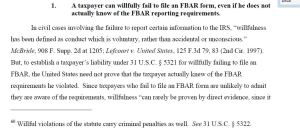
Finally, maybe the most troubling for USCs and LPRs who live outside the U.S., is the government’s assertion that an individual can be liable for the willfulness penalty, for “willfully failing to file a FBAR” – ” . . . even if the person does not actually know of the FBAR reporting requirements.” See, page 4 of the government’s motion for Summary Judgment in the Zwerner case. This is a position they have argued consistently in at least three different cases.
This leaves USCs and LPRs living overseas wondering, will the U.S. government assess willfulness penalties against me for having income and accounts in my home country during all of the years I have lived in “Country X” (particularly since I may have had no knowledge of the FBAR reporting requirements)? Under what circumstances am I at risk for such a claim by the government?
Another later post will explain how the government can collect the FBAR assessed penalties under the law and the problematic issues for them in collecting the amounts in a foreign country.
The IRS does not give a “Certificate of Expatriation” or similar tax document . . .
After a U.S. citizen has formally renounced (or relinquished) their U.S. citizenship, the U.S. Department of State provides a “Certificate of Loss of Nationality” (“CLN”). This form can be located here at – Certificate of Loss of Nationality of the United States, Form DS-4083 (CLN)
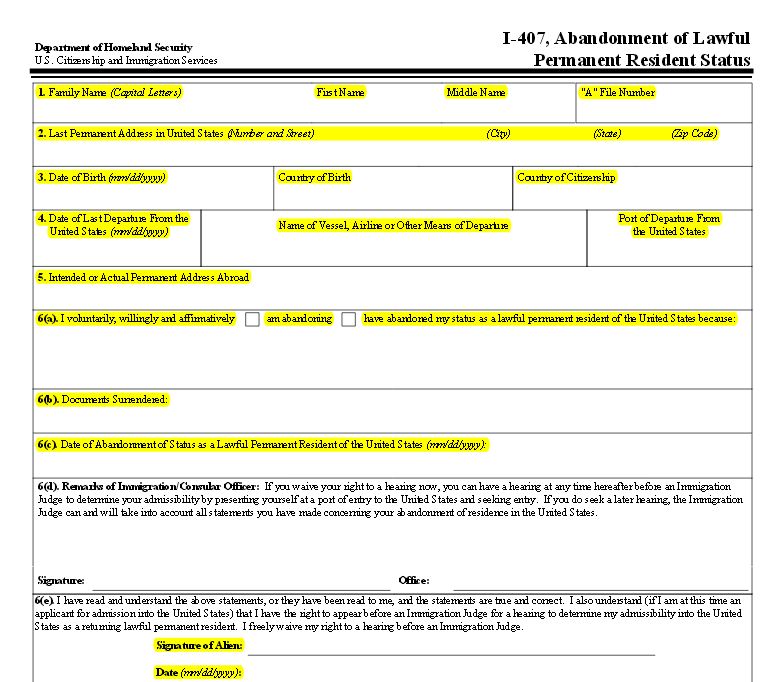
 Also, lawful permanent residents who formally abandon their “green card” status will do so by filing an Abandonment of Lawful Permanent Resident Status Form I-407.
Those LPRs who mail the Form I-407, will never receive any type of confirmation from the government, other than their own copies of documents filed and proof of mailing it (e.g., certified mail, return receipt). If the Form I-407 is presented to the U.S. Consulate or Embassy, the individual should receive a stamped copy of the form which should be given to the former LPR by the consular officer.
However, the Internal Revenue Service (“IRS”) which has very different responsibilities as compared to the U.S. Department of State, does not issue any sort of similar document to the CLN. There is no equivalent “Tax CLN.” Indeed, many individuals feel let down or “without closure” when they learn that it is a one-way flow of information; from the individual to the IRS. The IRS does not have an obligation to even confirm receipt of the documents filed with the IRS.
This is quite disorienting for many USCs and LPRs residing overseas, where the revenue authority in their country will regularly give a confirmation of tax documents received. Sometimes, a government will provide a confirmation of the taxes owing and paid through some specific type of feedback or response.
The IRS does no such a thing; and there is no document that will come from the IRS certifying “tax expatriation” has occurred.
The legal burden is therefore generally on the taxpayer to be able to prove the filing of the tax returns and IRS Form 8854. See, How many former U.S. citizens and long-term lawful permanent residents have filed (or will file) IRS Form 8854?
Filing the returns through an overnight courier service (e.g., DHL, Federal Express, etc.) and maintaining the proof of mailing and delivery is always important. If the tax documents are filed from the U.S., they should always be sent with such proof, or via U.S. certified mail, return receipt. One recommendation/pointer, is to ask the IRS to stamp date the receipt (e.g., a copy of the cover/transmittal letter) and return it to you in a self-addressed return envelope.
All of this is quite important, particularly to get the “clock ticking” against the IRS to bring an audit, under the statute of limitations period. See, When the U.S. Tax Law has no Statute of Limitations against the IRS; i.e., for the U.S. citizen and LPR residing outside the U.S.
The List is Out – and Its 1,001 Former U.S. Citizens for the 1st Quarter 2014
The IRS published today the list of former U.S. citizens for the first quarter of 2014 and it can be reviewed here. It’s a record for any first quarter by 47%.
This is a record pace from any prior year, considering the entire year of 2013 had a record pace of 2,999 former U.S. citizens for the entire year. The 1,001 listed persons in the first quarter of 2014 is a 47% increase over the 679 former citizens published in the same period a year ago. No other first quarter list had more than 500.
There are a number of interesting questions that are created by this trend.
- Does the IRS have access to the data for former lawful permanent residents? That information is not published under the statute (Section 6039G), which only covers U.S. citizens. Does the Department of Homeland Security track former LPR – names, addresses, etc.?
- Will the IRS simply select the list of published former citizens for audits? The complete set of lists going back to the mid-1990s can be reviewed here. Quarterly Publications.
- How many former citizens are not included in this quarterly list? The statute provides the names are compiled from data received from the U.S. Department of State and the federal agency principally responsible for immigration, among others..
- How many of these former citizens will be subject to the US$10,000 penalty under Section 6039G(c)?
- How will the IRS collect tax and penalty assessments against individuals who live exclusively outside the U.S.?
There has been a clear trend of a growing list of former U.S. citizens. As more “Accidental Americans” learn they are U.S. tax residents by virtue of their U.S. citizenship, I think the trend will continue. The longer term consequences will be interesting as they unfold.
???????????????? ?Please click here to view the above in Chinese.?
Why the so-called “Streamlined” Process is “Much Ado About Nothing” – Legally Speaking
At the end of 2012, the IRS announced a New Filing Compliance Procedures for Non-Resident U.S. Taxpayers.
This announcement is now talked about among many tax return preparers as if it creates some sort of special rights or benefits to a particular type of U.S. citizen residing overseas. The IRS announcement is neither the law, nor purports to be the law. It also does not modify the statute of limitations period or otherwise bar the IRS from commencing an audit against a USC residing overseas who has never filed U.S. income tax returns. See, When the U.S. Tax Law has no Statute of Limitations against the IRS; i.e., for the U.S. citizen and LPR residing outside the U.S. (Posted on March 24, 2014)
The “new filing compliance procedures” is simply a statement of what has always been the practice of the IRS. U.S. income tax returns that are filed are examined under whatever procedure the IRS chooses as part of its audit and review practices. Income tax returns with modest assets, modest income or little to no U.S. income tax liability garner less attention and resources of the IRS than those with lots of assets, lots of income, etc. See, IRS summary of IRS audits.
Some of the key concepts in the 2012 announcement are set out below:
- Compliance risk determination:
- The IRS will determine the level of compliance risk presented by the submission based on certain information provided on the returns filed, and based on certain additional information that will be required as part of the submission. Low risk will be predicated on simple returns with little or no U.S. tax due. Absent high risk factors, if the submitted returns and application show less than $1,500 in tax due in each of the years, they will be treated as low risk. In general, the risk level will rise as the income and assets of the taxpayer rise, if there are indications of sophisticated tax planning or avoidance, or if there is material economic activity in the United States.
* * *
- How taxpayers will be able to take advantage of the new procedure:
- Taxpayers wishing to use the new procedure will be required to submit: (1) delinquent tax returns, with appropriate related information returns, for the past three years, (2) delinquent FBARs for the past six years, and (3) any additional information regarding compliance risk factors required by future instructions. Payment of any federal tax and interest due must accompany the submission. More information about the application process including where submissions should be sent, will be provided prior to the effective date.
- Any taxpayer claiming reasonable cause for failure to file tax returns, information returns, or FBARs will be required to submit a dated statement, signed under penalties of perjury, explaining why there is reasonable cause for previous failures to file. See IRS Fact Sheet FS-2011-13 (December 2011) for examples of reasonable cause.
Does any of the above protect the USC residing outside the U.S. from an audit for any year a U.S. federal income tax return was not filed? The short answer is – NO!
Does any of the above statements in the IRS announcement mean that a USC residing overseas could not be subject to late payment or late filing penalties for not previously filing U.S. tax returns. The short answer is – NO!
Does any provision in the IRS announcement mean the FBAR penalties could not apply for failure to file. The short answer is – NO! See, When does the Statute of Limitations Run Against the U.S. Government Regarding FBAR Filings?
Does any of the above statements in the IRS announcement mean that a USC residing overseas can never be subject to penalties for not filing information returns regarding their non-U.S. international assets and “specified foreign financial assets”? The short answer is – NO! See, USCs and LPRs residing outside the U.S. – and IRS Form 8938
Why then, did the IRS issue such an announcement? Was it an attempt to present a softer message than the IRS announcement in 2011 ( IRS Fact Sheet FS-2011-13 – which enumerates various penalty concepts such as –2. Penalties imposed for failure to file income tax returns or to pay tax; 3. Possible additional penalties that may apply in particular cases; 6. Possible penalties for failure to file FBAR; etc.)?
This is another mixed message from the IRS, which is nothing more than how tax returns have been processed by the IRS over the decades; i.e., a taxpayer files a late tax return and it gets processed by the IRS (and the IRS may elect to audit any particular return, late filed or otherwise).
The -Times of Israel- article Regarding Taxation and U.S. Citizenship Overseas is Worth a Read
Drowning in a sea of new financial regulations, and with IRS audits on the  rise, some American citizens in Israel say they are weighing expatriation.
There are a number of personal perspectives of individuals who live outside the U.S. that are worth reading. This article, from the Israeli Times, although highly critical of U.S. tax policy (probably unfairly critical against the IRS) is worth reading for a more global perspective.
When the U.S. Tax Law has no Statute of Limitations against the IRS; i.e., for the U.S. citizen and LPR residing outside the U.S.
There are basically three ways a U.S. citizen living outside the U.S. will have no protection of a statute of limitations vis–à–vis the IRS.
The statute of limitations is the time frame in which the government has to conduct an audit against a U.S. taxpayer. This is important, since once that time frame lapses (i.e., the statute of limitations period is over) the IRS cannot commence tax audits or assess taxes or tax penalties against the USC or LPR living overseas.
The three basic scenarios of when there is no statute of limitations for federal tax matters are as follows:
1. The USC or LPR does not file a U.S. income tax return. IRC Section 6501(c)(3).
2. There is fraud on the part of the taxpayer (e.g., the taxpayer intentionally does not report income). IRC Sections 6501(c)(1), (c)(2).
3. The USC or LPR fails to report certain foreign transactions. IRC Section 6501(c)(8). This rule was only recently adopted as part of the “HIRE Act” which also created FATCA. The following types of transactions and forms that give rise to an “open” statute of limitations period is set out below:

For an excellent overview of the statute of limitations periods, see the presentation – “Starting the Race Against the Tax Authority in the International Tax World – Statute of Limitations & Lack of Filings” by John C. McDougal, Special Trial Attorney – IRS, Jon P. Schimmer and Eric D. Swenson of Procopio.
One of the basic points to takeaway from the law, is that a USC or LPR is almost always better off by filing tax returns (complete and accurate), even when no tax is owing. This will help assure him or her of a fixed time frame during which the U.S. federal government can conduct tax audits and other related tax investigations.
???????????????? ?Please click here to view the above in Chinese.?
Read the Q&A format here.
Will the Justice Department and Criminal Investigation Division of the IRS Turn Their Sights on USCs or LPRs living Overseas?
To date, there have been numerous indictments of non-U.S. resident persons in the “offshore financial account world” which has been a great focus of the U.S. federal government starting in 2008. An updated list of indictments of these persons can be found at Jack Townsend’s federal tax crimes blog here where he keeps a spreadsheet of cases.
To date, the author is not aware of any tax indictments (solely based upon a tax crime) of any United States Citizens or LPRs who have lived most all of their lives overseas. Is this an anomaly? Will the government be interested in bringing criminal charges against non-resident USCs or LPRs in the future?
Those persons living outside the U.S. who have been indicted (typically for conspiracy/aiding and abetting charges) have been so-called enablers; non-U.S. bankers, lawyers and accountants. Some of these cases can also be reviewed at at the federal tax crimes blog of Jack Townsend, which is the most comprehensive source of this information.
???????????????? ?Please click here to view the above in Chinese.?