The dangers of becoming a “covered expatriate” by not complying with Section 877(a)(2)(C).

Probably the most misunderstood concept in the U.S. tax expatriation law provisions is Section 877(a)(2)(C) for several reasons.

1.  People of modest means with modest to little income and little to no assets can fall into this category.

2.  Most individuals think the mark-to-market tax upon expatriation is only applicable to rich, wealthy or otherwise individuals with high levels of income.  See, Accidental Americans” – Rush to Renounce U.S. Citizenship to Avoid the Ugly U.S. Tax Web” International Tax Journal,CCH Wolters Kluwer, Nov./Dec. 2012, Vol. 38 Issue 6, p45

3.  Lawful permanent residents (“LPRs”) can inadvertently fall into this category without doing anything, other than living principally in a country outside the U.S., which has a U.S. income tax treaty. See, Oops…Did I “Expatriate” and Never Know It: Lawful Permanent Residents Beware! International Tax Journal, CCH Wolters Kluwer, Jan.-Feb. 2014, Vol. 40 Issue 1, p9.  At the end of this post is a list of the countries with U.S. income tax treaties.

4.  Few individuals understand exactly what must be included and reported in IRS Form 8854 to be able to satisfy the certification requirement above.  For more details, see What are the consequences of becoming a “covered expatriate” for failing to comply with Section 877(a)(2)(C)?

The relevant provisions of Section 877(a)(2)(C) are highlighted below:

  • This section shall apply to any individual if—
  • (A) the average annual net income tax . . . is greater than $124,000,
  • (B) the net worth of the individual as of such date is $2,000,000 or more, or
  • (C) such individual fails to certify under penalty of perjury that he has met the requirements of this title for the 5 preceding taxable years or fails to submit such evidence of such compliance as the Secretary may require.

Failure to certify truthfully about compliance with U.S. tax law for 5 years, as set forth above in the statute, means the individual necessarily will be a “covered expatriate.”   Does this mean that if a U.S. citizen who renounces citizenship or a LPR who abandons their green card, will necessarily be a “covered expatriate” if they fail to follow IRS Notice 2009-45 “Guidance for Expatriates Under Section 877A”?

What steps will the IRS take if someone intentionally does not comply with the certification requirement?  Will they become a target of a criminal investigation, and under what circumstances?  What could be the focal point of IRS Criminal Investigations of Former U.S. Citizens and Lawful Permanent Residents?

There are many pending and open questions not answered by current law, as the U.S. Treasury has yet to publish regulations under Section 877A, 877 or 2801.

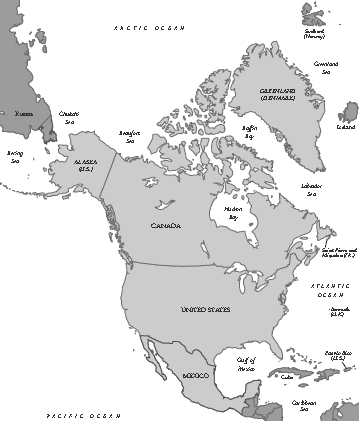
APPENDIX – Countries with Income Tax Treaties with the United StatesEurope Map

Armenia
Australia
Austria
Azerbaijan
Bangladesh
Barbados
Belarus
Belgium
Bulgaria
Canada
Chile
China
Cyprus
Czech Republic
Denmark
Egypt
Estonia
Finland
France
Georgia
Germany
GreeceAsia Map - including Russia
Iceland
India
Indonesia
Ireland
Israel
Italy
Jamaica
Japan
Kazakhstan
Korea, Republic of
Kyrgyzstan
Latvia
Lithuania
LuxembourgNorth America Map
Malta
Mexico
Moldova
Morocco
Netherlands
New Zealand
Norway
Pakistan
Philippines
Poland
Portugal
Romania
Russia
Slovak Republic
Slovenia
South Africa
Spain
Sri Lanka
SwedenMiddle East Map
Switzerland
Tajikistan
Thailand
Trinidad and Tobago
Tunisia
Turkey
Turkmenistan
Ukraine
United Kingdom
Uzbekistan
Venezuela

What are the consequences of becoming a “covered expatriate” for failing to comply with Section 877(a)(2)(C)?

Many lay pIRS Form 8854ersons are stumped as they try to understand the tax consequences of Sections 877 and 877A.  The language in the drafting of the statutes is not so clear.  Be careful to understate the meaning and how the IRS interprets the law.

One of the greatest risks for anyone who wants to self-diagnose their path towards becoming a former U.S. citizen, is Section 877(a)(2)(C).  To be blunt, anyone who renounces their citizenship at the Embassy or Consulate will find that process relatively easy.  However, no one at the U.S. Department of State will provide tax advice or try to interpret the meaning of Section 877(a)(2)(C).  Indeed, the Foreign Affairs Manual used to read to the person taking the oath, simply provides the standard overview language of “special tax consequences” arising form the renunciation.

Even the most economically modest individual, with little assets or income, can fall into this trap for the unwary – Section 877(a)(2)(C).  The statute is spelled out below –

  • This section shall apply to any individual if—
  • (A) the average annual net income tax . . . is greater than $124,000,
  • (B) the net worth of the individual as of such date is $2,000,000 or more, or
  • (C) such individual fails to certify under penalty of perjury that he has met the requirements of this title for the 5 preceding taxable years or fails to submit such evidence of such compliance as the Secretary may require.
The provision is clear that anyone who does not satisfy it, will be a “covered expatriate” and hence subject to the taxation and reporting requirements under Sections 877 and 877A and 2801.
This is worth understanding well, before rushing off to take the oath at the U.S. Embassy or the U.S. Consulate.

One of the greatest traps for the unwarry is how Section 877(a)(2)(C) can cause even the most economically modest person to become a “covered expatriate” with the adverse tax and reporting requirements that follow.

One of the greatest traps for the unwary is how Section 877(a)(2)(C) can cause even the most economically modest person to become a “covered expatriate” with the adverse tax and reporting requirements that follow.

All individuals should have a clear understanding about how this specific code section can affect their personal taxes and the future taxes of any future gifts or bequests/inheritances to U.S. beneficiaries.  All U.S. citizen or U.S. resident children, grandchildren and friends and family of the “expatriate” who fall into this “Section 877(a)(2)(C) trap”  will likely be subject to the 40% tax on “covered gifts” or “covered bequests.”  This can come as a real surprise years after the “renouncing” citizenship or “abandoning” lawful permanent residence status.