“Delinquent FBAR Filing Procedures”
There has been considerable commentary—and some concern—about the IRS’s removal, around the end of June 2026, of its longstanding webpage titled “Delinquent FBAR Filing Procedures.” The IRS originally created those procedures in 2014.
The disappearance of the webpage is noteworthy. But it may not be nearly as important as some commentators suggest.
The IRS and Department of Justice have spent enormous resources over the last decade and a half identifying, assessing, litigating, and collecting billions of dollars in international information-reporting and FBAR penalties. See, penalty information amounts in the National Taxpayer Advocate, 2011, 2012, 2013, 2014, 2015, 2016, 2017, 2018, 2019, 2020, 2023 and 2025 Annual Reports to Congress and TIGTA reports, including Additional Actions are Needed to Address Non-Filing and Non-Reporting Compliance Under the Foreign Tax Compliance Act (Apr. 2022) This enforcement effort grew out of the offshore banking investigations beginning with UBS and the broader legislative response that culminated in FATCA in 2010.
TIGTA report: $157 Billion of Potentially Unreported Foreign Accounts?
As the TIGTA reports: “Foreign financial institutions (FFI) are required to File IRS Form 8966, FATCA Report, to report information about financial accounts in which U.S. taxpayers hold certain ‘ownership interests.'”
TIGTA noted that foreign financial institutions report U.S.-owned financial accounts to the IRS on Form 8966, FATCA Report, while U.S. taxpayers separately report specified foreign financial assets on Form 8938. The disparity identified by TIGTA was enormous.
For 2017 and 2018, taxpayers reported (on their IRS Form 8938) approximately $6.6 billion and $15.9 billion, respectively, while foreign financial institutions reported (on IRS Form 8966) approximately $106.8 billion and $173.0 billion.
From these figures, TIGTA concluded that the data indicated potential unreported or underreported foreign bank-account values of approximately $157 billion.
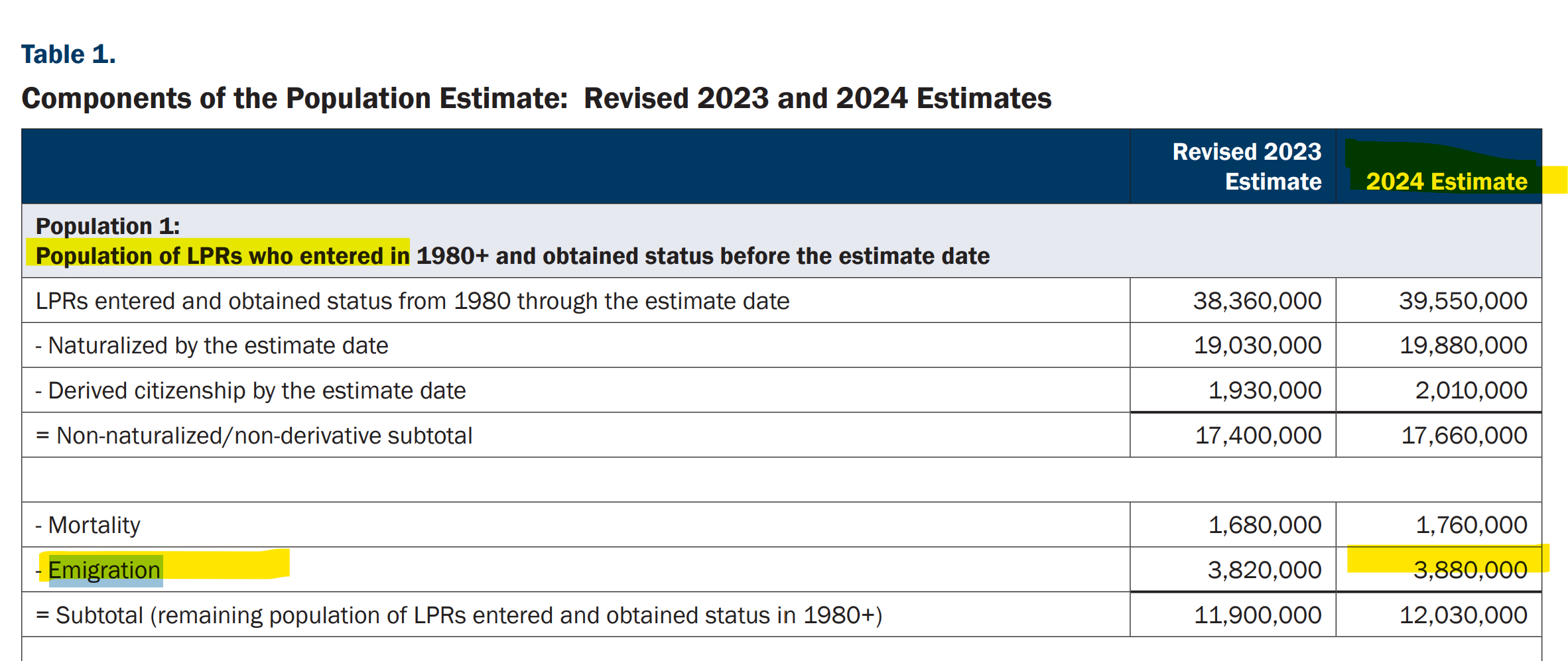
That conclusion deserves considerable skepticism. Among other questions: how many of those reported  foreign assets belong to lawful permanent residents—“green card” holders—who actually reside overseas and may qualify as residents of a treaty country under an applicable U.S. income tax treaty?
That was precisely the type of residency issue presented in my case of Aroeste v. United States, Case No. 22-cv-00682-AJB-KSC (S.D. Cal. 2023).
Importantly, for these individuals residing overseas with a green card, they must be concerned about being deemed a “covered expatriate” by application of the treaty law. See, Can You Lose Your Green Card Just by Living Outside the United States?
Why FBAR Exposure Remains Serious
Account holders and their advisors nevertheless have good reason to take FBAR exposure seriously. Federal courts have increasingly accepted a relatively low threshold for establishing a “willful” FBAR violation. The government generally needs to prove its civil FBAR case only by a preponderance of the evidence, and courts have repeatedly held that willfulness can include recklessness or willful blindness, rather than requiring proof that the taxpayer deliberately intended to violate the FBAR statute.
See, among others, United States v. Reyes (2d Cir. 2026); Bedrosian (3d Cir.); Horowitz (4th Cir.); Kelly (6th Cir.); Rum and Schwarzbaum (11th Cir.); and Norman and Kimble (Federal Circuit).
That is where the real concern lies, not simply in the disappearance of an IRS webpage.
The IRS Removed the Webpage—Not Its Internal Guidance in the IRM (the IRS’ “Bible”)
The IRS removed the public-facing “Delinquent FBAR Filing Procedures” webpage, but the same guidance remains in the Internal Revenue Manual (IRM) to still encourage late filed FBAR filings. The same language is found in the IRM, which is the most important since revenue agents and managers “are responsible for adhering to the content of this IRM”. See, IRM 4.26.16.1(i). 
The IRM continues to provide that an FBAR penalty should not be imposed when:
- the violation was due to reasonable cause; and
- accurate delinquent or amended FBARs are filed to correct the prior violations.
See, IRM 4.26.16. Report of Foreign Bank and Financial Accounts (FBAR)
The critical point is that filing a delinquent FBAR does not itself establish reasonable cause or eliminate a potential penalty, but notification of the government is required if you go down this path.
IRM 4.26.16. Report of Foreign Bank and Financial Accounts (FBAR) Is the Delinquent Procedure
IRM 4.26.16.3.11 continues to describe the delinquent FBAR filing procedures. Among other things, it instructs taxpayers to file delinquent FBARs electronically, using the instructions applicable to the year being reported, and to provide the reason why the FBAR was filed late.
Most importantly, the IRM states that a penalty will not be asserted for an account “if it is determined” that:
- the failure was not willful;
- the failure was due to reasonable cause; and
- the account was properly reported on the delinquent FBAR.
The words “if it is determined” are crucial. 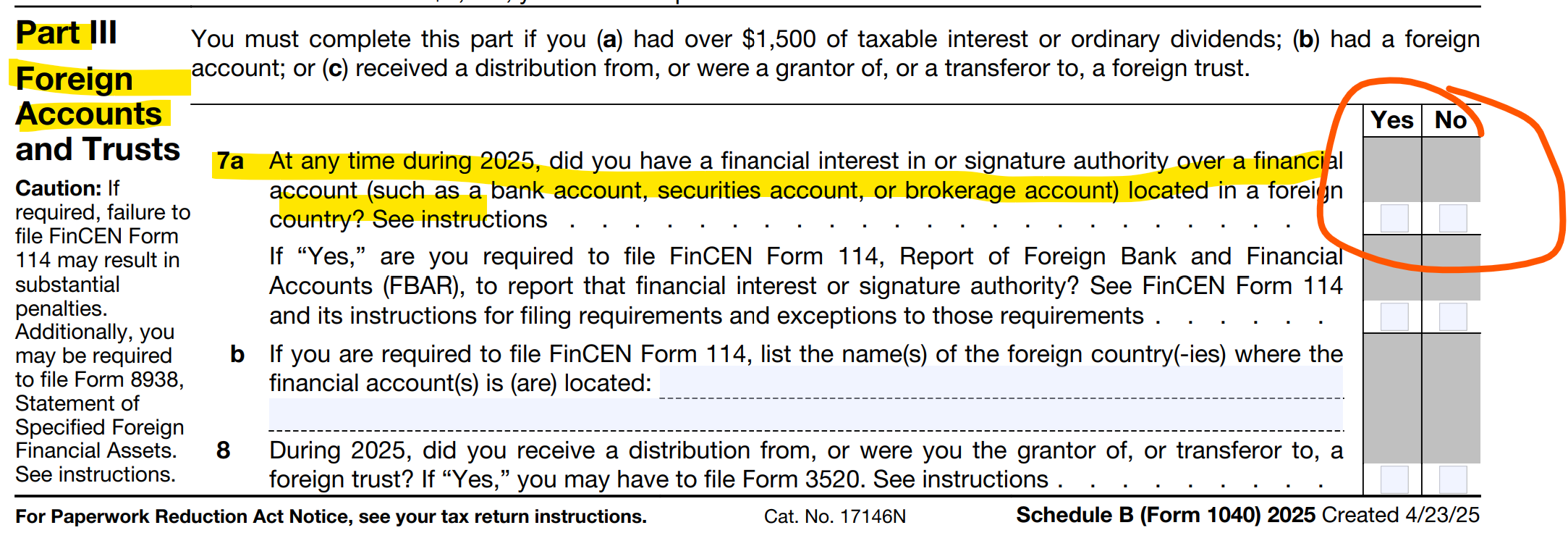 Who makes that determination? See my case of Jones v. United States, No. 19-CV-4950 (C.D. Cal. 2020), as a cautionary tale.
Ultimately, the IRS makes this determination which starts the government machinery running. Its not the account holder, the person with signature authority, or the taxpayer’s advisor; no matter how convinced they are of their reasonable cause and their facts.
The More Important Question (Implied Above): Should You File a Late FBAR at All?
This is the question that deserves considerably more attention.
Whether someone should file a delinquent FBAR depends entirely upon the person’s particular facts and circumstances. Filing late is not automatically the safest course.
One of the most important considerations is the six-year FBAR statute of limitations under 31 U.S.C. § 5321(b)(1). That limitation period is fundamentally different from certain Title 26 international information-reporting rules, where the assessment period can remain open under IRC § 6501(c)(8).
Accordingly, before filing a delinquent FBAR, an account holder should understand at least two competing questions:
- What are the consequences of filing late?
- What are the consequences of not filing at all?
Those questions cannot responsibly be answered without examining the particular years involved, when the six-year limitations period expires, the underlying income-tax filings, what the taxpayer knew, all of the surrounding facts, what advice was received, and whether the government might characterize the conduct as willful or reckless.
Bittner Changed the Economics of FBAR Enforcement
The Supreme Court’s decision in Bittner v. United States, 598 U.S. 85 (2023), significantly changed the strategic landscape.
The Court held that the non-willful FBAR penalty applies on a per-report, rather than per-account, basis. That substantially reduced the government’s potential penalties in all non-willful cases involving numerous foreign accounts.
As a practical matter, Bittner also changed the economics of FBAR enforcement. I had the privilege of working on the ACTEC amicus brief filed in Bittner – which was cited in both the majority opinion by Justice Gorsuch and the dissent by Justice Barrett – See Brief for American College of Trust and Estate Counsel as Amicus Curiae 5–7.
In my view, the IRS now has a greater incentive to focus its enforcement resources on cases in which it believes it can establish willfulness through reckless disregard or willful blindness, thereby potentially supporting the much larger willful FBAR penalty.
These Are the IRS’s Own Rules
It is also important to distinguish the statute from the IRS’s administrative procedures.
I sometimes refer to these as the IRS’s “Monopoly rules.” They are the government’s administrative rules for handling delinquent FBARs; they are not themselves statutory safe harbors enacted by Congress.
That distinction matters.
The IRM says a penalty will not be asserted “if it is determined” that reasonable cause exists and the other requirements are satisfied. But “reasonable cause” is not defined in the FBAR statute itself, Title 31.
Instead, courts and the government have borrowed concepts developed under Title 26, including the Supreme Court’s familiar “ordinary business care and prudence” standard. See United States v. Boyle, 469 U.S. 241 (1985); see also Moore v. United States, No. C13-2063RAJ (W.D. Wash. 2015), and United States v. Ott, No. 2:18-cv-12174 (E.D. Mich. 2019).
Filing Late Does Not Erase the Original Violation
This point is sometimes overlooked.
Once an FBAR filing deadline has passed without the required report being filed, subsequently filing the FBAR does not somehow erase the historical failure.
The water has already passed under the bridge.
A delinquent filing may become highly relevant to reasonable cause, mitigation, cooperation, and the government’s ultimate enforcement decision. But it does not make the original failure disappear.
Moore provides an important cautionary example. An even more dramatic example arose in Jones v. United States, No. 19-CV-4950 (C.D. Cal. 2020), a case I represented as we prepared for a jury trial during the COVID period.
Mrs. Jones, an elderly widow, and her late husband’s estate challenged approximately $3.4 million in willful FBAR penalties. She had affirmatively disclosed her late filings to the IRS through the streamlined process after filing the delinquent FBARs. The government nevertheless pursued a willfulness theory based substantially on willful blindness.
The government argued willful blindness and Mrs. Jones (90+ years of age), ironically, was legally blind by the time the case was set to go to trial.
That is one reason the facts surrounding preparation and signing of the income-tax return can become just as important as the FBAR itself.
The lesson is important: coming forward and filing late does not itself immunize an account holder from an FBAR penalty examination. It does not mean a revenue agent will come to the right result based upon the facts of your case. It can be a bit like the lottery.
“Reasonable Cause” May Not Mean What You Think
What does it take for the IRS to conclude that reasonable cause does not exist?
Sometimes, not much.
A simple “mistake” or “oversight” does not necessarily constitute reasonable cause. The government generally looks for evidence that the person exercised ordinary business care and prudence but nevertheless could not comply.
Death, serious illness, destruction of records, fire, or natural disaster can support reasonable cause under appropriate circumstances. But even those facts do not automatically establish it.
Likewise, ignorance of the FBAR requirement ordinarily does not automatically establish reasonable cause. Even reliance on professional tax advice may be insufficient—particularly where the government contends that the advisor lacked appropriate international-tax expertise or that the taxpayer failed to provide the advisor with the relevant information.
Schedule B can also become critical evidence.
The Takeaway – Before You Dive In
The disappearance of the IRS webpage titled “Delinquent FBAR Filing Procedures” should not itself drive a taxpayer’s decision.
The underlying IRS guidance remains in the Internal Revenue Manual.
The much more important question is whether filing a delinquent FBAR is actually the appropriate strategy for the particular individual and the particular years involved.
That requires understanding the six-year FBAR statute of limitations, the taxpayer’s underlying filing history, the reason the FBAR was not timely filed, what the taxpayer knew, what professional advice was received, the information appearing on Schedule B and other returns, and the possibility that the government could characterize the conduct as reckless or willful.
Once a delinquent FBAR is filed, the filing—and the taxpayer’s explanation for filing late—cannot simply be taken back.
So be thoughtful when someone recommends entering the “Delinquent FBAR Filing Procedures” for a low low fee of just US$**99.99.
Understand why you are filing, what you are saying to the government, what years remain open, and what consequences may follow.
Dive in with your eyes wide open – and make sure you can see the bottom before you jump.